Blog · October 30, 2026 · 5 min read
Acid Wash vs Resurfacing in Phoenix, AZ
An acid wash strips a thin layer off existing plaster to remove scale and stains. Resurfacing removes the finish entirely and puts a new one on. On a 1970s or 1980s Phoenix pool with original plaster, an acid wash buys a season or two, and a resurface replaces what is already gone.
All postsGood to know
The short answer
An acid wash is a chemical cleaning that eats the top skin of the plaster, lifting hard water scale and leaf stains with it and leaving the pool whiter for a while. Resurfacing chips out the old finish and trowels on a new one, which is the real repair. The problem in Phoenix is that most original-plaster pools are already thin, and every acid wash makes them thinner. The right choice depends on how much plaster is left, what the stains are, and whether the skin is chalking or just dirty.
Good to know
Acid wash: what it actually is
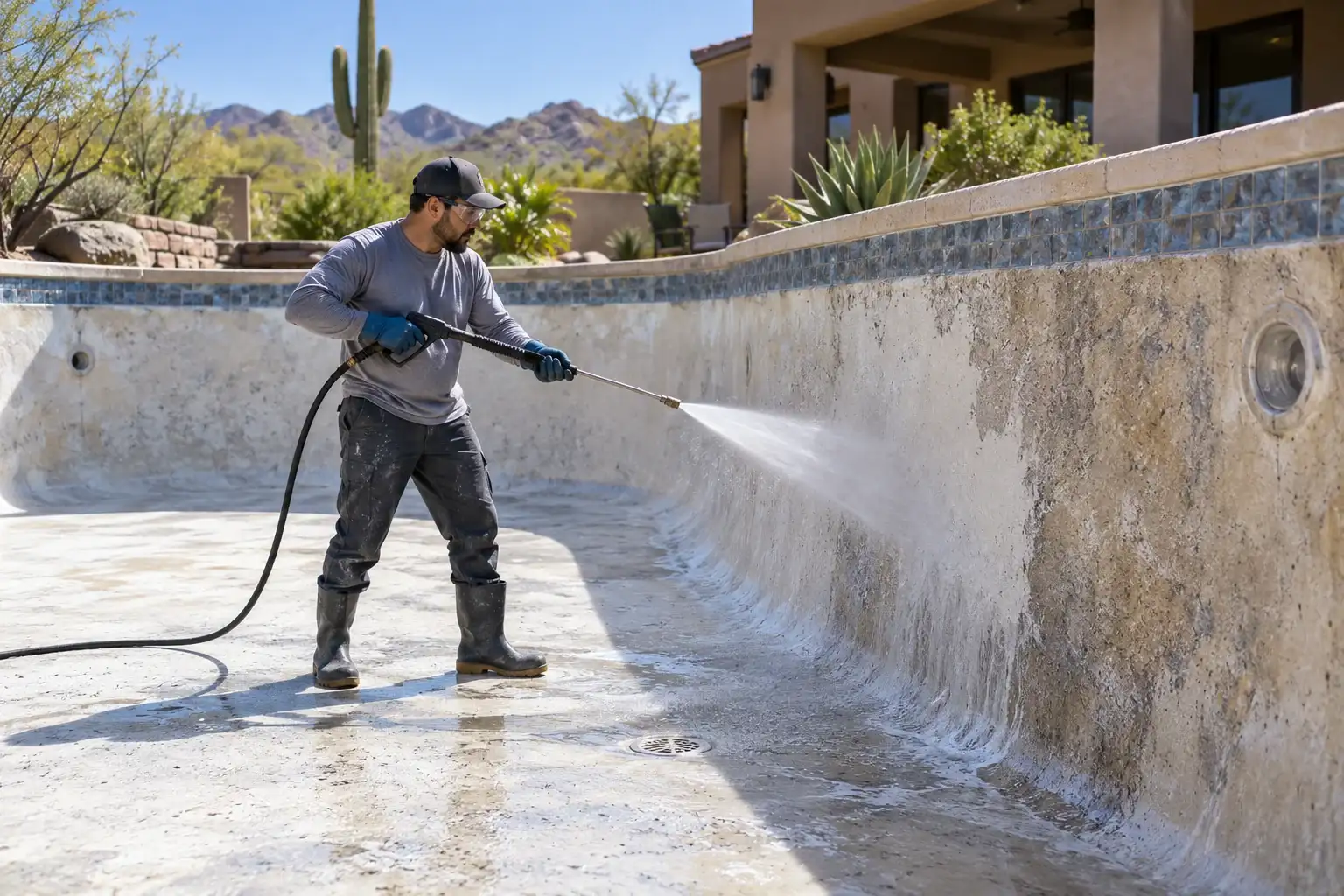
An acid wash drains the pool and wipes or sprays the plaster with diluted muriatic acid. The acid eats the very top layer of cement, the layer holding the scale and the tannin stains, and the crew rinses it away. The plaster underneath comes up whiter because the aged, mineral-soaked surface is gone. What people miss is that the acid eats cement indiscriminately. It removes scale, but it also removes plaster. The surface comes back rougher, because the cement between the sand grains dissolves faster than the grains themselves.
Each wash costs the pool a measurable slice of its skin. On a new-ish pool that slice is nothing. On a 1970s or 1980s original-plaster pool, the skin is already worn down from decades of hard water and sun, and the wash may be the last one it can take.
Good to know
Resurfacing: what it actually is
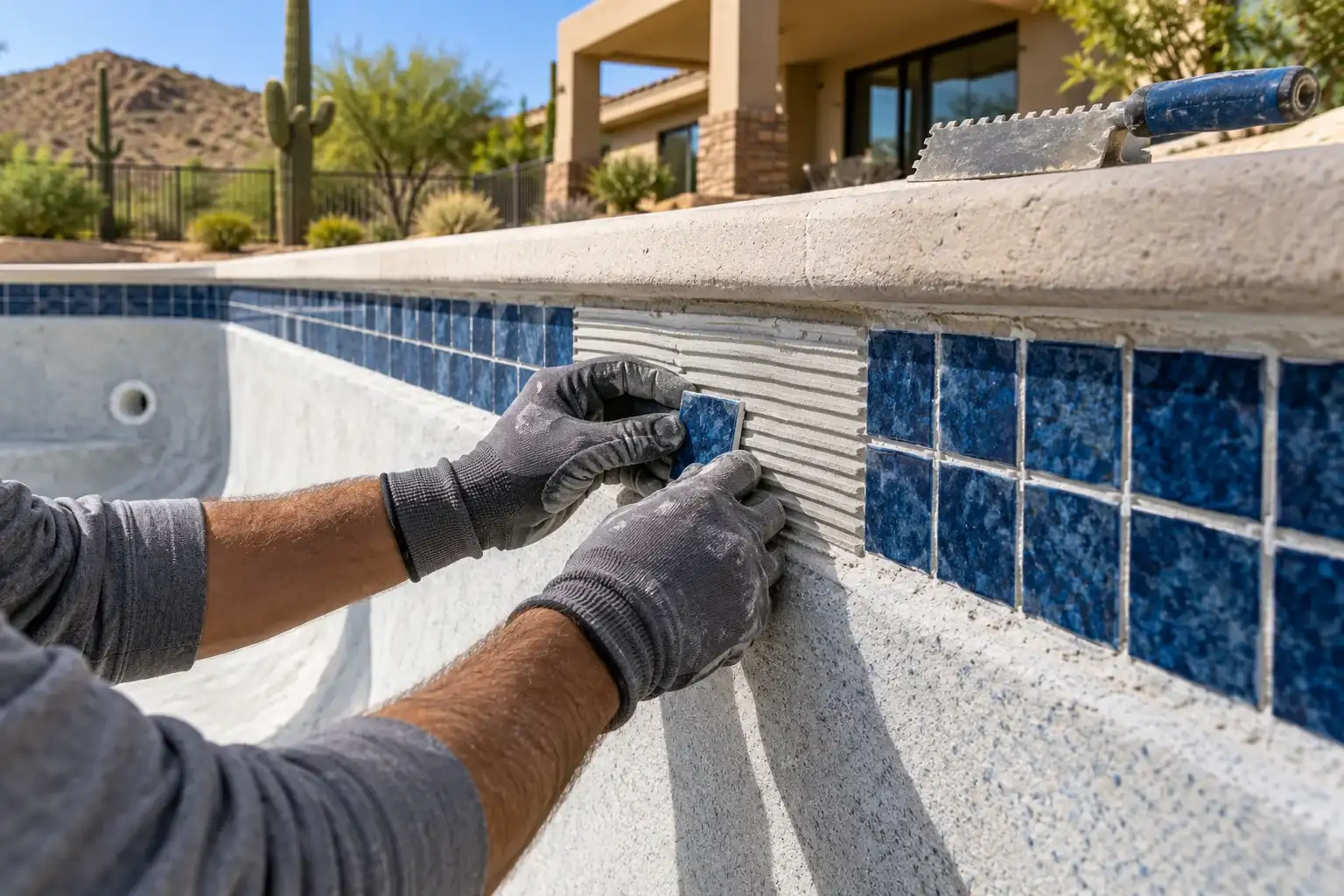
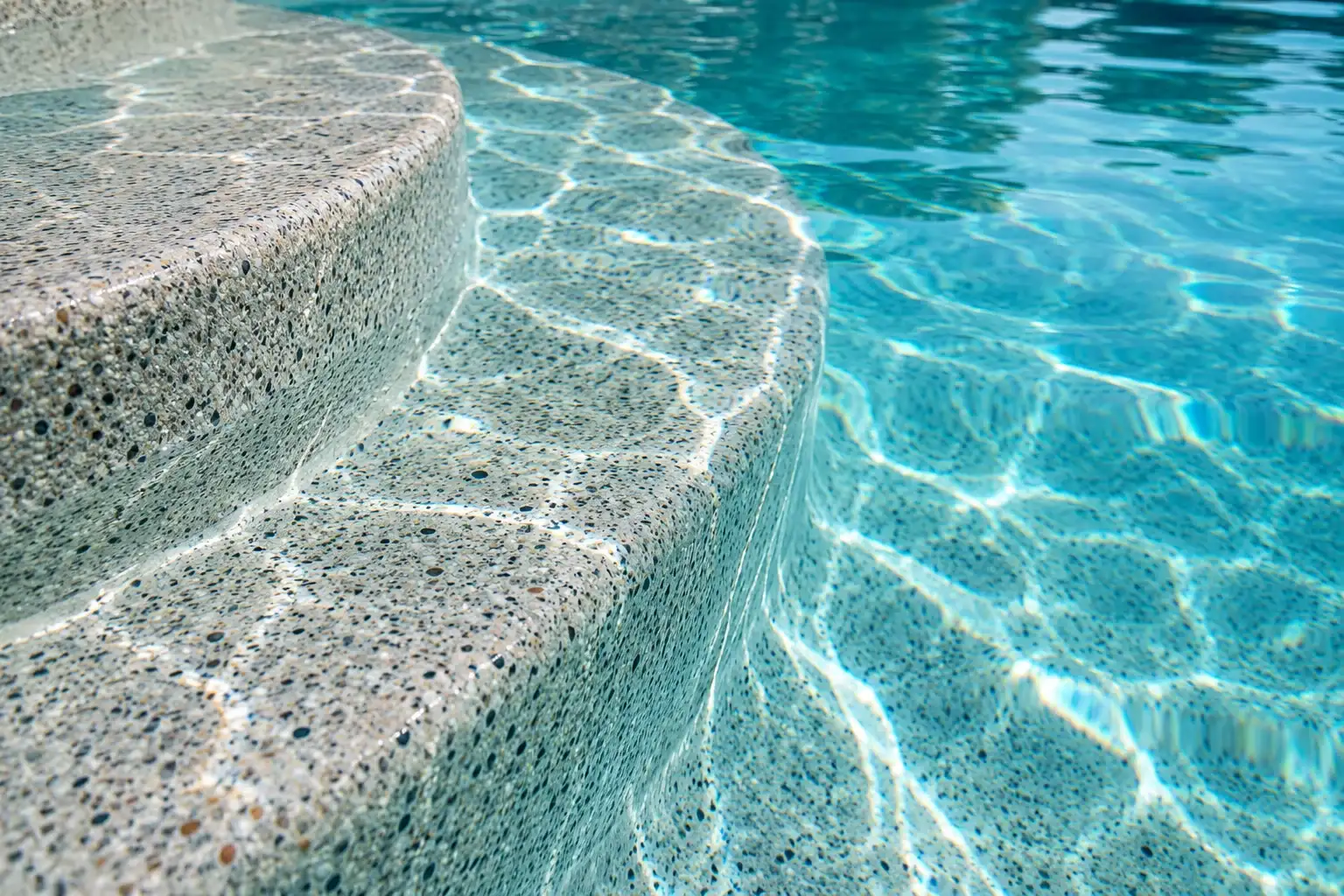
Resurfacing removes the old finish and replaces it with a new one, either plain plaster, quartz, or pebble. The old material comes off down to the shell, the shell gets inspected and prepped, and the new finish goes on in passes with a cure schedule behind it. The point of a resurface is not brightness. It is thickness. A chalky skin that has lost its cement and its smoothness gets replaced with a full, sound layer, and the pool is a pool again instead of a slowly dissolving one.
The trade is the cost and the work. A resurface is a construction job with a drained pool, a chip-out, and a cure window. An acid wash is a day of chemical work. They are not two versions of the same thing, and a pool that needs the big one will not be fixed by the small one.
Signs
Where acid wash fails here
Phoenix hard water is why acid washes keep failing. The scale band at the waterline comes back within a season because the water is still hard, and the wash did nothing to change that. The tree debris load is the second problem. Mesquite and palo verde tannins soak into the plaster and the acid lifts them, but the trees drop again next year and the stains return with them. Then there is the heat. Draining a pool in a Phoenix summer is its own risk: a drained shell can crack in the heat, and monsoon ground water can push up under it. An acid wash is a small job with a real seasonal window, and the season is not July.
Worst case is a wash on plaster that was already thin. The acid opens spots where the shell shows through, and now the pool needs a resurface that could have been planned instead of discovered.
There is also the chemistry that follows the wash. Freshly exposed plaster is open-pored, and the first hard water it meets soaks straight in. The waterline band reforms faster on washed plaster than it ever did on the old surface, because the acid opened the skin up. None of this makes an acid wash a bad tool. It makes it a cleaning tool, and a pool whose skin is already thin is not a cleaning job.
Signs
Where resurfacing fails here
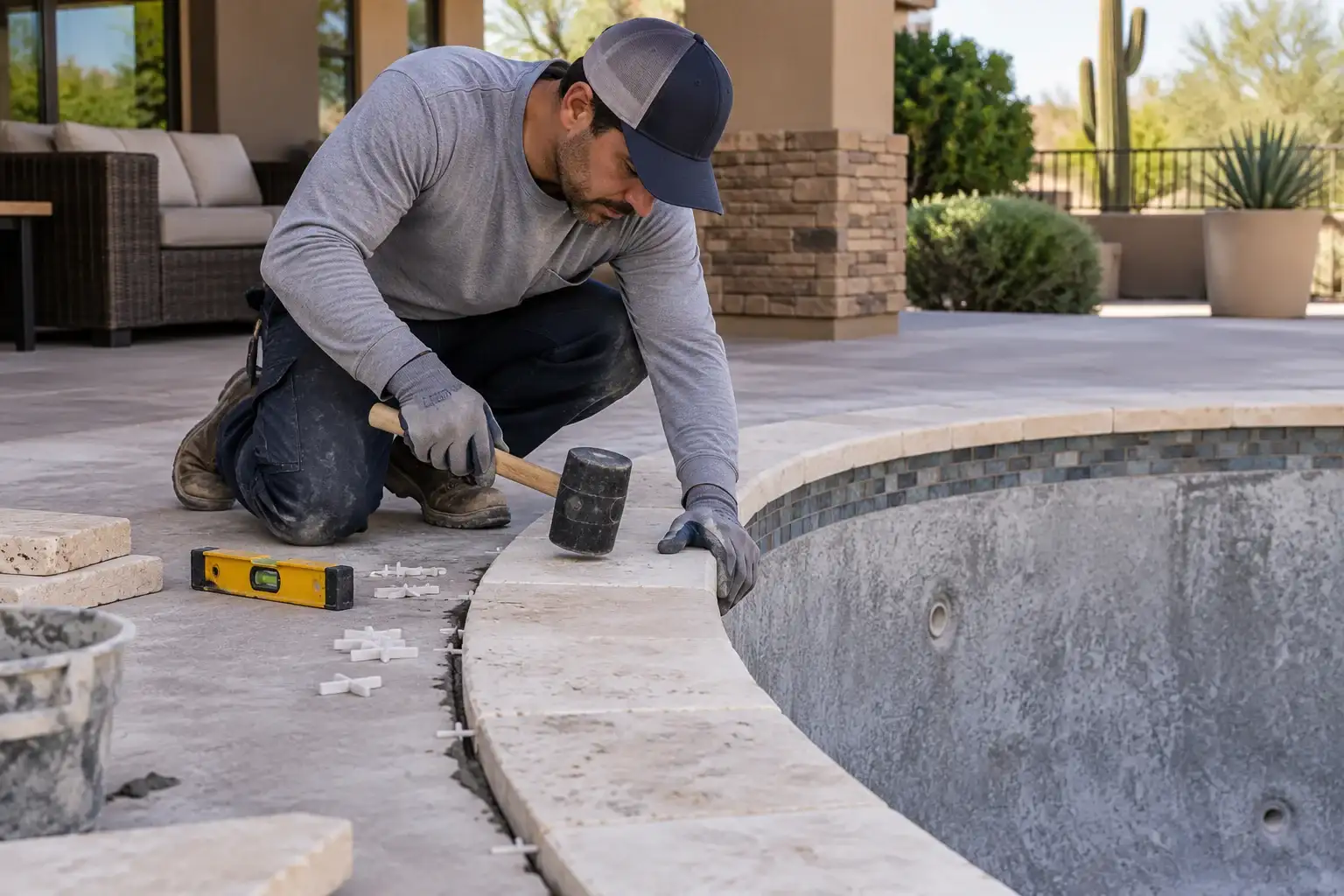
Resurfacing fails here when it is treated as a bigger acid wash. Skipping the chip-out, troweling over old plaster, or rushing the cure in summer heat all produce a finish that blisters or chalks early, and the owner pays twice. It also fails when the waterline tile is ignored. A resurface that goes over loose tile just moves the leak to the new finish. And on a pool that only has mild scale, a full resurface is overkill, which is its own kind of failure: money spent on thickness the pool did not need yet. The honest answer is sometimes the wash, and a straight operator tells you so.
Costs
What it costs and what drives the number
An acid wash is a fraction of a resurface. That is the whole appeal, and it is also the trap when the wash leads to a resurface anyway, because then you paid for both. The wash is priced on footage and how hard the scale is. The resurface is priced on footage, prep depth, and access, with the shell condition moving the number the most. What varies is how much plaster is left, and nobody knows that until the pool is drained and looked at. For the full list of drivers, see the pool resurfacing cost page.
Good to know
What good work looks like in Phoenix
- Telling you which job your pool actually needs, including when the wash is the right call and the resurface is a waste of money.
- Checking how much plaster is left before anyone agrees to an acid wash, because a thin skin and acid do not mix.
- The work gets done properly, with the pool drained in the right season and the chemistry managed afterward.
- You get one recommendation and one number, not an upsell ladder.
6 questions
Acid Wash vs Resurfacing: your questions
Still have a question? Call (747) 243-2089 and say what your pool is doing.
How often can you acid wash a pool?
Less often than people think in Phoenix. Every wash removes plaster, and original 1970s or 1980s plaster is already thin. A pool that needs washes back to back is a pool asking for a resurface.
Will an acid wash remove hard water scale?
Yes, for a while. The wash lifts the scale with the top layer of plaster, but the water is still hard, so the band comes back within a season or two. A wash makes sense when the band is the only problem and the plaster is still thick. When the plaster is chalking too, the wash just postpones the real job and thins the skin that has to carry it.
Does acid wash ruin plaster?
It thins it, which is the same thing over time. The surface also comes back rougher, because acid eats cement faster than the sand grains in the mix.
When should I resurface instead of acid wash?
When the plaster is chalking, rough over large areas, or showing the shell through. The white powder page explains how to read the difference between dirty and dying. The test is the walls, not the floor: rough walls mean the skin is going, and a wash only cleans skin that still exists.
Can acid wash fix white powder on the floor?
No. White powder is chalking, the skin itself failing. A wash brightens it for a moment and then the chalking continues, because the problem is the finish, not the dirt.
Is it safe to drain a Phoenix pool for a wash?
Not in the heat of summer. A drained shell can crack in the heat and monsoon ground water can push up under it. The job belongs in the cooler months.