Service 03 of 04 · Phoenix, AZ
Pool plastering and replastering in Phoenix
Your pool plaster feels rough or looks stained, and you want a clean white surface for less up front? Tell us about your pool, and someone from our team will call you back to plan it.
See price ranges- Pool plastering and replastering
- Priced in writing first
What you get
What you get with a plaster resurface
Plaster is the classic Phoenix pool finish, and a fresh coat changes the whole pool:
- A smooth white or near white surface that reads clean and bright in the water
- Usually the lowest upfront cost of the 3 main finishes
- A familiar process, with the timing laid out in your written plan
- A surface that can be colored or tinted if you want something beyond plain white
- A call back to go over your pool, the finish and the budget
5 steps
5 signs your pool needs plastering or replastering
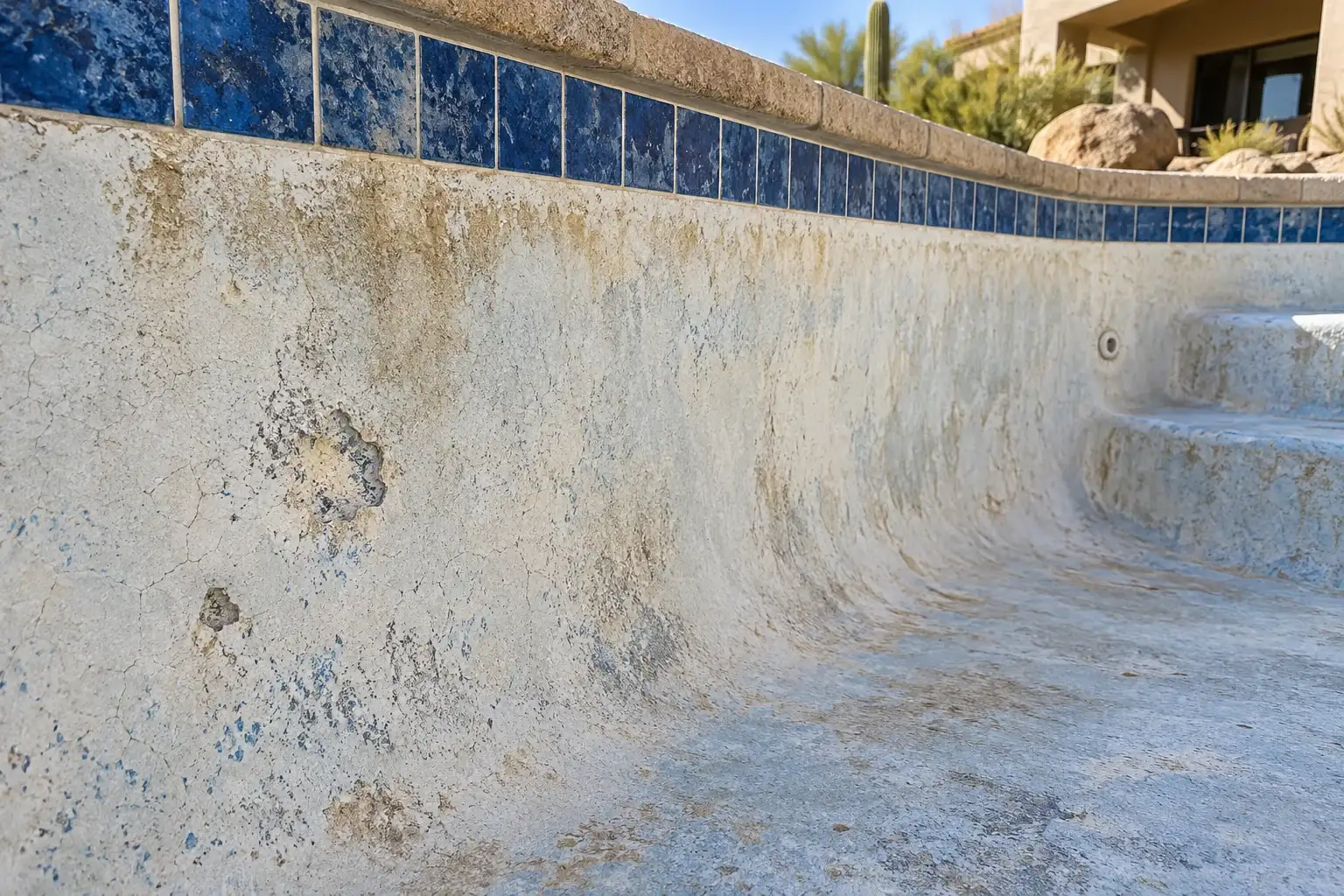
Plaster wears out on a schedule, and Phoenix speeds that schedule up. Watch for these:
The surface feels rough or grainy where it used to feel smooth
White scale and calcium buildup ring the waterline and will not scrub off
Stains from leaves, minerals and pool chemicals have settled into the plaster
Patches of plaster have thinned and the gray shell shows through
Small cracks or hollow spots have appeared where the plaster let go of the shell
A 2026 Arizona pool cost guide puts the working life of plaster here at 10 to 15 years, shorter than in milder climates because of UV and hard water. If you see 2 or more of these, the surface may be telling you it is time.
3 steps
How the process works
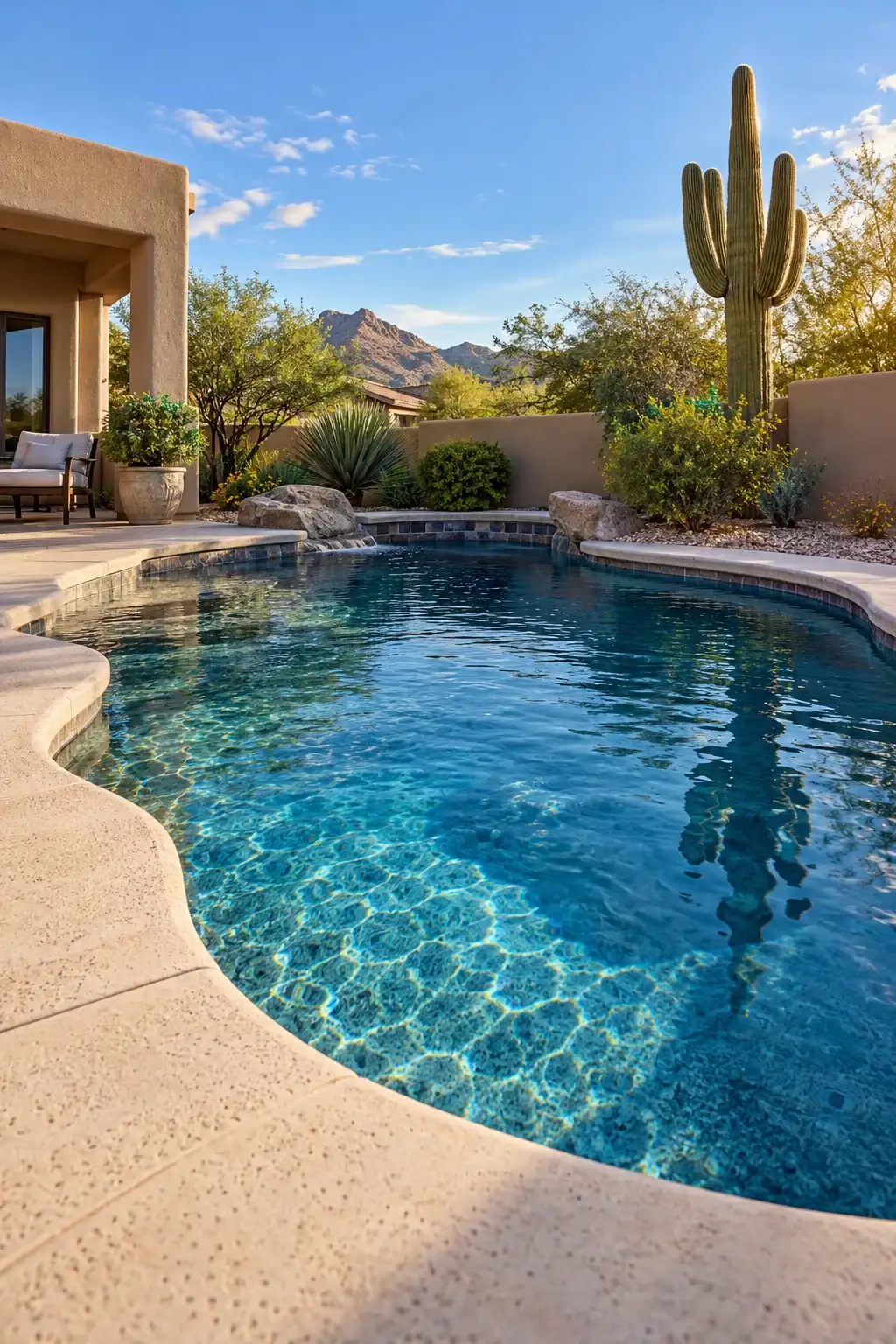
Tell us about your pool. Size, current finish if you know it, and what is wrong with it.
We call you back. Someone goes over whether a fresh plaster coat or a full replaster is right, plus the budget and timing.
You get a plan and a price in writing before anything is scheduled or any work starts.
Costs
What plastering and replastering cost in Phoenix
A 2026 Arizona pool cost guide puts standard plaster at $6,000 to $10,000 per pool, with a life of 10 to 15 years. A national 2026 cost guide puts replastering at about $5,500 per 1,000 sq ft and labor to refinish a pool at $45 to $65 per hour. Draining the pool runs about $175 to $225, cleaning about $250, and refilling about $55 per 5,000 gallons.
Replastering is the same job as plastering, just applied over a surface that has already had plaster once. The difference is prep: a badly worn or chipped out shell needs more work before the new coat can take. For context, the 2026 national average for pool resurfacing is $11,000, with most homeowners paying $6,000 to $15,000, and a national size table runs from about $320 for a 6 by 8 ft pool up to $5,200 for a 20 by 40 ft pool. For the full cost picture by size and finish, read what pool resurfacing costs in Phoenix, or run the pool cost estimator.
Plaster
Why plaster wears out faster in Phoenix
City of Phoenix tap water is hard, measured at 158 to 344 ppm in the city's 2024 water quality report. That calcium can etch and scale a plaster surface, and paired with year round UV it can wear the finish down faster than the same plaster would in a milder climate. A national 2026 cost guide gives plaster about 10 years and says its life can be affected by how well the water's chemical balance is kept.
Monsoon season, June 15 through September 30, can add dust and debris that settle on the surface. Regular brushing helps, but over the years the surface can still lose its smooth finish. Concrete pools are generally resurfaced on a roughly 10 year cycle, which matches the short end of plaster's 10 to 15 year life in this climate. That is the trade of plaster: it usually costs the least now and may need to be redone sooner, which can suit a short stay in the home better than a long one.
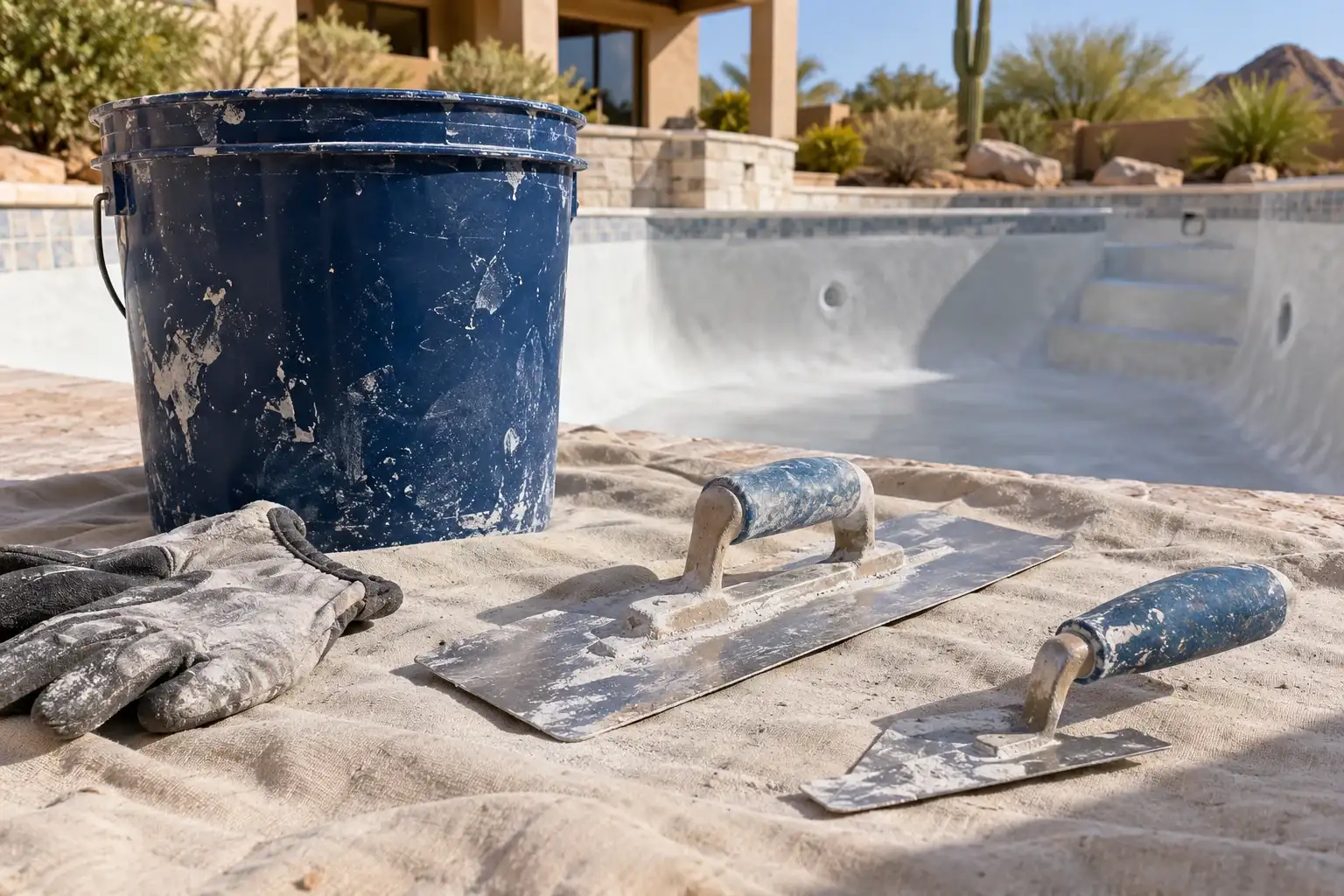
Pebble finish
Plaster versus quartz and pebble
Plaster is usually the lowest cost way to get a fresh surface, at $6,000 to $10,000, but it usually lasts the shortest, 10 to 15 years. Quartz usually costs more and can add hardness and color, and a pebble style finish runs $9,000 to $16,000 and lasts 15 to 25 years. If you plan to stay in the home a long time, the higher cost finishes can mean fewer resurfaces. If you want the lowest upfront number, plaster is the entry point. See the full side by side in plaster, quartz or pebble for a Phoenix pool.
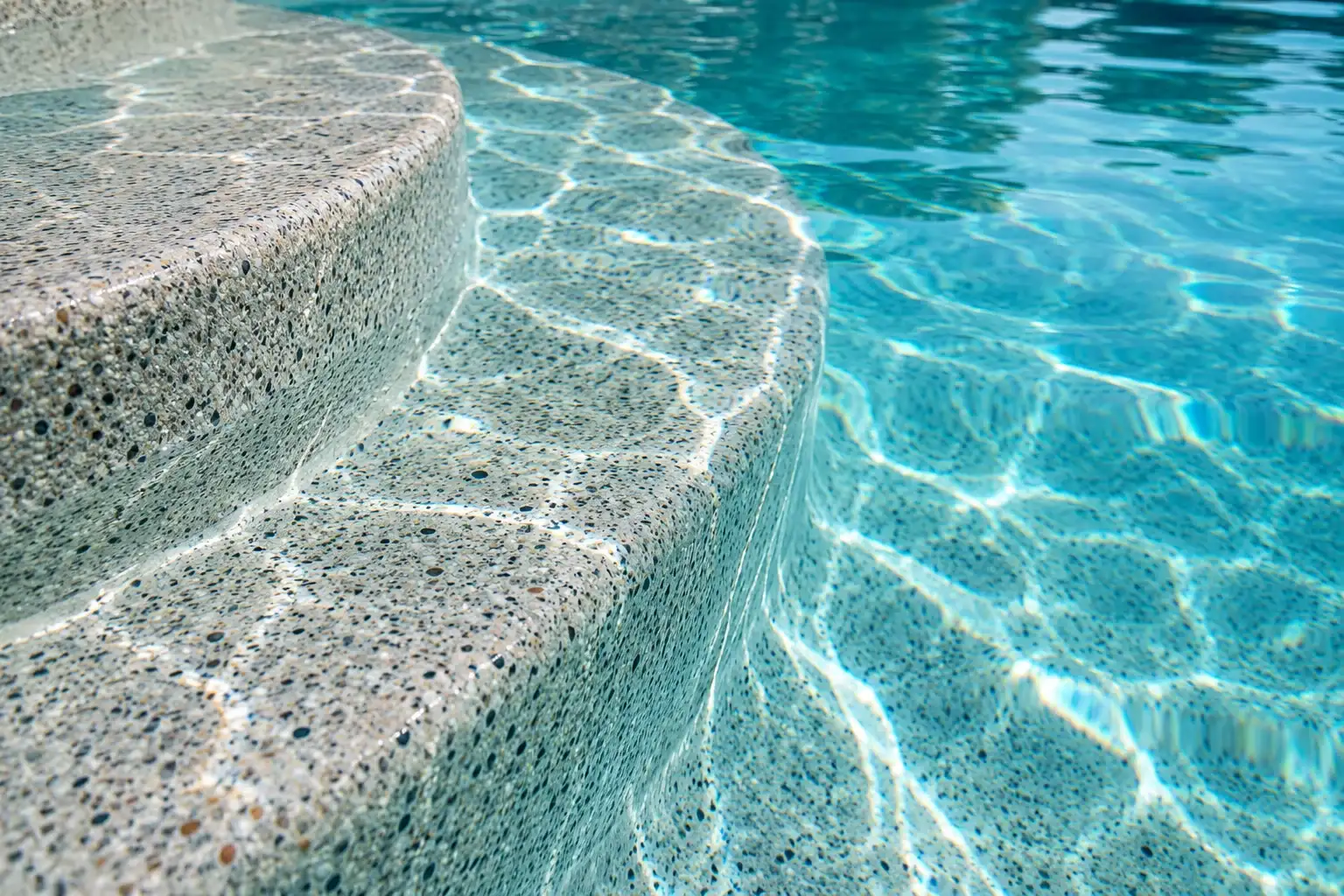
Plaster
Can plaster be colored?
Yes. White is the default and the brightest, but plaster can be tinted in soft grays, blues and earth tones, which can add a modest amount to the cost. The color sits in the plaster rather than on it, though it may fade and etch in Phoenix hard water faster than a quartz or pebble color would. If color that holds is the goal, quartz may be the better fit. Tell us the look you want, and someone from our team will call you back about your project.
How it works
What the job involves
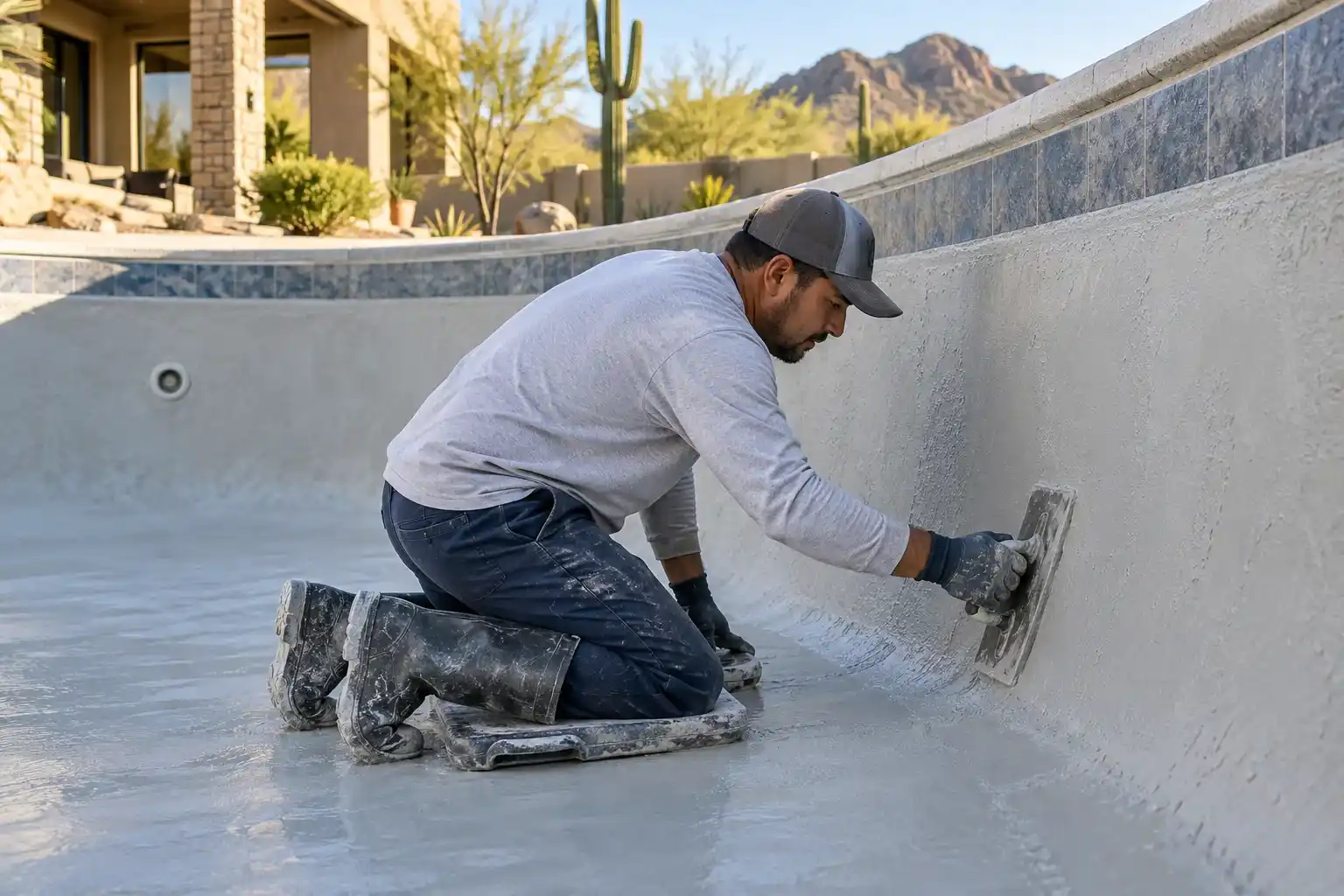
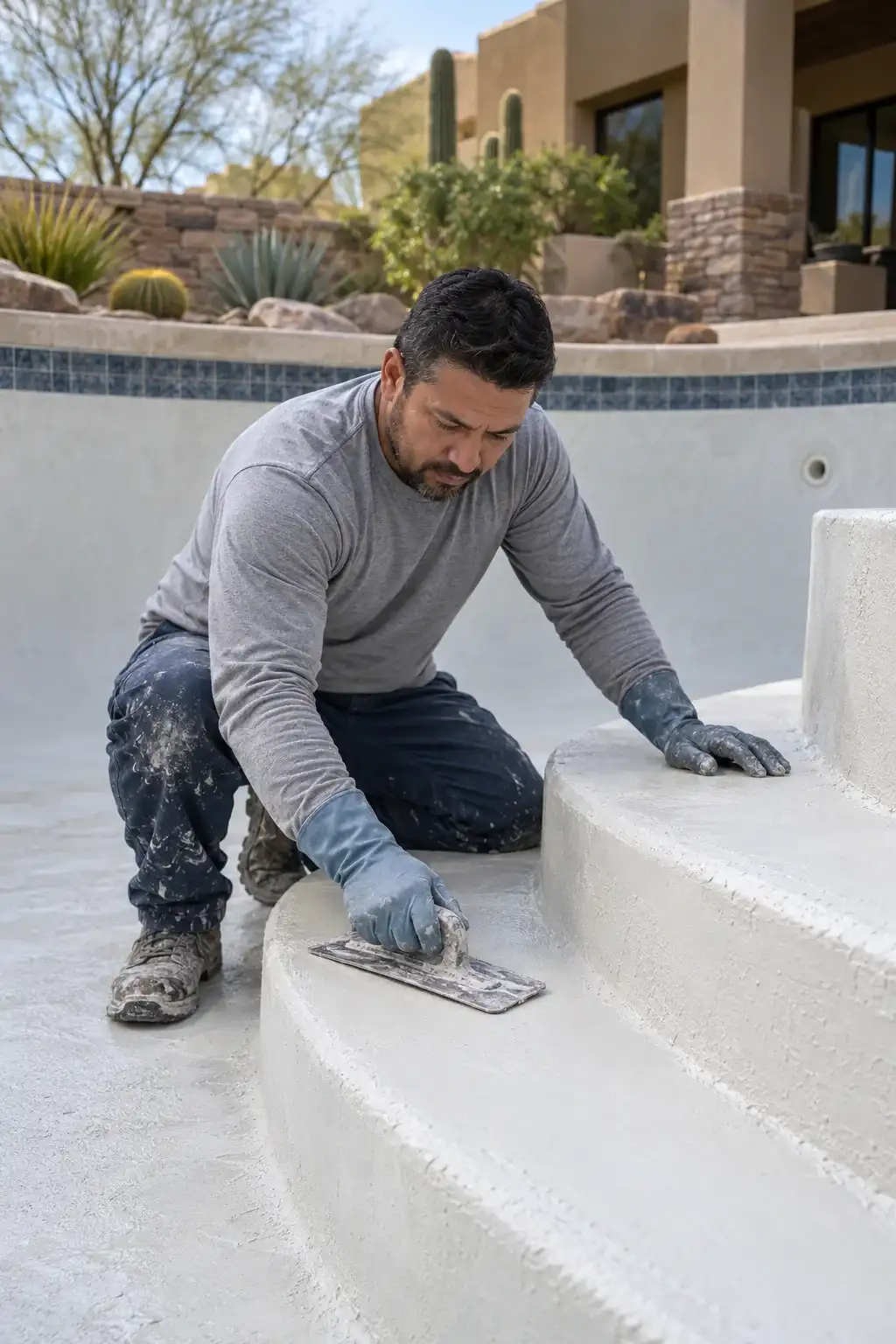
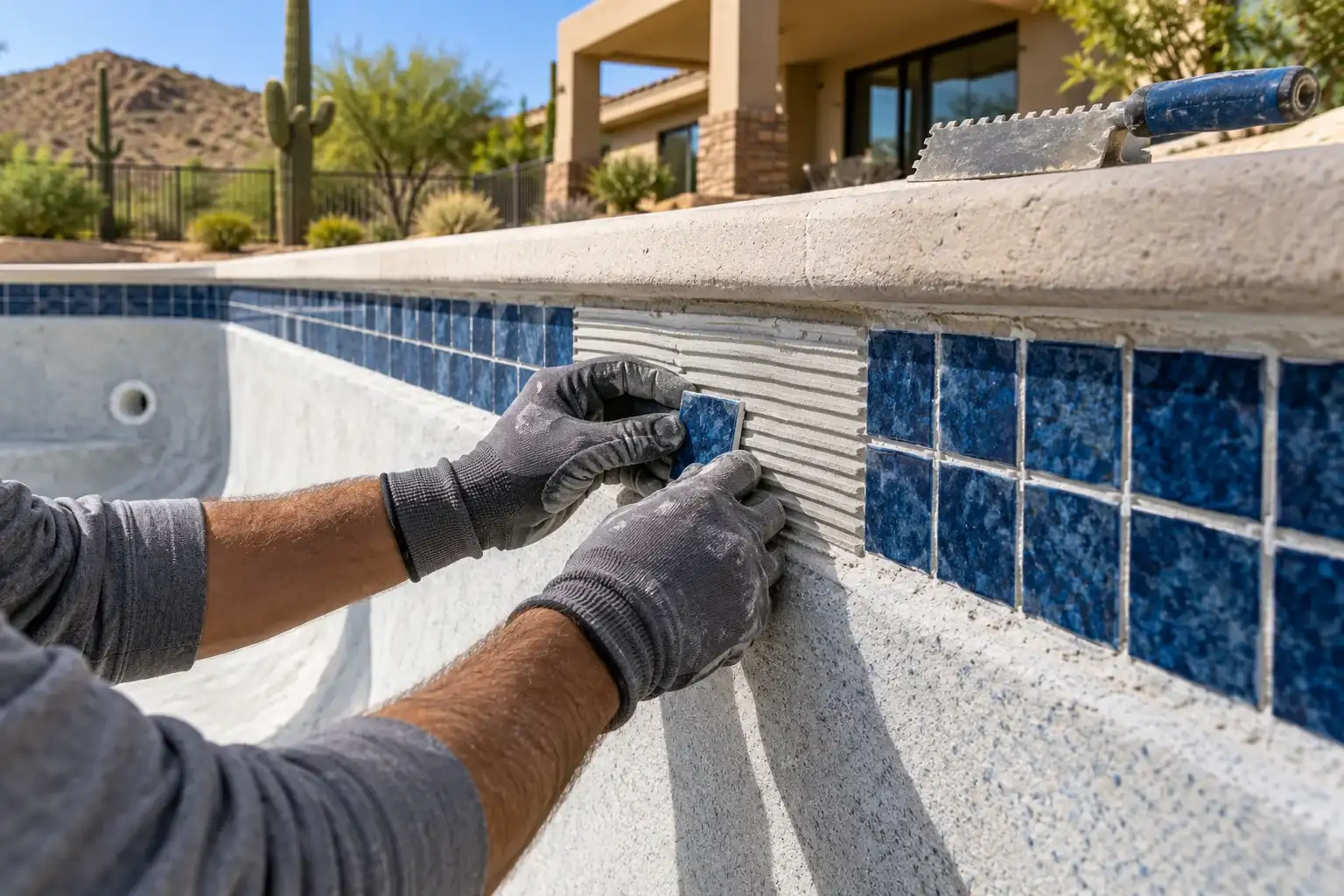
A plaster job is measured in days once the pool is drained. The old surface is prepped, the new plaster is mixed and applied to the shell with a trowel, and the pool is refilled and the water balanced. Replastering adds whatever prep the worn shell needs before the new coat goes on. Your written plan lays out the full sequence, the drain, clean and refill steps, and the timing before anything starts. Draining runs about $175 to $225, cleaning about $250, and refilling about $55 per 5,000 gallons, so the prep and water costs are part of the price.
6 questions
Questions people ask
Still have a question? Call (747) 243-2089 and say what your pool is doing.
What is the difference between plastering and replastering?
Nothing in the work itself. Plastering is the first finish on a new shell, and replastering is the same coat applied over a worn one. Replastering just adds prep for the old surface.
How long does plaster last in Phoenix?
About 10 to 15 years in Phoenix, according to a 2026 Arizona pool cost guide. A national 2026 cost guide puts plaster at about 10 years and says water chemistry can affect how long it lasts.
Is plaster the lowest cost resurface?
Usually. At $6,000 to $10,000 per pool it is generally the lowest cost of the 3 main finishes, with quartz usually priced above it and a pebble style finish at $9,000 to $16,000.
Can I go from plaster to quartz or pebble?
Yes. When the plaster is worn out, you can choose any of the three finishes for the replacement. A worn plaster pool is a natural moment to upgrade.
How do I know if I need a full replaster or a lighter fix?
If the surface is rough, stained or showing the shell, it likely needs a new surface rather than a light fix. Send the form, and someone from our team will call you back about your project.
Does replastering fix stains and scale?
Often. When the old surface is chipped out in prep, the stains set into it are removed with it instead of being covered by the new coat.