Service 02 of 04 · Phoenix, AZ
Quartz pool resurfacing in Phoenix, AZ
Your plaster looks stained and worn, and you want more color and texture without the full pebble style price? Tell us about your pool, and someone from our team will call you back to plan it.
See price ranges- Quartz pool resurfacing
- Priced in writing first
What you get
What you get with a quartz finish
A quartz pool finish for a Phoenix pool mixes colored quartz crystals into the plaster, and the result changes what you get underfoot and in the water:
- A surface that can be harder than plain plaster, with a soft sparkle from the quartz crystals
- A finish that can resist staining and etching better than white plaster in hard Phoenix water
- Color options that run well past white, from blues and grays to tan and teal
- A mid range price point that usually slots between plaster and a pebble style finish
- A call back to go over the quartz colors, the budget and the timing for your pool
4 steps
4 signs your pool is ready for a quartz resurface
The signs are the same as any worn pool, and quartz is one finish to consider once you see them:
The plaster has thinned and the gray shell shows through in patches
The surface feels rough or scratchy on bare feet
Stains, scale and etching have dulled the waterline and floor
The current surface has passed 10 to 15 years in Phoenix sun and hard water
Quartz can be a step up when you want color and a longer expected life but are not ready to pay for a full pebble style finish.
3 steps
How the process works
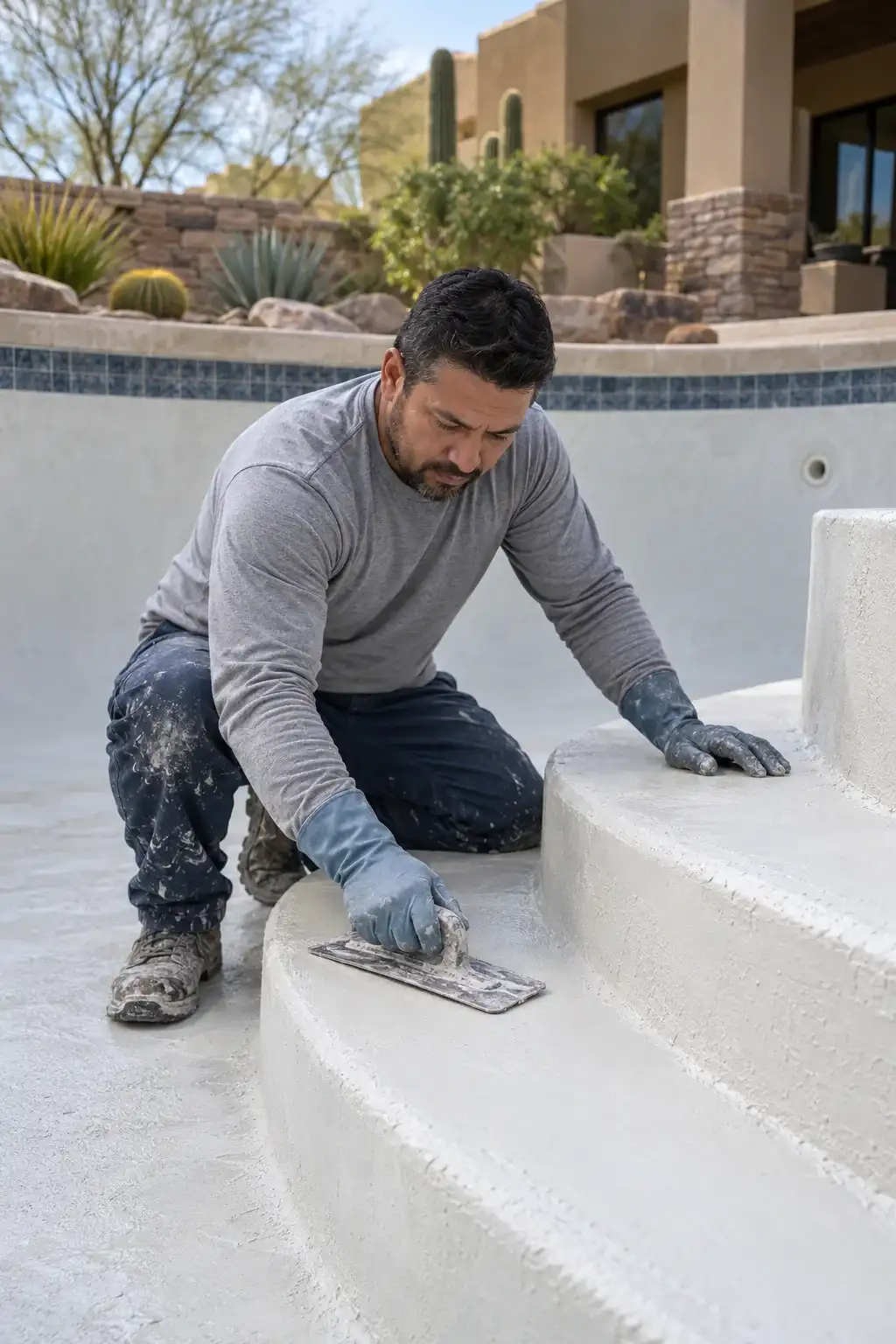
Tell us about your pool. Size, current finish if you know it, and what is wrong with it.
We call you back. Someone goes over the quartz color options, the rough budget and the timing with you.
You get a plan and a price in writing before anything is scheduled or any work starts.
Costs
What a quartz resurface costs in Phoenix
Quartz usually sits between the other 2 finishes on cost. A 2026 Arizona pool cost guide puts plaster at $6,000 to $10,000 per pool and a pebble style finish at $9,000 to $16,000, so a quartz finish generally lands between those bands and moves with the size of your pool. A national 2026 cost guide puts labor to refinish a pool at $45 to $65 per hour, draining at about $175 to $225, cleaning at about $250, and refilling at about $55 per 5,000 gallons.
For context, the 2026 national average for pool resurfacing is $11,000, with most homeowners paying $6,000 to $15,000, and a national size table runs from about $320 for a 6 by 8 ft pool up to $5,200 for a 20 by 40 ft pool.
See the full cost picture in what pool resurfacing costs in Phoenix, or run the pool cost estimator for a range around your pool.
What you get
How a quartz finish holds up in Phoenix
City of Phoenix tap water is hard, measured at 158 to 344 ppm in the city's 2024 water quality report, and that calcium can etch and scale a soft plaster surface over time. The quartz crystals in a quartz finish are harder than the cement around them, so the surface can resist that wear better and may keep its color longer than plain white plaster.
Monsoon season, June 15 through September 30, can add dust and debris that settle into the surface. A colored quartz finish can hide that better than white. Concrete pools are generally resurfaced on a roughly 10 year cycle, and a quartz finish is generally expected to last longer than plain plaster.
Pebble finish
Quartz versus plaster and pebble
Plaster is the low cost entry at $6,000 to $10,000 with a 10 to 15 year life. Quartz can step up the hardness, color and stain resistance for a mid range price. Pebble style adds the longest life, 15 to 25 years, and the most texture, at $9,000 to $16,000. If you want color and a surface that is expected to outlast plaster without the extra texture or cost of pebble, quartz is the middle ground. That middle position holds on feel too: it is troweled smooth like plaster, and it is generally priced below pebble style while expected to outlast plaster. See the full comparison in plaster, quartz or pebble for a Phoenix pool.
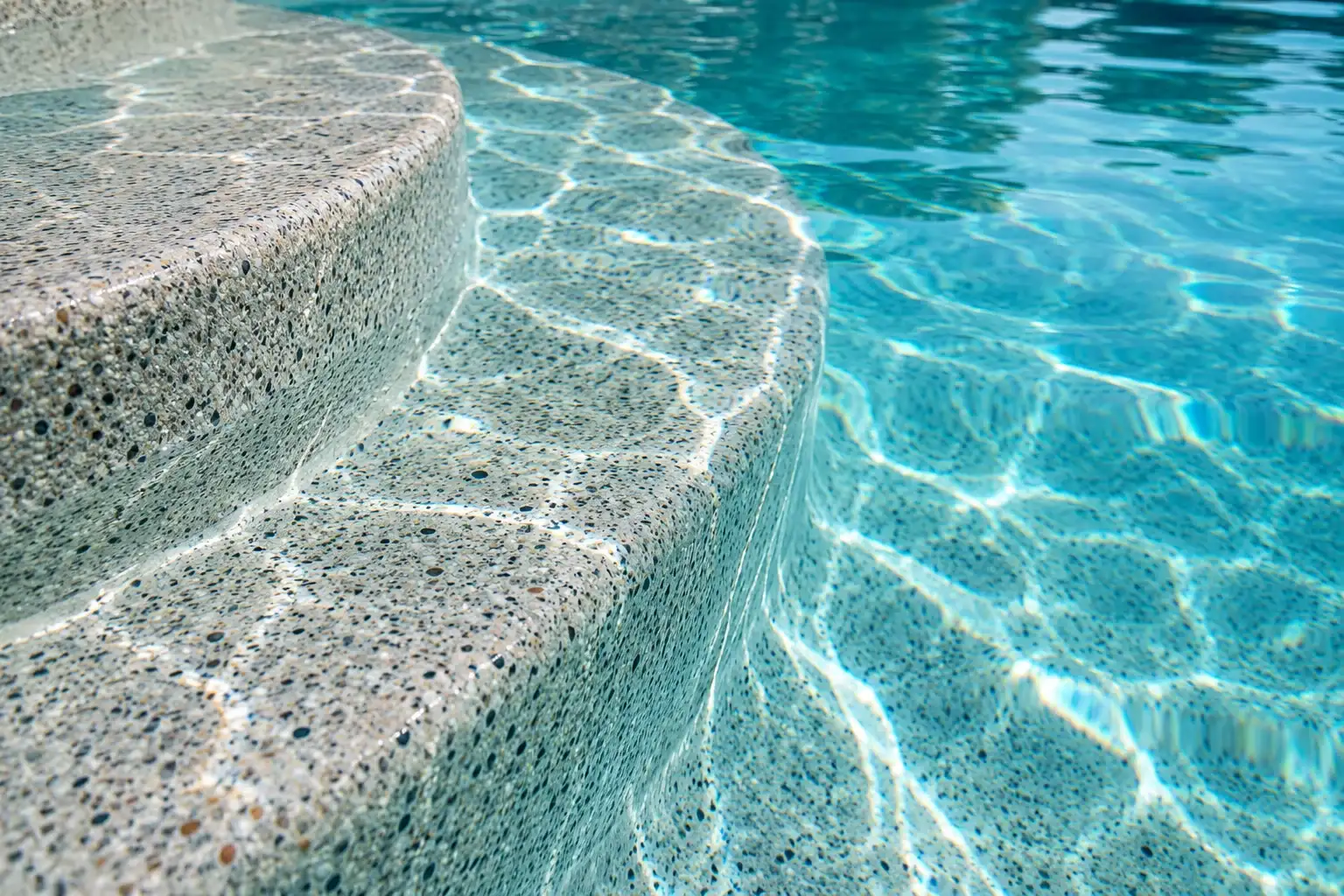
Quartz finish
Choosing a quartz color
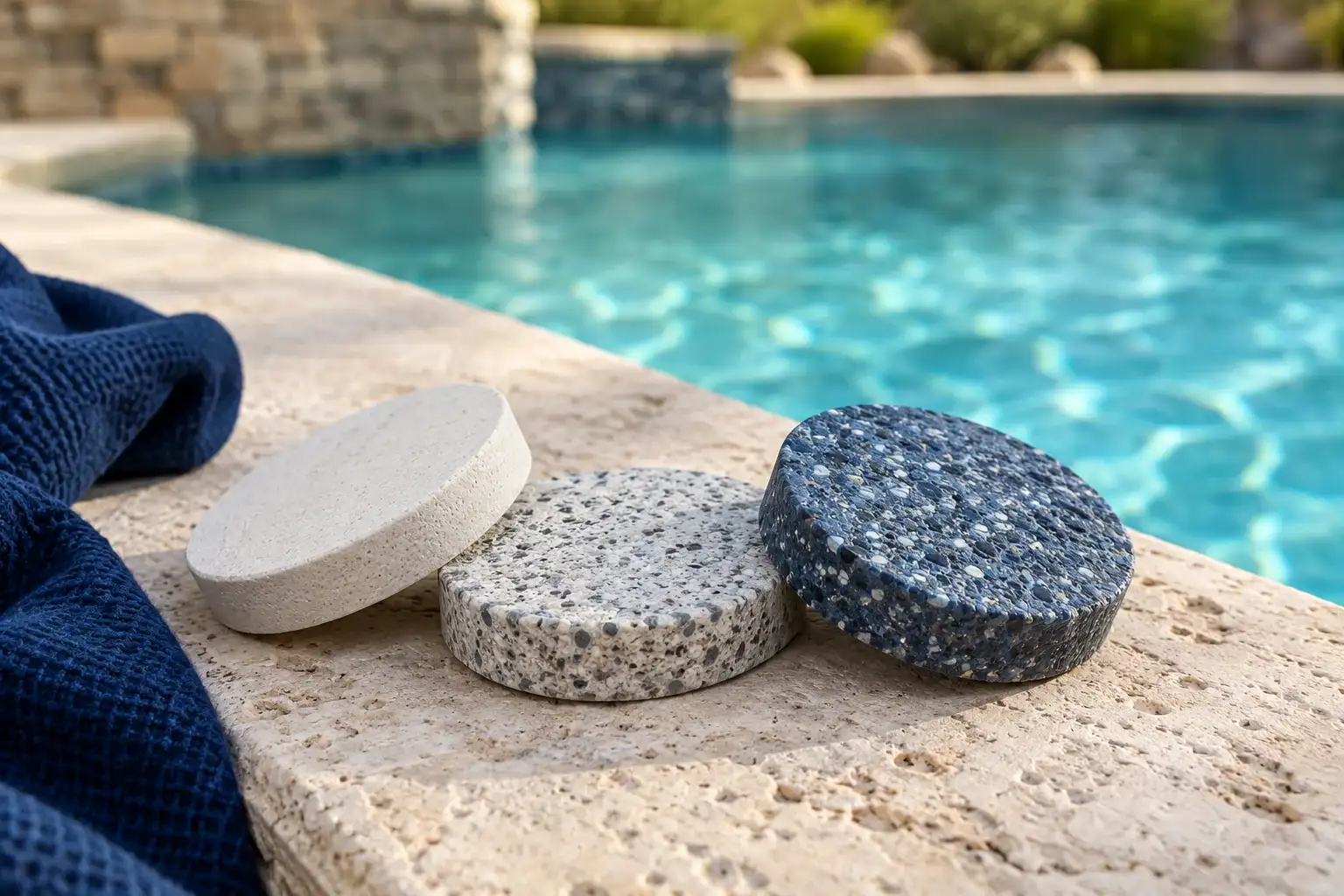
Quartz finishes come in far more than white. Blues, grays, tans, teals and greens are all common, and the color is built into the crystals rather than painted on. Lighter tones can keep the water cooler and the pool brighter, while mid and darker tones can hide scale and give the water more depth. Tell us the look you want, and someone from our team will call you back about your project. Because the crystals are mixed through the full depth of the finish, the color can read evenly across the floor, walls and steps.
How it works
What the job involves
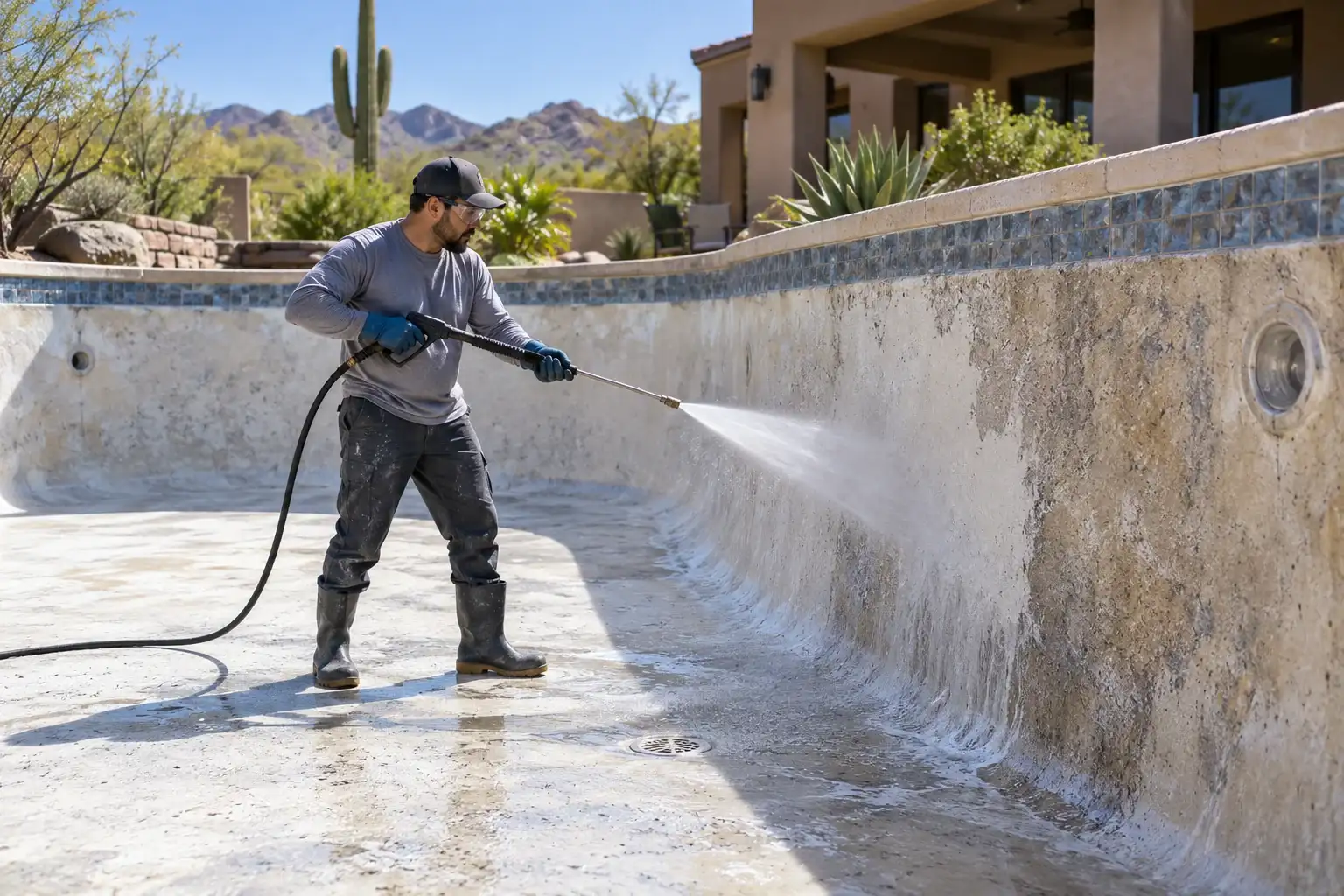
The pool is drained, the old surface is prepped so the new layer can take, the quartz and plaster mix is applied to the shell and troweled to a smooth finish, and the pool is refilled and balanced. Because quartz is troweled like plaster, the process follows the same steps, but the result can be harder and more colorful. The crystals are mixed into the plaster before it is applied, so the color and the hardness run all the way through the surface rather than sitting on top. Your written plan lays out the full sequence and timing before anything is scheduled.
Quartz finish
Who quartz is the right pick for
Quartz is a finish for the Phoenix owner who wants color and a surface that is expected to outlast plaster without paying for a full pebble style finish. It can suit pools that get a lot of use, because a harder surface can hold up to feet, toys and sun better than plain plaster. If the current white plaster has worn out and you want the next surface to look better and last longer, quartz is a natural step up. It is also a finish to consider when you want a specific color, since the tone lives in the crystals rather than in a tint. See the plaster, quartz or pebble comparison for how it stacks against the other two.
6 questions
Questions people ask
Still have a question? Call (747) 243-2089 and say what your pool is doing.
Is quartz better than plaster?
For color and expected life it often is. Quartz can resist staining and etching better than white plaster and may hold its color longer, usually for a price between plaster and pebble style.
Does quartz cost more than plaster?
Usually. It generally lands between plaster at $6,000 to $10,000 and a pebble style finish at $9,000 to $16,000, and the final number moves with your pool's size.
What colors can I get?
Blues, grays, tans, teals and greens are all common, along with near white. The color is in the crystals, so it holds longer than a painted surface.
How long will a quartz finish last?
It is generally expected to outlast plaster, which runs 10 to 15 years in Phoenix, and to fall short of a pebble style finish's 15 to 25 years.
How does quartz compare to plaster in feel?
Quartz is troweled smooth like plaster, so the feel underfoot stays smooth, but the surface can be harder and can resist staining and etching better in Phoenix water.
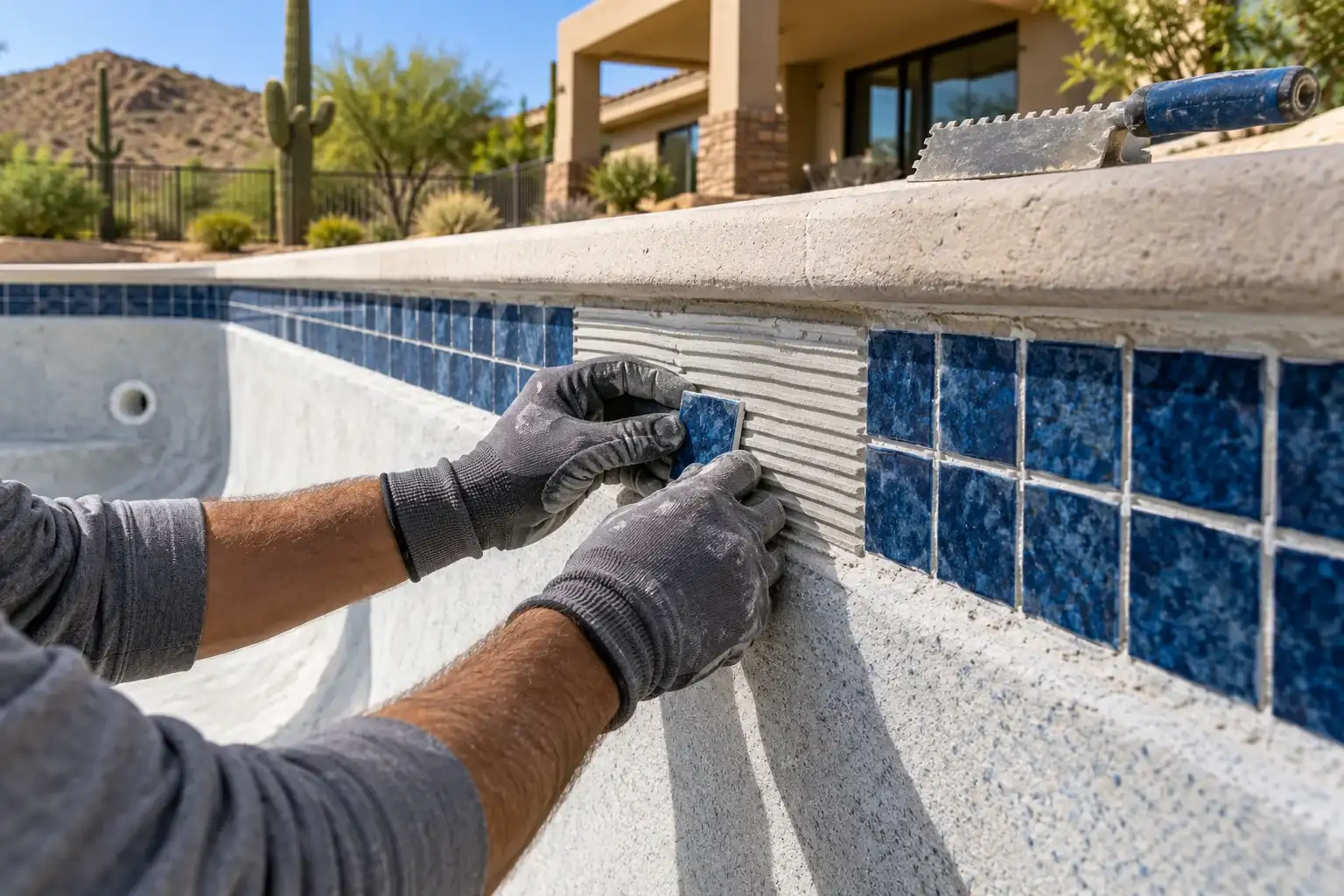
Can quartz be paired with new tile?
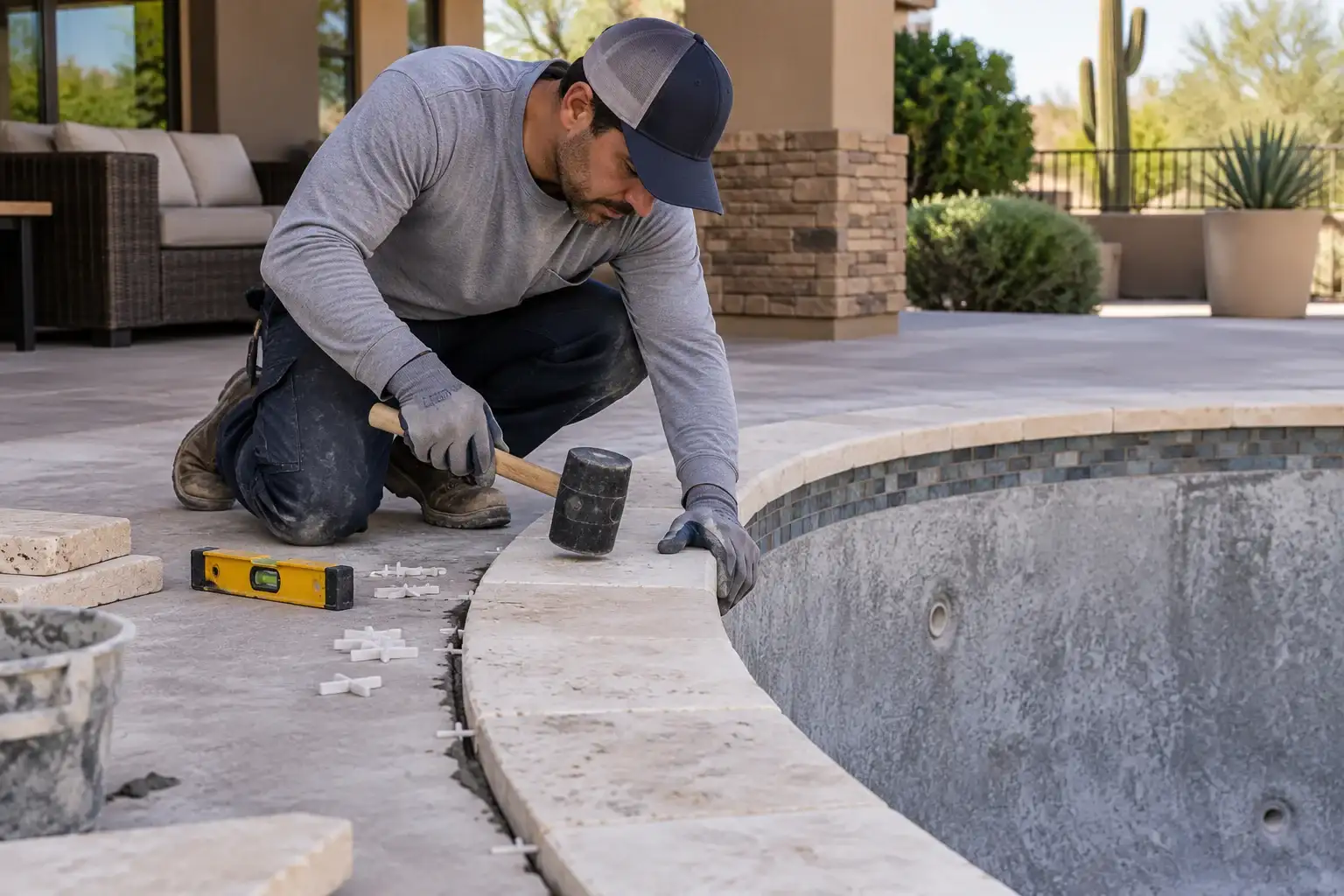
Yes. A resurface is the natural time to replace waterline tile too, since the pool is already drained. See pool remodeling in Phoenix for how tile, coping and steps fold into the same project.