Guide · Phoenix, Arizona
The Phoenix pool resurfacing guide
Pool resurfacing in Phoenix replaces the worn interior finish of your pool with new plaster, quartz or a pebble style surface. A national 2026 cost guide names pool size, the finish and the location as the main drivers of the price. For a quick range, use the cost estimator.
See price ranges- Plaster
- Quartz
- Pebble style
Arizona water and sun
Why Phoenix pools can wear faster than pools in milder climates
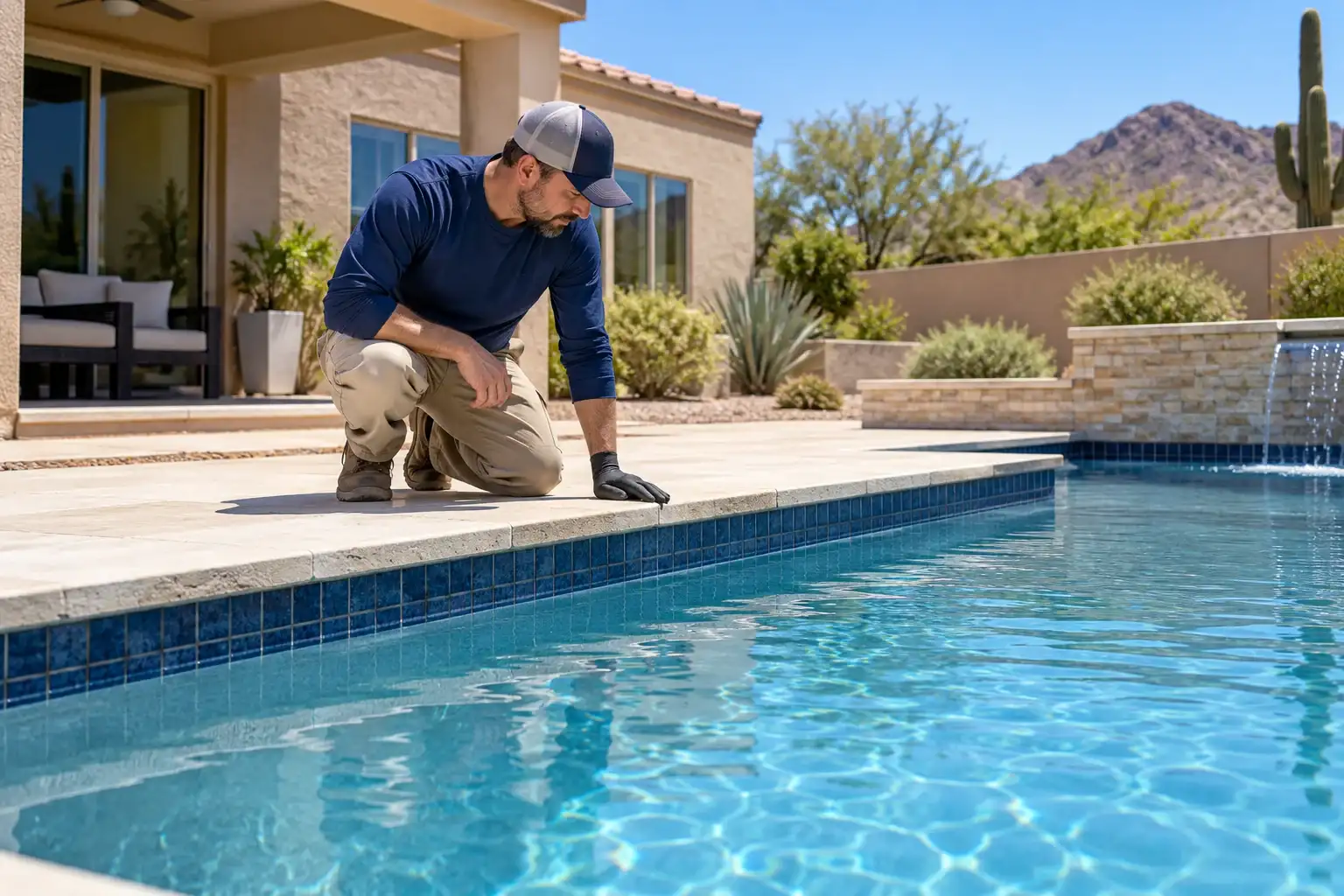
Two things stack on top of each other here: year round sun exposure and hard water. The City of Phoenix 2024 Water Quality Report (opens in a new tab) measured total hardness between 158 and 344 ppm, or 9.2 to 20.1 grains per gallon, across the reporting year. Hard water can leave mineral deposits that roughen and discolor a pool surface over time. A 2026 Arizona pool cost guide says intense UV and hard water are hard on pool surfaces here, puts standard plaster at a 10 to 15 year working life and says pebble style finishes can last 15 to 25 years.
Arizona's monsoon season officially runs June 15 through September 30, per the National Weather Service (opens in a new tab). Storms during that window can complicate a resurfacing job while the pool is drained.
Good to know
Finish types, side by side
Standard plaster
Usually the lowest upfront cost of the 3 main finishes, plain white or lightly tinted. A 2026 Arizona pool cost guide puts a plaster resurface at $6,000 to $10,000 per pool, with a typical working life of 10 to 15 years here before hard water and sun wear it back down to rough and stained. A pool with an older plaster finish may be reaching the point where a second or third resurface makes sense. A fresh plaster coat can be tinted light blue, gray or white, and the surface feels smoother underfoot than pebble style, which some swimmers prefer for laps or for small children who spend time standing on the pool floor.
Quartz aggregate
Quartz usually sits between plaster and pebble style on both cost and expected life, with more color and texture options than plain plaster. Quartz aggregate mixes small mineral particles into the plaster base, which adds color depth and a slightly textured feel without the fuller roughness of a pebble style surface. It is a common middle choice for owners who want more visual interest than white plaster but are not ready for the higher cost of pebble style.
Pebble style
The most textured and generally longest-lasting option, denser aggregate that can resist staining better than plaster. A 2026 Arizona pool cost guide puts pebble style resurfacing at $9,000 to $16,000 per pool, often lasting 15 to 25 years. Over a 20-year span, 2 plaster resurfaces at $6,000 to $10,000 each add up to $12,000 to $20,000, against $9,000 to $16,000 for 1 pebble style job, which is part of why some long-term owners choose it despite the higher day-one price. The surface has more texture underfoot than plaster or quartz, which some owners like for grip around steps and benches and others find less comfortable for extended barefoot time; some owners switch from plaster to pebble style because they do not want to repeat a resurface within 10 to 15 years.
See the full plaster vs quartz vs pebble comparison for a side by side breakdown, or the dedicated pages for pebble, quartz and plaster and replastering.
Costs
What a resurfacing project actually costs
A national 2026 cost guide puts the average resurfacing job at $11,000, with most homeowners paying $6,000 to $15,000. The price is made up of:
- Finish, which sets much of the price (the same cost guide lists replastering at about $5,500 per 1,000 sq ft, resurfacing with aggregate at about $6,500 and refinishing with tile at about $30,000 per 1,000 sq ft).
- Labor, $45 to $65 per hour, depending on where you live and how complex the job is.
- Drain, clean and refill, roughly $175 to $225 to drain, about $250 for cleaning and about $55 per 5,000 gallons to refill.
- Prep work, light prep for a standard resurface, or a full chip-out (removing the old finish down to the shell) for a pool with deeper damage, which adds to both material and labor.
A pool remodel in Phoenix averages $9,331, and most homeowners pay $5,732 to $12,976, per published 2026 cost data for the Phoenix metro. A remodel can include upgrades such as resurfacing, deck work and water features. See the full cost breakdown or run your own pool through the estimator.
Signs
Light prep or a full chip-out
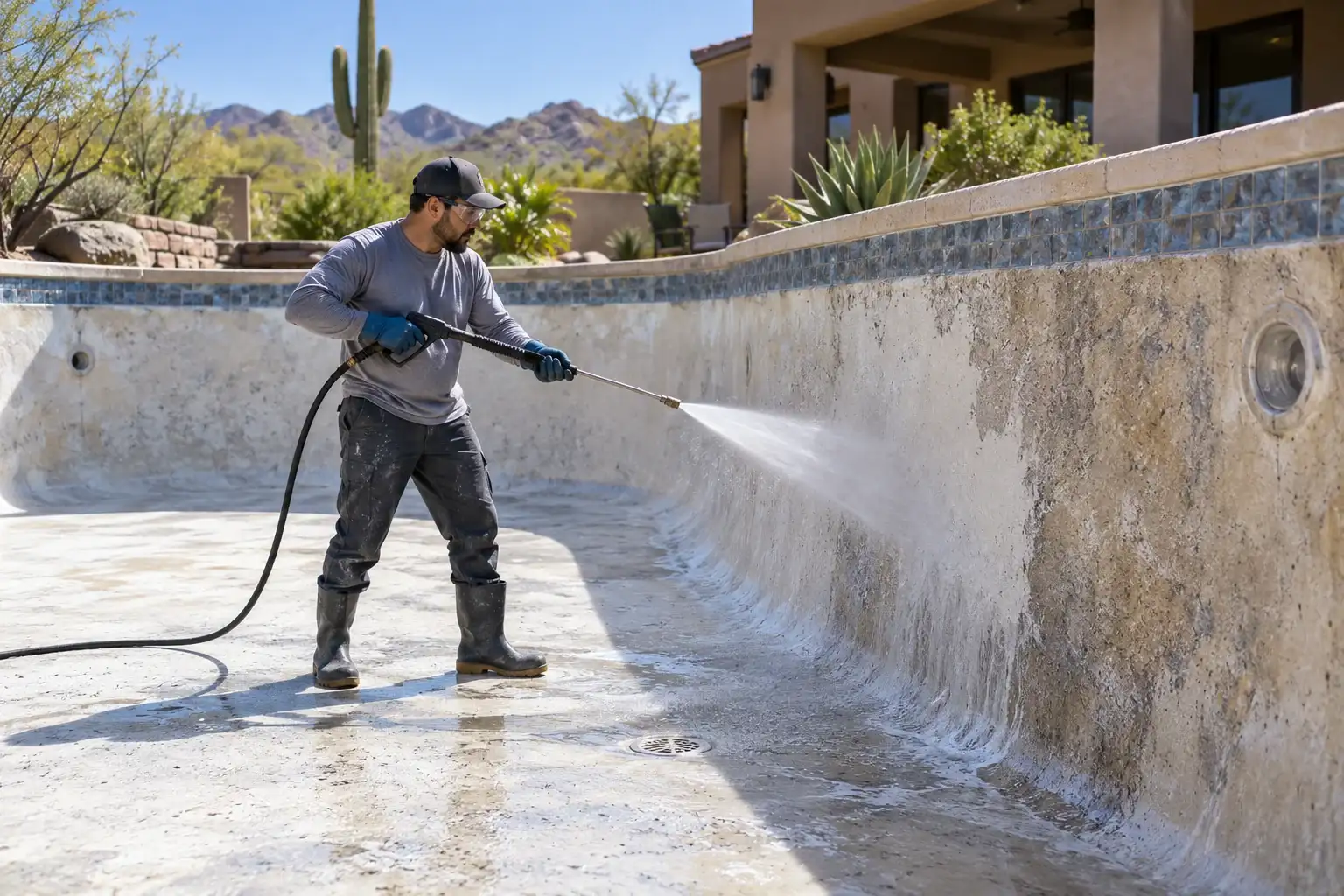
A standard resurface, often called light prep, has the existing shell surface sanded and the new finish applied directly onto it after cleaning and minor repairs. A full chip-out removes the old finish down to the bare shell before the new material goes on. A pool with deep cracking, widespread delamination (the finish separating from the shell in sheets), or a history of repeated patch jobs usually needs the full chip-out so the new finish has a sound surface to hold to. The tradeoff is straightforward: light prep costs less and takes less time, while a full chip-out costs more and extends the schedule, but it also resets the surface completely instead of layering a new finish over old problems. The shell is inspected in person before one is chosen over the other; a phone estimate alone cannot make that call.
Costs
What a written quote should include
Before work starts, the written plan and price for a Phoenix resurfacing job spell out the finish type and color, whether the scope is light prep or a full chip-out, any tile or coping work included, the drain, clean and refill line item, the estimated timeline and the total price. Run your pool through the estimator to see a range against the published figures above.
How it works
What happens after the resurface
A freshly resurfaced pool needs a specific startup process before it is ready for normal swimming and chemical balance: filling, brushing on a schedule while the new surface cures, and careful chemical balancing in the first few weeks, since a pool filled too fast or chemically unbalanced too early can mark a brand new finish. The startup schedule is set for your finish type.
Good to know
When to resurface in Phoenix
The signs it is time
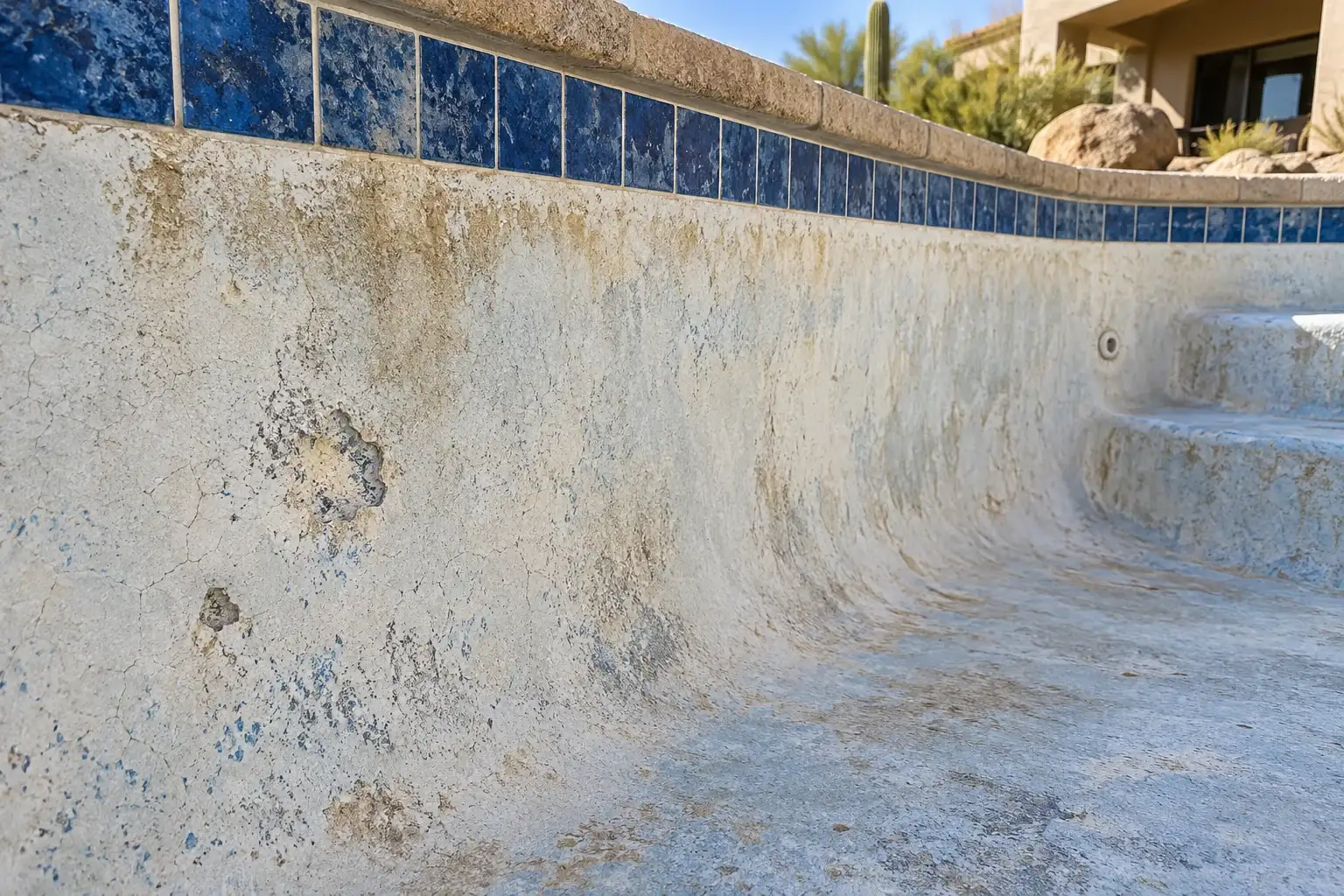
- Rough, sandpaper-like texture underfoot and along the walls.
- Dark staining or blotchy color that will not come out with brushing or rebalancing chemicals.
- Chipping, flaking or exposed gray patches where the finish has worn through to the shell.
- Visible cracks in the shell itself, not just the surface, especially near steps and benches.
- A finish 10 years old or older, the point where Arizona plaster commonly nears the end of its working life.
The best time of year to book
Many Phoenix pool owners prefer to schedule resurfacing before or after the June 15 to September 30 monsoon window, since storms can complicate a job while the pool is drained. Booking outside that window generally means less schedule risk, and the exact timeline is set once the scope is confirmed. See the dedicated timing page for more detail.
How often a pool needs it
Concrete pools are generally resurfaced on a roughly 10 year cycle, according to published 2026 cost data for the Phoenix metro. A 2026 Arizona pool cost guide puts plaster at 10 to 15 years and pebble style at 15 to 25 years. See how long a pool surface lasts in Phoenix for the full breakdown by finish.
Rules
Permits and licensing
Arizona requires a contractor license for work of $1,000 or more in labor and materials, or for any job that needs a local building permit (A.R.S. 32-1121 (opens in a new tab)). Some scopes need a permit, depending on the city and what changes. We go over that with you once the scope is set.
Costs
Is it worth having a pool in Arizona?
That is a personal call, weighing the upkeep against how much your household actually uses the backyard. The upkeep side is real: hard water measured at 9.2 to 20.1 grains per gallon in Phoenix's own reporting and near-constant sun can both shorten a pool surface's working life compared to a milder climate, so some Arizona owners plan for resurfacing on a tighter schedule. On the other side, a pool can be used for much of the year here. The answer depends on how often your household is in the water.
Arizona water and sun
How the Phoenix climate shapes the whole decision
Phoenix's hard water and year round sun can shorten a finish's working life, and they can shape which finish makes sense, how a project gets scheduled and what the price looks like. A 2026 Arizona pool cost guide puts the working life of plaster here at 10 to 15 years and pebble style at 15 to 25 years, which is one reason some Phoenix owners choose pebble style over repeating the project on a shorter cycle.
Hard water also affects more than the pool surface. Calcium and mineral buildup that can roughen a finish over time can also leave scale on tile lines and equipment. Knowing that going in helps you plan a realistic resurfacing schedule.
Questions
Common questions about choosing the scope
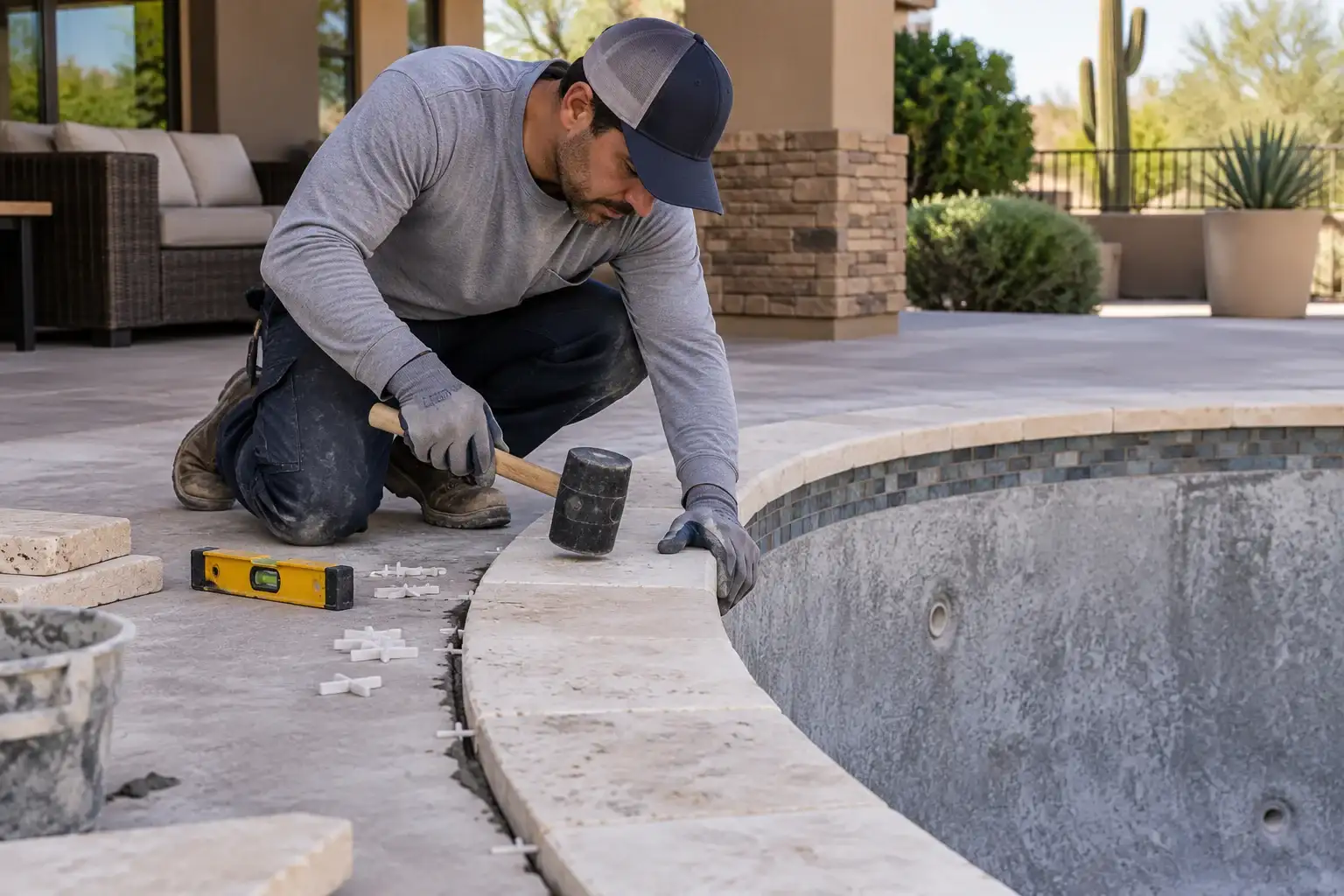
Two scope questions come up often: whether to add tile and coping at the same time as the resurface, and whether a quartz or pebble style upgrade is worth the extra cost over plaster. On the first, tile and coping work can be bundled into the same project as a resurface because the pool is already drained, and a national 2026 cost guide notes that bundling add-ons with a resurface may save money. Doing it later can mean draining the pool again just for that work. On the second, the figures in the cost section above give a sense of it: a pebble style finish that can last 15 to 25 years against a plaster finish that typically needs replacing every 10 to 15 years can narrow the lifetime cost gap.
How it works
What happens if the scope changes
Pool projects sometimes change scope once the shell is opened up, most often from light prep to a full chip-out after more cracking or delamination turns up than expected from the outside. That kind of change raises the price, which is why the prep method is set out in the written plan before work begins.
Timing
A short glossary for first-time pool owners
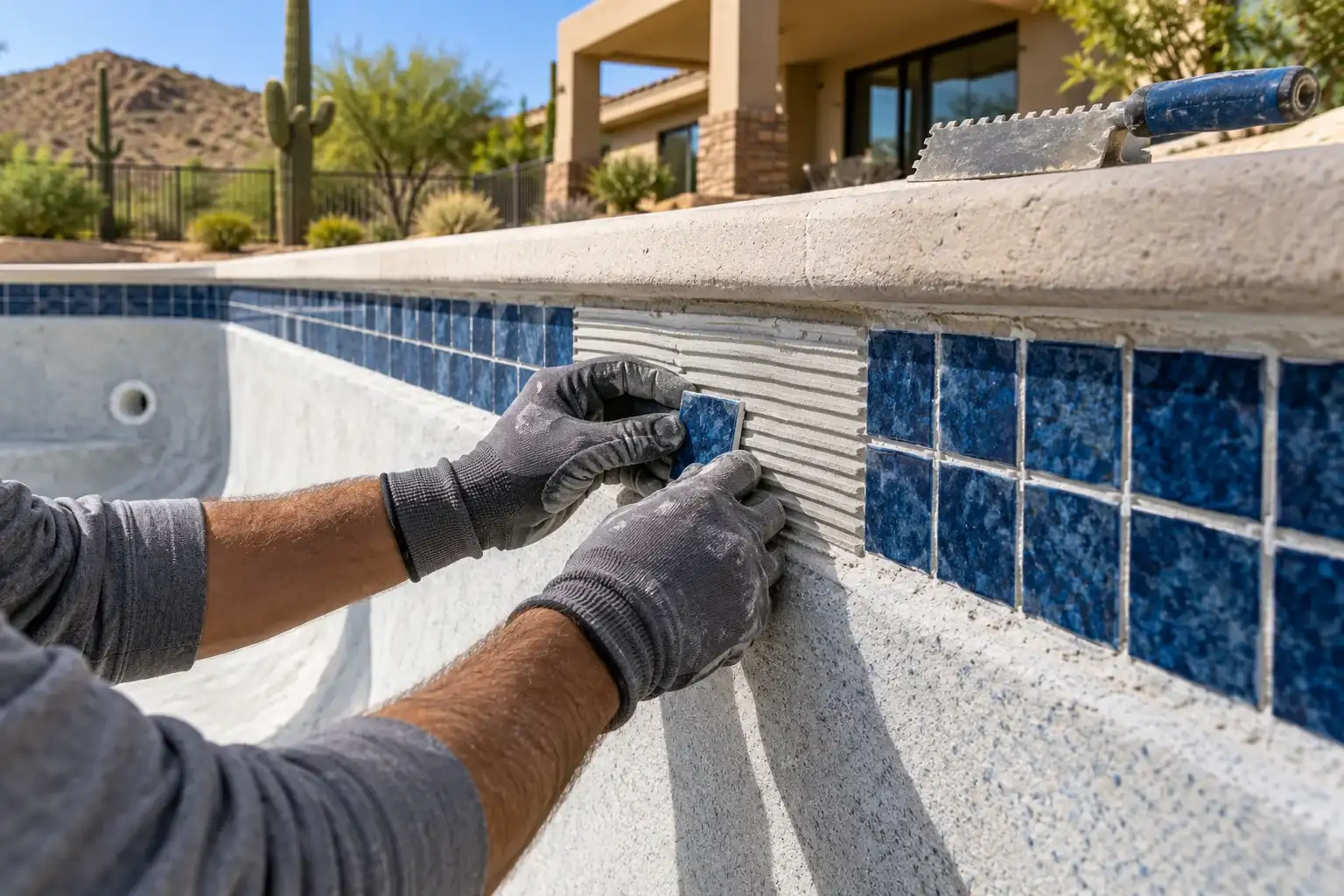
A few terms matter when you plan a resurface. The shell is the structural body of the pool, usually concrete or gunite, that the finish is applied over. Delamination means the finish has separated from the shell, often in sheets, and is one of the clearest signs a full chip-out is needed rather than light prep. Coping is the cap along the edge of the pool, often tile or stone, that finishes the transition from deck to water. The waterline is the band of tile right at the pool's normal water level, which can collect mineral buildup over time and is a common add-on when a resurface is already underway. Knowing these terms makes it easier to follow the plan for your own project's scope.
Good to know
Phoenix area pages
Pool resurfacing in your specific part of Phoenix: Arcadia, Biltmore, Ahwatukee Foothills, Desert Ridge, North Phoenix, Moon Valley, Deer Valley, Laveen, Camelback East and Encanto.
Good to know
Valley towns we serve
Scottsdale, Mesa, Tempe, Chandler, Gilbert, Glendale, Peoria, Paradise Valley, Surprise, Goodyear, Avondale, Sun City, Anthem, Cave Creek, Fountain Hills, Tolleson, Litchfield Park and Buckeye.
7 questions
Questions people ask
Still have a question? Call (747) 243-2089 and say what your pool is doing.
How much to replaster a 20,000 gallon pool?
A 2026 Arizona pool cost guide puts plaster resurfacing at $6,000 to $10,000 per pool, before any added tile or coping work. Where a 20,000 gallon pool lands depends on its surface area, shape and shell condition. Run your numbers on the cost estimator.
What time of year is best to resurface a pool?
Many Phoenix owners prefer to schedule resurfacing outside the June 15 to September 30 monsoon window to reduce weather-related schedule risk. See the full timing page.
Is it worth having a pool in Arizona?
It depends on how much use your household gets from it against the upkeep, which runs higher here due to hard water and sun exposure. See the section above for the full tradeoff.
Do I need a permit to resurface my pool?
Some scopes need a permit, depending on the city and what changes. We go over that with you once the scope is set.
How is quartz different from pebble or plaster?
Quartz usually sits between plaster and pebble style on cost and expected life, with more color and texture than plain plaster but a smoother feel than pebble style. See the full comparison.
What is the difference between resurfacing and remodeling?
Resurfacing replaces the interior finish, plaster, quartz or pebble style. Remodeling is broader and can add waterline tile, coping, steps or benches alongside or instead of a resurface. See pool remodeling in Phoenix for the full scope.
Can I get an estimate without committing to anything?
Yes. Run the cost estimator or call (747) 243-2089, and someone calls you back to go over your pool. Nothing is billed or scheduled until you approve a written price.