Blog · October 30, 2026 · 5 min read
Salt Water vs Chlorine in Phoenix, AZ
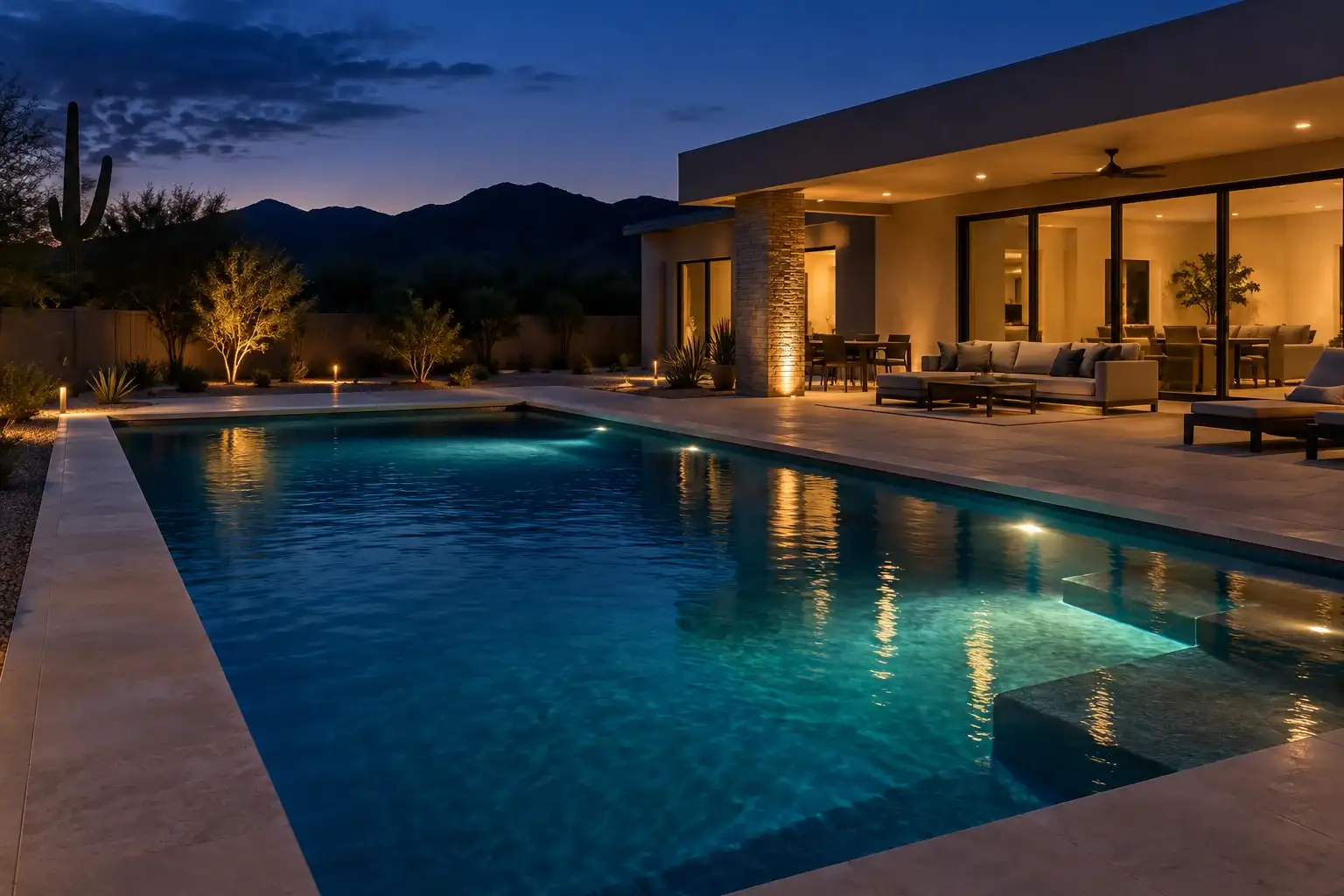
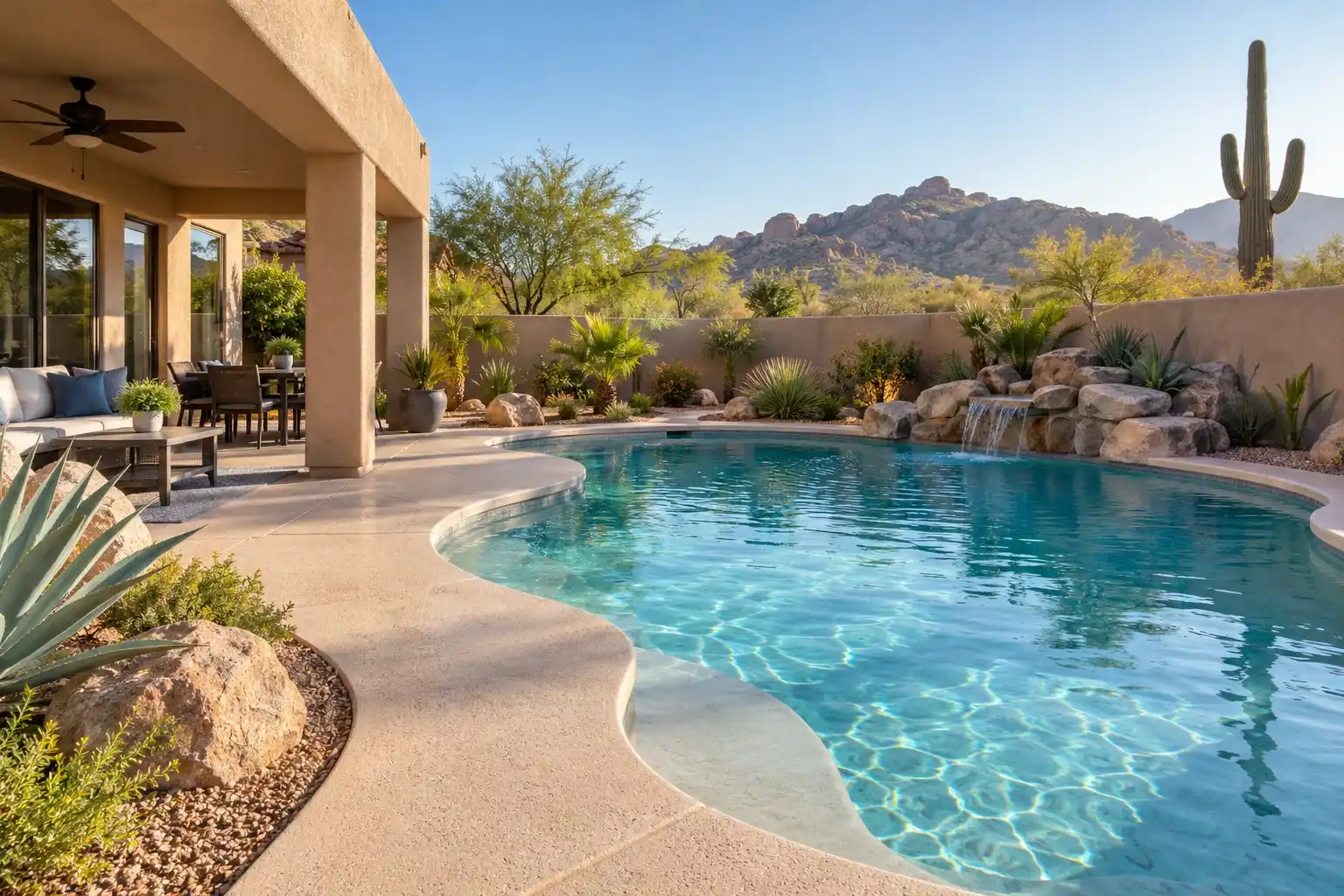
A salt pool makes its own chlorine from dissolved salt with a generator cell. A chlorine pool gets chlorine from tabs or liquid you add by hand. Both pools run on the same chemical, and in Phoenix the difference is how hard water, evaporation, and summer heat treat each system.
All postsGood to know
The short answer
A salt system dissolves salt into the water and runs it through a cell that turns chloride into chlorine, which reverts to salt and gets used again. A chlorine pool gets the same chemical from tabs, which also add stabilizer that climbs in the desert sun. Salt means less hauling and adding, but the cell scales up in Phoenix hard water and needs cleaning and eventual replacement. Tabs are cheap to start but the stabilizer problem builds over time. The right choice depends on how the pool is used, how old the plumbing is, and whether you want to maintain a machine or a chemical schedule.
Arizona water and sun
Salt water: what it actually is
A salt pool carries a few thousand parts per million of dissolved salt, about a tenth as salty as the ocean and light enough that you barely taste it. Water passes through a generator cell, an electric current converts the chloride into chlorine, and that chlorine does exactly what store-bought chlorine does before it reverts to salt. The system keeps regenerating its own supply, so you add acid and adjust rather than haul chlorine every week.
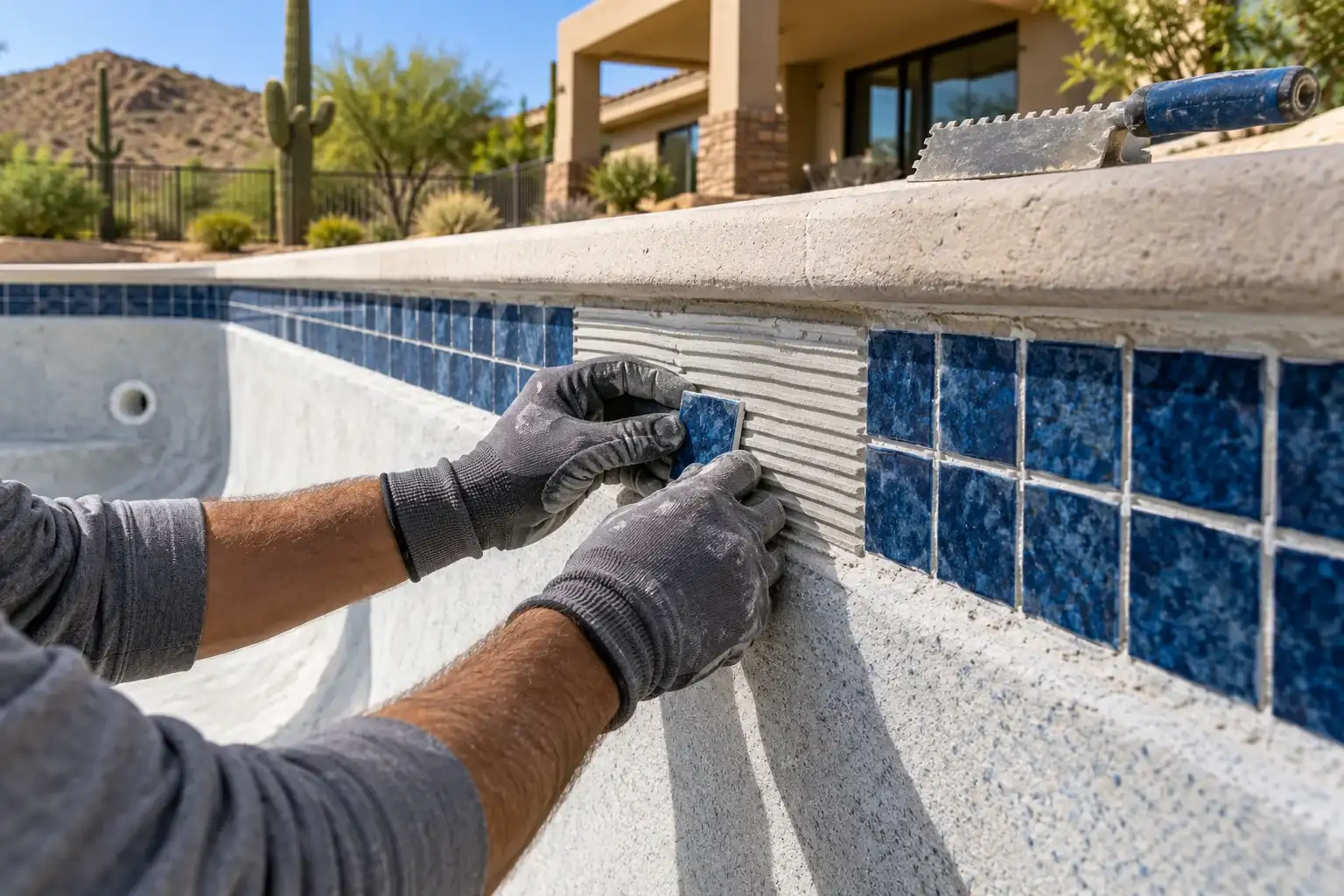
The cell is the weak point here. Phoenix water is hard, and the same minerals that scale the waterline tile scale the plates inside the cell. Crusted plates pass less current, the cell makes less chlorine, and the pool goes dull or green while the control box still reads fine. Summer heat makes it worse, because evaporation concentrates the salt and the minerals at the same time, and the swim season is when the cell has to work hardest.
Good to know
Chlorine: what it actually is
A chlorine pool gets its sanitizer from tabs, usually trichlor, or from liquid chlorine. The tabs dissolve slowly and add chlorine plus stabilizer, also called cyanuric acid. Stabilizer protects chlorine from burning off in sunlight, which matters in Phoenix where the sun load is brutal. The catch is that stabilizer never leaves the water. It builds up season after season until it binds so much chlorine that the pool needs bigger and bigger doses to stay clear, and at some point the fix is a partial drain and refill.
Liquid chlorine adds no stabilizer, which is why some pools run on it in summer, but it is hauling and dosing by hand all through July and August. Either way, a chlorine pool is a schedule you keep, and the schedule gets heavier exactly when the heat peaks and monsoon dust storms dump dirt that eats the chlorine out of the water.
Signs
Where salt water fails here
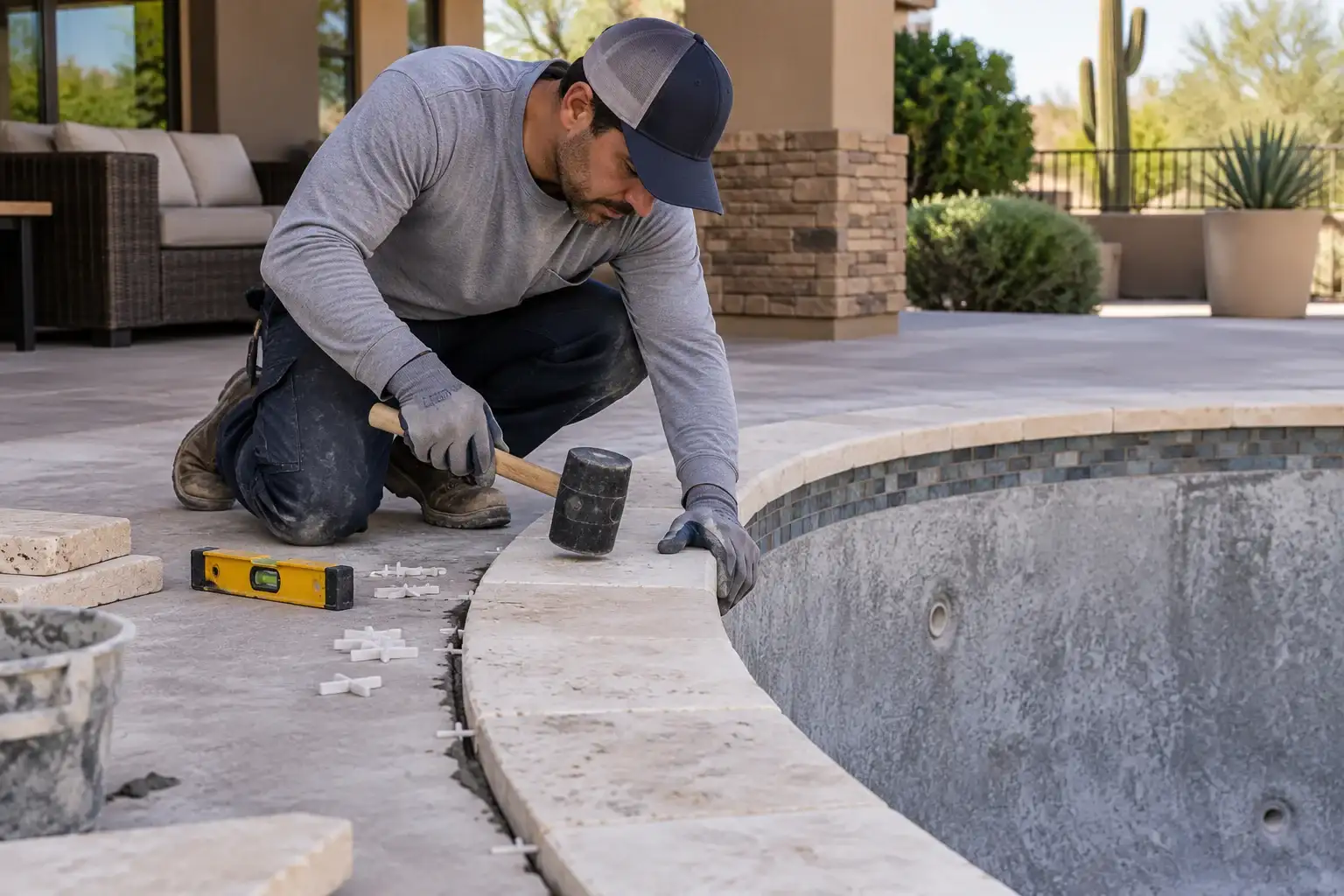
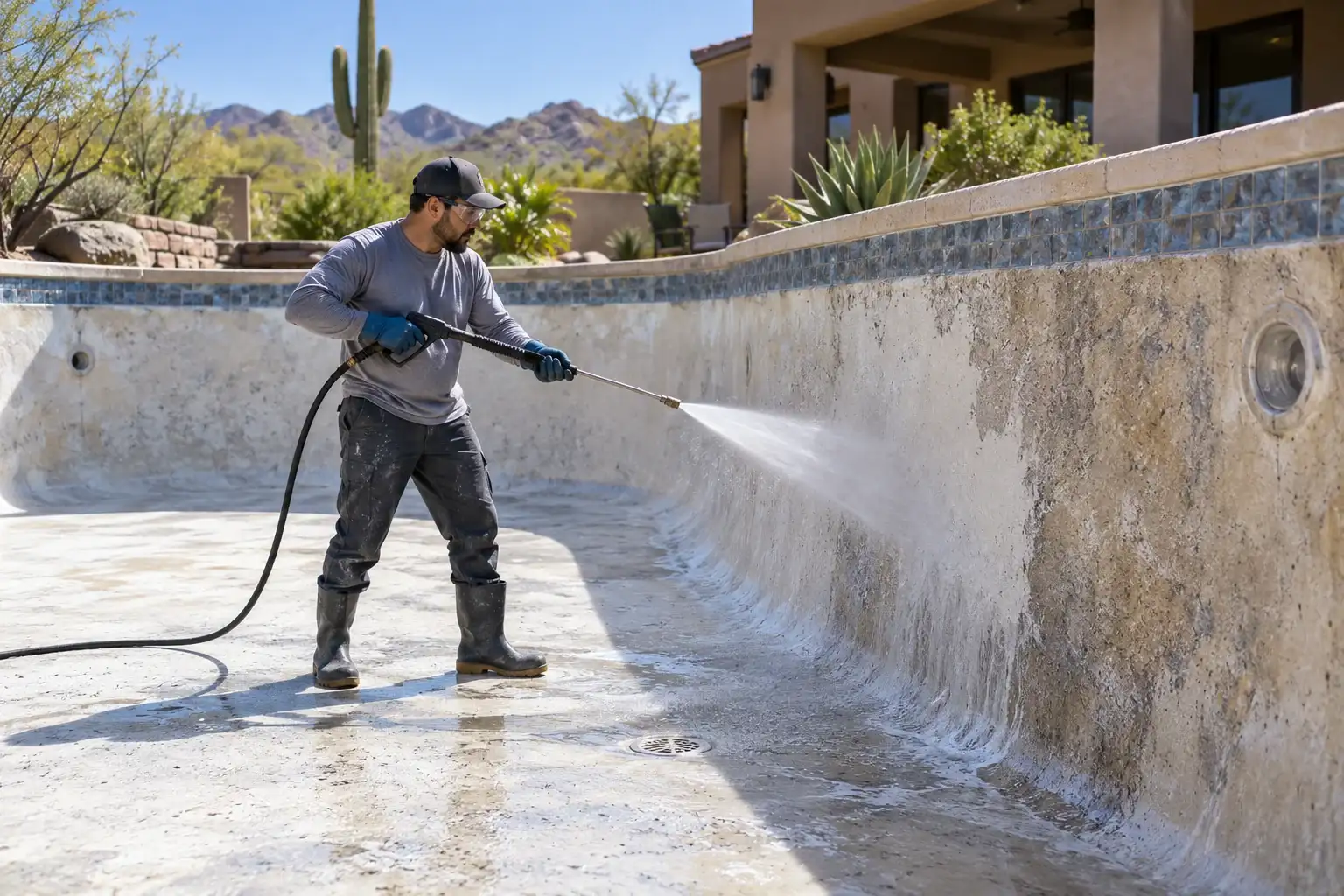
Salt systems fail in Phoenix first at the cell. Hard water scale crusts the plates within a season or two, the chlorine output drops, and the owner gets told to buy chemicals when the real problem is a scaled cell that needs cleaning. On a 1970s or 1980s pool with its original plumbing and finish, there is a second trap: homeowners blame the salt for a failing finish. A chalky, peeling plaster skin was dying long before the salt went in, but the salt takes the blame because it arrived last. The finish fails on its own schedule. The chemistry gets blamed, which is the oldest story in the trade.
The heat also taxes the cell. A generator sized for a soft-water climate runs near its limit through a Phoenix July, and a cell that is half scaled from hard water falls behind exactly when the pool needs chlorine the most. The system is not the problem. The water and the sizing are.
Signs
Where chlorine fails here
Tabs fail here slowly, through stabilizer. A Phoenix pool in full sun needs stabilizer to keep chlorine from burning off, and every tab adds more. Two or three summers later the stabilizer number is high enough that the chlorine stops working at normal doses, the pool goes dull, and the answer is more chlorine, then a drain and refill, then the cycle starts again. Hard water still scales the waterline either way, and monsoon dust storms still eat through the chlorine right after a storm when the pool is full of dirt and organics. A tab floater left against a wall also bleaches the old plaster under it, which shows up as a white patch on an already old finish.
Costs
What it costs and what drives the number
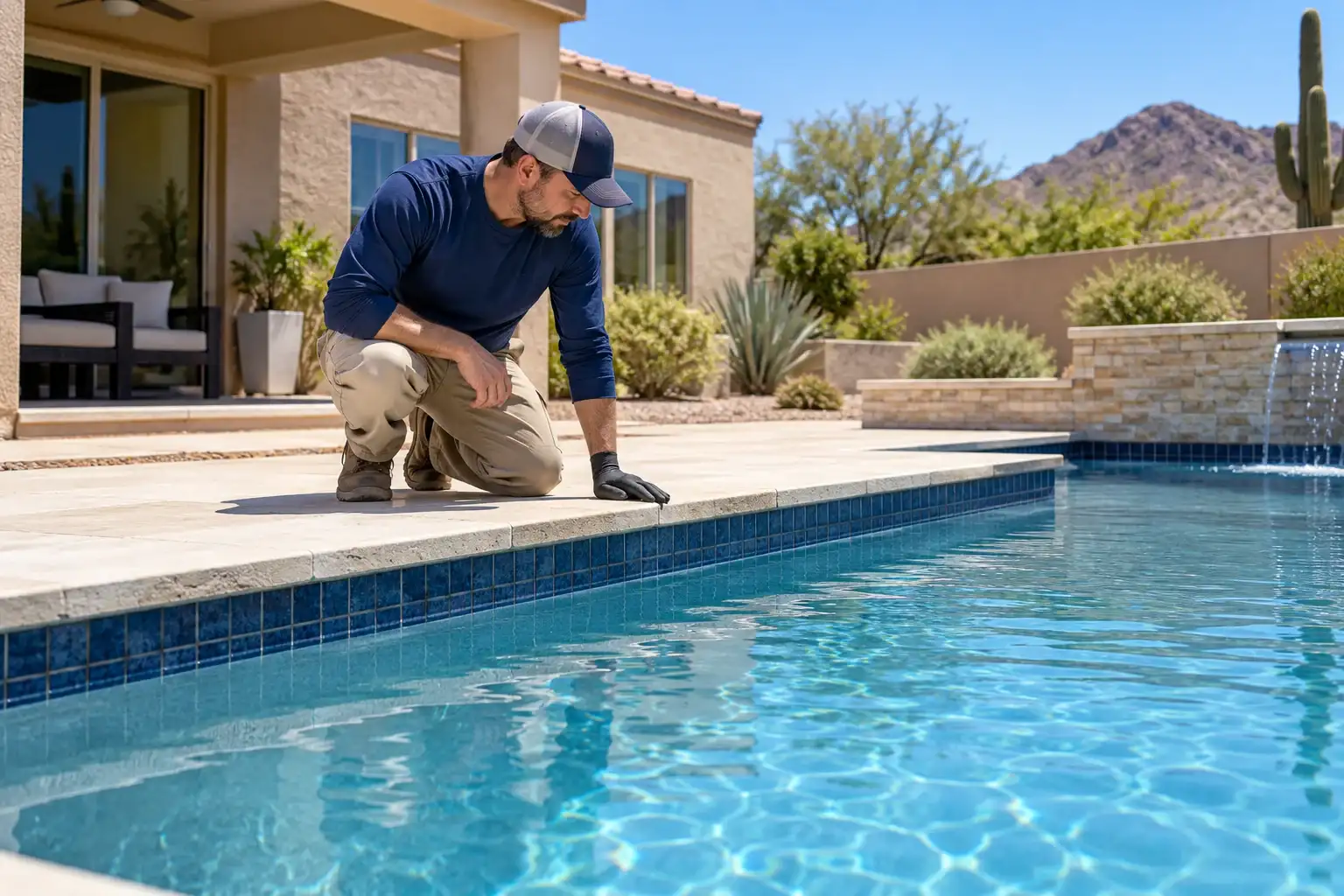
Salt costs more up front: the cell, the control box, and the install. Tabs cost less to start and more per season as the stabilizer problem grows. The cell is a wearing part, and in hard water it wears faster, so the replacement cycle is part of the real cost. What varies is usage and water. Heavier swim seasons, more evaporation, and harder water all push the salt system toward more cleaning and earlier cell replacement, while a chlorine pool sees the cost arrive as chemical runs that get longer each summer. Neither number is fixed, and the pool resurfacing cost page explains why water and finish condition move every pool bill.
Good to know
What good work looks like in Phoenix
- Telling you which system fits your water and your habits before anyone sells you a cell or a tab feeder.
- The chemistry stays balanced for Phoenix hard water, because scale is the recurring problem in both systems.
- Reminding you that a salt system does not fix a failing finish, and a chalky pool needs a resurface, not a new sanitizer.
- You get one straight answer about your pool, not a product pitch with a pool attached.
6 questions
Salt Water vs Chlorine: your questions
Still have a question? Call (747) 243-2089 and say what your pool is doing.
Does a salt pool still have chlorine?
Yes. The cell makes chlorine from the salt. The water feels softer, but the sanitizer doing the work is the same chemical a chlorine pool uses.
Why does my salt cell keep scaling?
Phoenix water is hard, and the minerals that scale your waterline scale the cell plates too. Heat and evaporation concentrate the minerals, so the cell needs cleaning more often here than in softer water. Cleaning the cell is routine maintenance, like cleaning the waterline, not a sign the system is broken.
Is salt water bad for old plaster?
The salt gets blamed more than it deserves. A 1970s or 1980s finish that chalks and peels was failing on its own. Read the resurfacing vs replastering page before you swap systems to fix a finish.
Do salt pools work in Phoenix summer heat?
They work, but the cell works hardest exactly when evaporation concentrates the minerals and the chlorine demand peaks. A scaled or undersized cell falls behind in July and August.
Why does my chlorine pool go dull after a dust storm?
Monsoon storms dump dirt and organics that consume chlorine fast. A pool with old tabs and built-up stabilizer recovers slowly, which is when most dull-water calls happen.
Which is cheaper to run?
It depends on the water and the swim season. Salt costs more up front with a wearing cell; chlorine costs more per season as stabilizer builds. In hard water, the salt cell replacement cycle is the number people forget. The honest version is that Phoenix water makes both systems cost more than the brochure numbers, the salt system in cell cleaning and replacement, the chlorine pool in stabilizer-driven drains and refills.