Blog · October 30, 2026 · 5 min read
Pool Resurfacing vs Replastering in Phoenix, AZ
Replastering is one kind of resurfacing: a fresh plaster layer troweled over a prepared shell. Resurfacing is the broader term and also covers quartz and pebble finishes. On a 1970s or 1980s Phoenix pool, the decision that matters is which finish goes back on, not which word the contractor uses.
All postsGood to know
The short answer
Replastering means chipping out the failing skin and troweling on new plaster, usually a half inch or less. Resurfacing is the same prep with more finish choices, and quartz or pebble generally hold up longer in hard water and full sun. For an original-plaster Phoenix pool, replacing plaster with the same material just restarts the clock on the same wear. The right call depends on the shell under the finish, the water chemistry, and how the pool has been maintained since it was built.
Plaster
Replastering: what it actually is
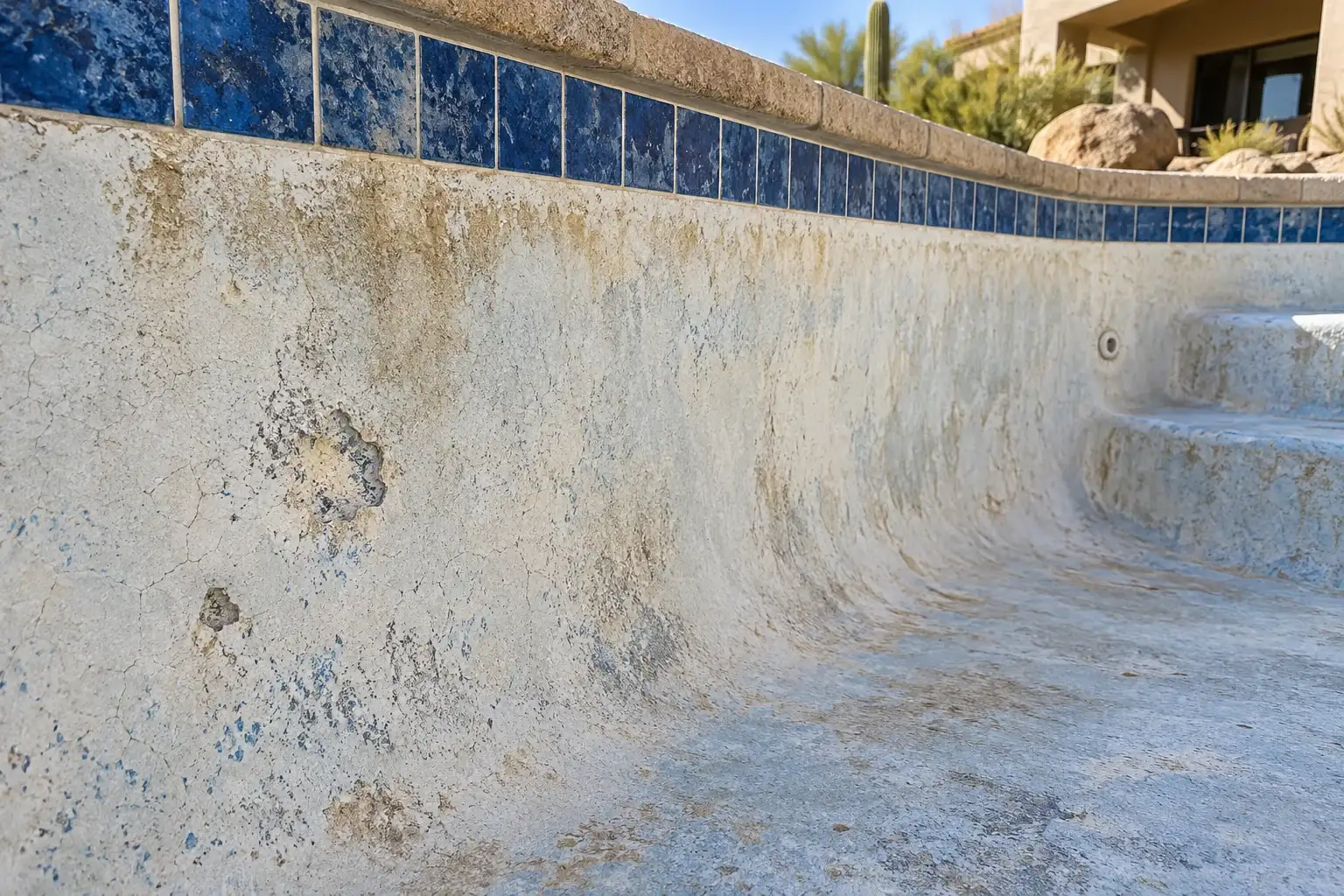
A concrete pool is a structural shell with a plaster skin on top. The skin does two jobs: it seals the shell so water never reaches the rebar, and it gives swimmers a smooth surface to stand on. Arizona water chemistry and sun eat that skin over the years. Plaster chalks and peels. The first visible sign is white powder on the floor, with walls that feel rough under the hand.
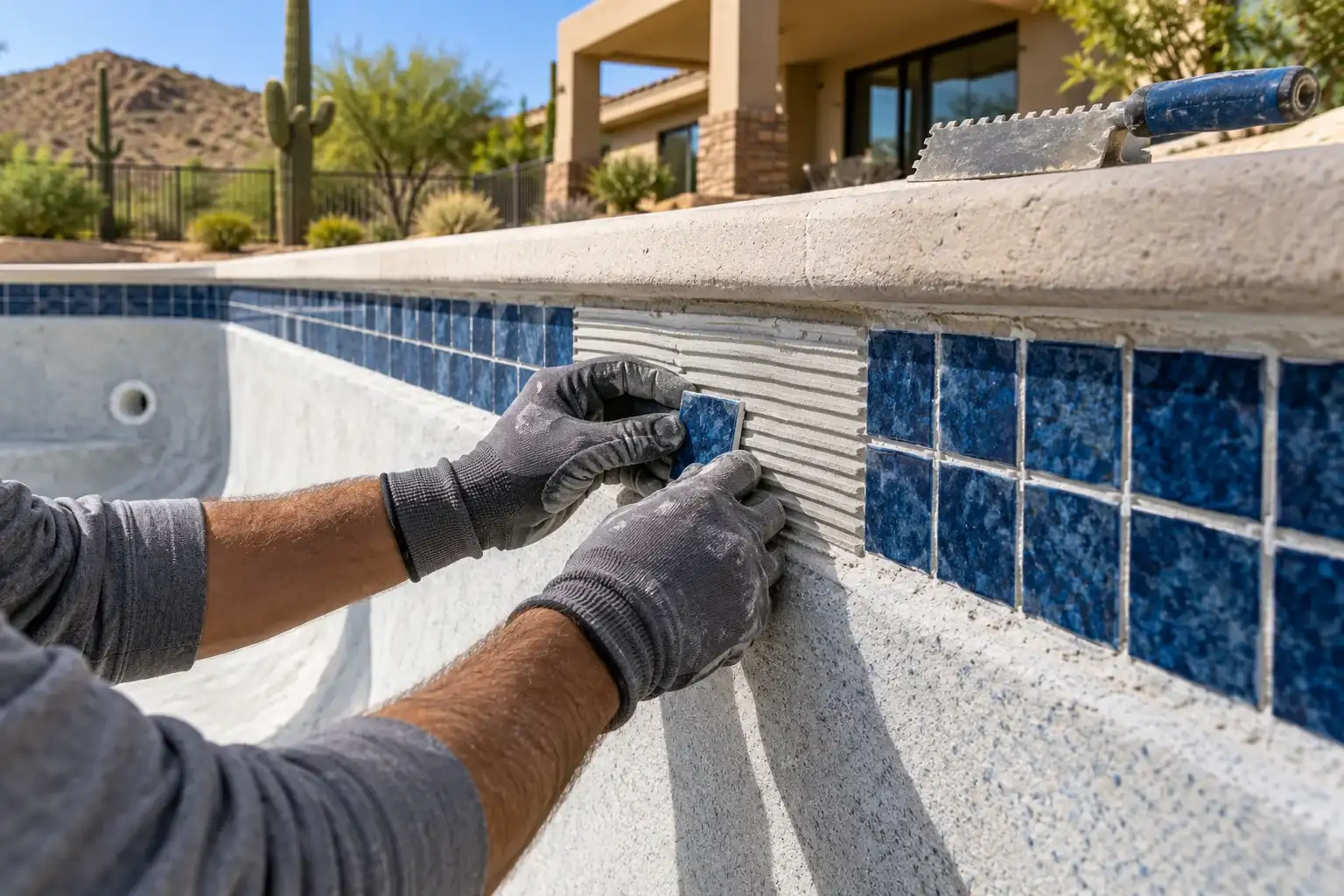
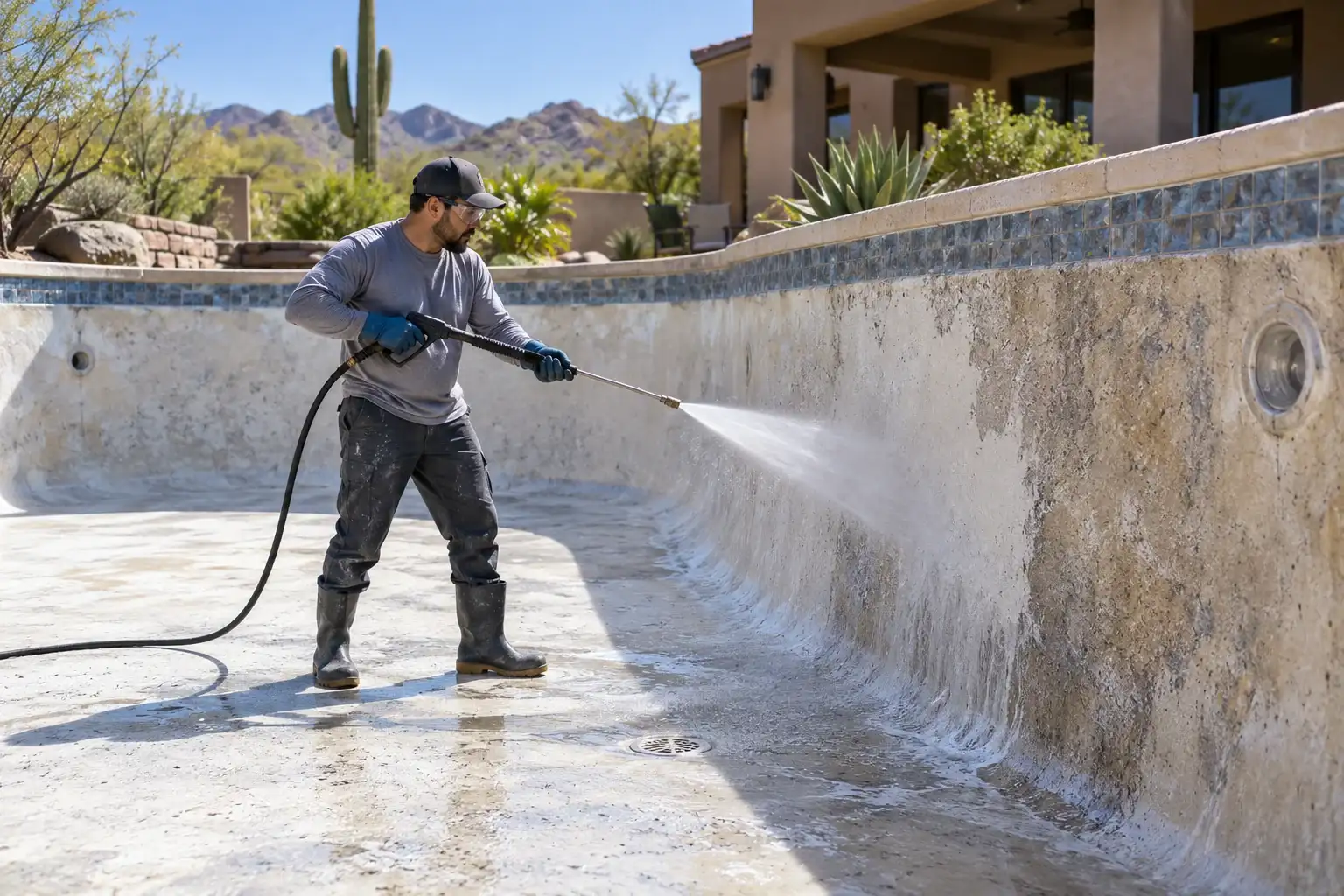
Replastering removes the failing layer, usually by chipping or sandblasting it off, then trowels on new plaster in one or two passes. The new skin is thin and needs water in the pool on a schedule while it cures. Cure time in Phoenix heat matters more than most bids admit. Plaster that dries too fast loses strength at the surface, and that weakness shows up as rough patches and early chalking within a few seasons.
Replastering is not a coating. It replaces a worn layer with the same class of material. The shell underneath stays exactly as it is, cracks and hollow spots included. That is why a replaster that does not inspect the shell first is a gamble, and why two bids for the same pool can describe two very different jobs.
Good to know
Resurfacing: what it actually is
Resurfacing is the same job with a different question: what goes back on. Plain plaster is the default, but quartz finishes mix crushed quartz aggregate into the plaster, and pebble finishes embed small natural stones that get exposed as the top layer of cement wears away. Quartz and pebble change the texture, the color, and how the surface stands up to hard water and summer sun.
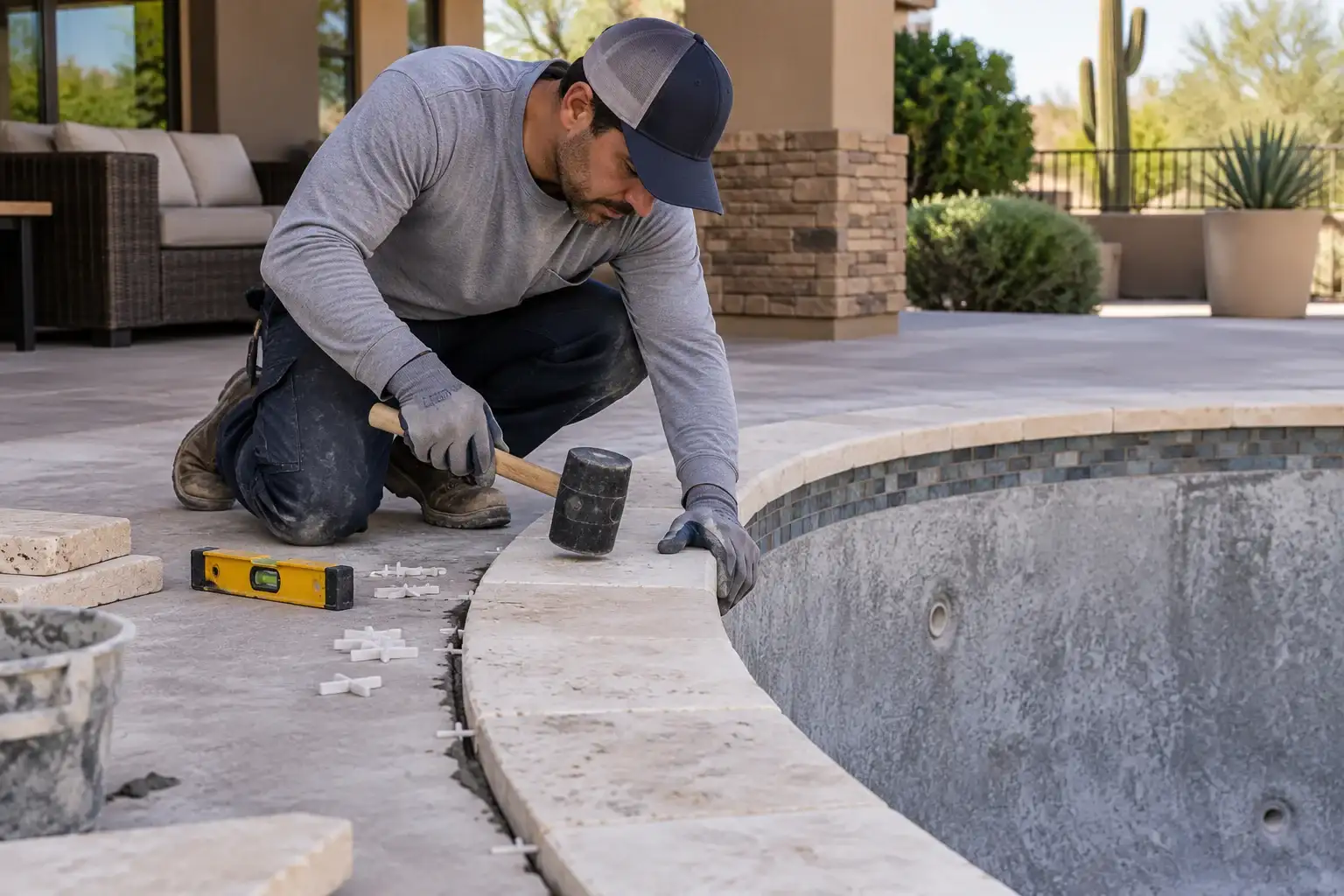
The prep is the same or heavier than a replaster. The old finish still comes off, the shell still gets inspected for cracks and hollow spots, and the new material goes on in passes. A resurface that skips prep is a replaster with a nicer label, and it fails exactly the way the old finish did. The word on the bid matters less than the prep written into the scope, because the finish is the part you see and the prep is the part that decides whether you see it fail.
Signs
Where replastering fails here
Phoenix has many pools built in the 1970s and 1980s that still carry their original plaster. By now that skin is thin and chalky, stained where mesquite and palo verde leaves sat on the floor, and ringed with white scale at the waterline from the Valley's hard water. Replastering works only if the old material comes off completely and the shell is dry before the new layer goes on. Plaster applied over a damp or poorly prepped shell blisters in the first season, and the homeowner gets told it is a chemistry problem when it is a prep problem.
Plain plaster also chalks again faster here than almost anywhere. Hard water keeps pulling minerals out of the skin, and the summer sun breaks down the surface year after year. On an original-plaster pool in Camelback East or Arcadia, where flood irrigation and big trees are part of the yard, a plain replaster is not a mistake. It is just the shortest-lived version of the fix, and that is fine if you know it going in.
Signs
Where resurfacing fails here
Resurfacing fails when the finish choice ignores the yard it sits in. Quartz and pebble mottle when the mix is inconsistent or the pool is filled too early, and both show white scale at the waterline within a couple of seasons if the chemistry drifts. In a Camelback East backyard with a big palo verde overhead, a dark pebble finish catches every leaf stain. In Arcadia, flood-irrigated lots keep the ground wet around older shells, and moisture moves through the shell wherever the plaster is breached. A new finish over a wet shell blisters.
A resurface that does not deal with loose waterline tile first just moves the leak. The finish is only as good as the prep under it, and prep is where cheap bids cut. Read the quartz vs pebble and pebble vs plaster pages before you pick a finish, because the wrong one for your yard shows up within two seasons.
Costs
What it costs and what drives the number
Both jobs are priced on square footage, the depth of the chip-out, and access. Alley-loaded backyards in older central Phoenix neighborhoods are slower to work in than open lots, and that shows up in the number. Replastering sits at the low end of the range. Quartz runs above it, pebble above that, and the spread varies from pool to pool. The number also moves with the shell: cracks, hollow spots, and loose waterline tile all get billed somewhere in the scope. What costs the most is doing it twice, which is what happens when the old finish is not fully removed or the cure is rushed to get to the next job. For the full breakdown of what moves a Phoenix bid, see the pool resurfacing cost page.
Good to know
What good work looks like in Phoenix
- Looking at the shell before anyone bids a finish. Cracks under the plaster make this a different job than a clean re-skin.
- The work gets done well, not by whoever priced the chip-out lowest.
- Telling you straight when plain plaster will chalk again in a few Phoenix summers, and when quartz or pebble is worth the difference.
- You get a written scope and one number. No pitch that grows after the drain.
6 questions
Pool Resurfacing vs Replastering: your questions
Still have a question? Call (747) 243-2089 and say what your pool is doing.
Is replastering the same as resurfacing?
Replastering is one kind of resurfacing. Resurfacing is the umbrella term that covers plaster, quartz, and pebble finishes, so the two words get used interchangeably on bids, which is how the confusion starts.
How long does a replaster last in Phoenix?
Plain plaster in hard water and full sun is the shortest-lived finish. Quartz and pebble generally hold up longer. The actual years vary with water chemistry, shade from trees, and how well the surface was prepped before the new layer went on.
Can a new finish go over old plaster without removing it?
It can, and that is how blisters happen. The old material has to come off for the new layer to bond to the shell. Anything less is a coating, and coatings fail on Phoenix pools.
Why is there white powder on my pool floor?
That is chalking, the first stage of a plaster skin failing from water chemistry and sun. It does not stop on its own, and brushing just moves it around. There is a full explanation on the white powder page.
Does a resurfaced pool help when I sell?
A chalky, rough pool reads as a project to buyers. A clean finish changes how the whole backyard presents, and it is one of the least expensive ways to update a 1970s or 1980s yard.
Which finish should a Phoenix pool get?
It depends on the shell and the yard. The quartz vs pebble and pebble vs plaster comparisons walk through the tradeoffs before you commit.