Blog · October 30, 2026 · 5 min read
Plaster vs Fiberglass Pool in Phoenix, AZ
A plaster finish is a troweled cement skin over a concrete shell. A fiberglass pool is a preformed shell with a gel coat surface. They fail differently in Phoenix: plaster chalks and etches, gel coat fades and blisters. If you already own a concrete pool, this comparison decides your next build, not your resurface.
All postsGood to know
The short answer
A gunite or shotcrete pool gets resurfaced with plaster, quartz, or pebble. Fiberglass is a whole new pool, which means tearing out what you have, digging through caliche, and starting over. Plaster wears out and gets replaced every so many years, while fiberglass is a one-piece shell that cannot be resurfaced, only repaired or replaced. The right choice depends on the condition of your shell, the soil under the yard, and what a rebuild would actually cost in your neighborhood.
Plaster
Plaster: what it actually is
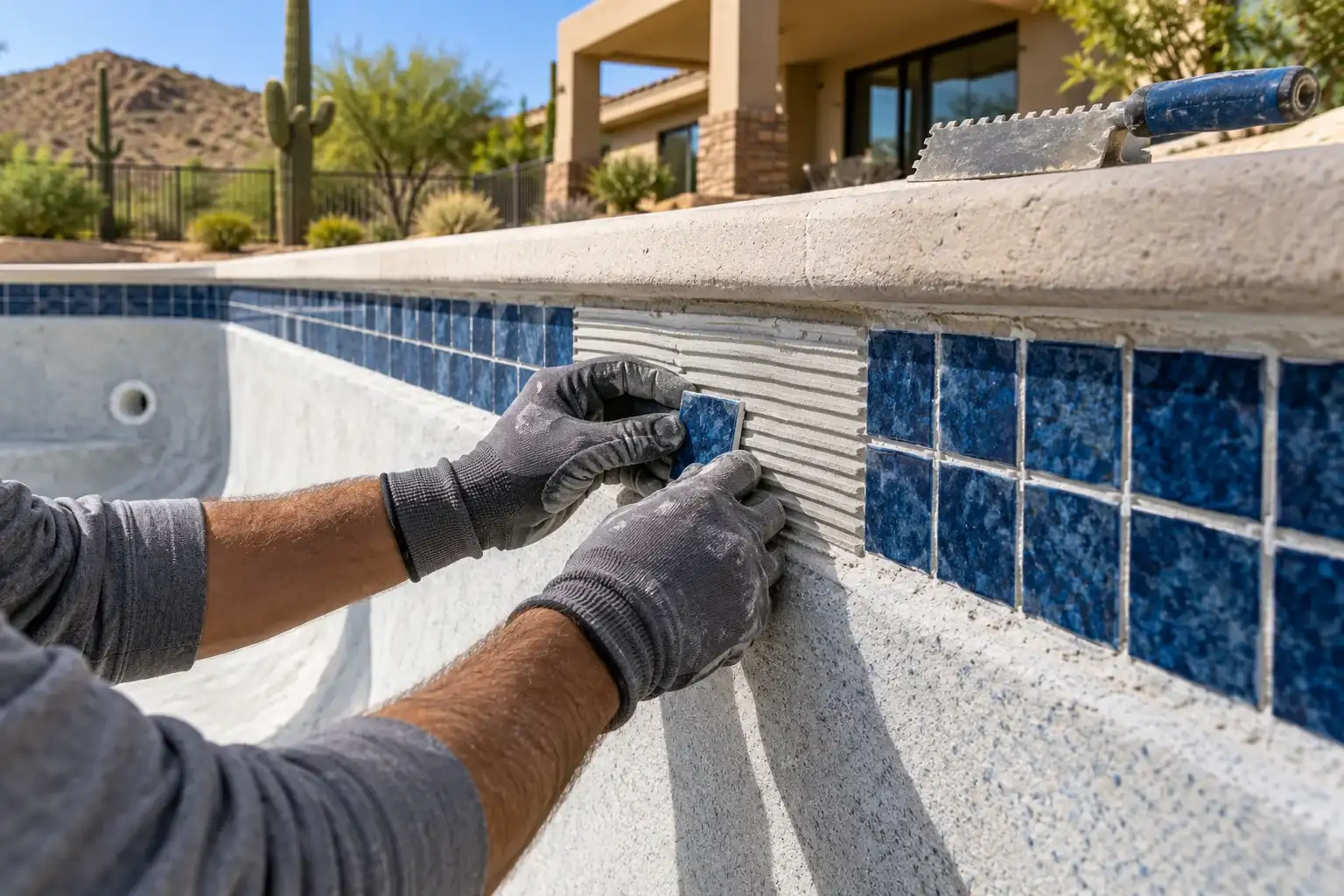
Plaster is the thin cement skin that seals a concrete pool. The shell does the structural work, and the plaster keeps water off the rebar and gives swimmers a smooth surface. Water chemistry is what kills it. Arizona water is hard and aggressive, and over the years it dissolves the cement right out of the surface, which is why an old Phoenix pool chalks white powder onto the floor and turns rough under the hand.
The important part is that plaster is replaceable. When the skin fails, it gets chipped out and a new one goes on, and the pool is a pool again without touching the structure. That replaceable skin is the whole argument for keeping an older concrete pool alive. The shell underneath is usually fine long after the finish is gone.
Good to know
Fiberglass: what it actually is
A fiberglass pool is a molded shell, made in a factory and dropped into a hole in one piece. The surface is a gel coat, the smooth colored layer you see and touch. There is no plaster to wear out and no finish to replace. The trade is that the gel coat is the finish, the waterproofing, and the color all at once, and when it fails there is no re-skin. Fading, chalking, and blistering all happen at the gel coat.
Phoenix heat is hard on gel coat. It is a plastic surface, and plastics age faster in Arizona sun than the national average assumes. A gel coat that looks deep blue in a showroom fades to chalky gray after enough full-sun summers, and the color cannot be restored, only painted over or replaced with a new shell.
Signs
Where plaster fails here
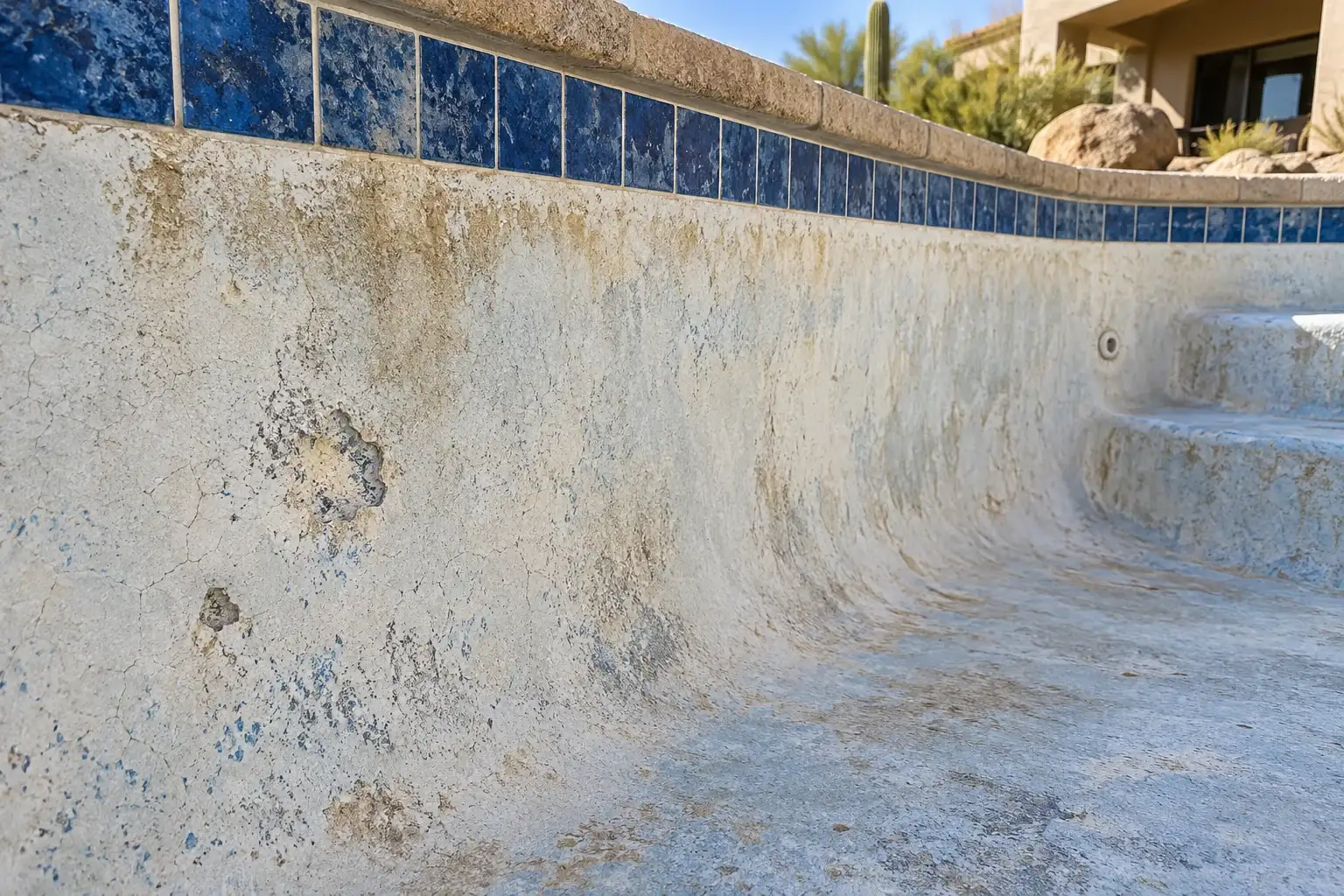
Phoenix has many pools from the 1970s and 1980s that still carry their original plaster, and almost all of them are failing the same way: white powder on the floor, rough walls, and a hard scale band at the waterline. The sun is the second problem. Surface temperatures in a Phoenix summer are the hottest in the Valley, and a finish that sits in hot, hard water every day for forty years is simply at the end of its life. The fix is a resurface, and the good news is that the fix is routine. The shell under a Camelback East original-plaster pool is usually sound, which makes plaster failure a maintenance event, not a structural one.
That is the part of the comparison people skip. A fiberglass conversation starts with replacing the whole pool, and a plaster conversation starts with re-skinning one. The finish on a Phoenix pool is designed to be a wearing part, like tires on a car, and a pool that has chalked out once has simply used up its first set.
Signs
Where fiberglass fails here
Fiberglass fails here in the ground, not just in the sun. A new shell means digging a new hole, and much of the Valley sits on caliche, the cemented layer that turns a dig into a jackhammer job. Expansive clay in parts of the city swells and shrinks, and a one-piece shell has to flex with soil movement or crack. Then there is the yard you already have. Replacing a concrete pool with fiberglass means demolishing the old shell, hauling it out through an alley, and starting the permits and the HOA paperwork from zero. And the gel coat still fades in Phoenix sun, still blisters if moisture gets behind it, and still has no resurface option when it does.
Costs
What it costs and what drives the number
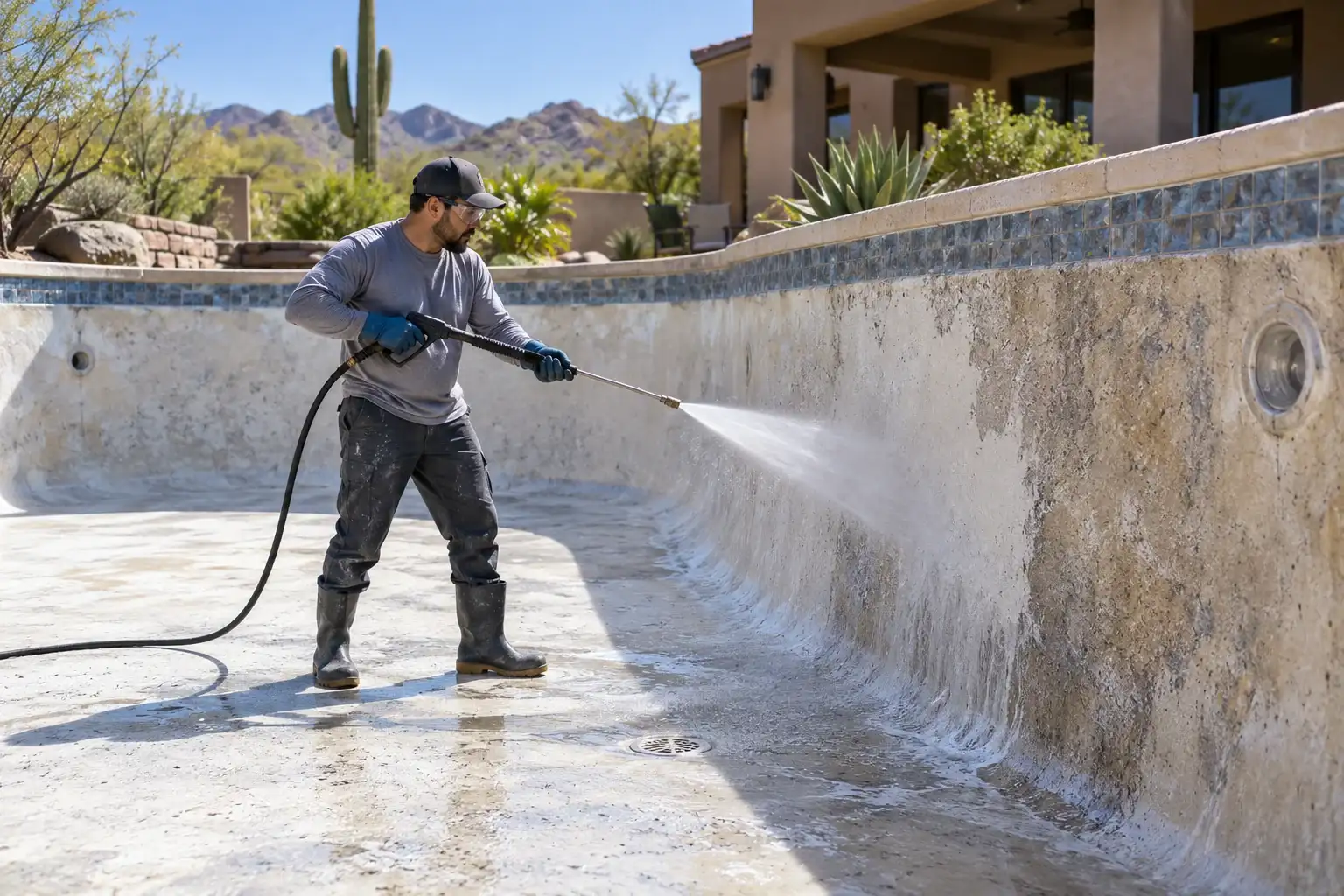
Resurfacing an existing concrete pool is priced on square footage, prep depth, and access. A fiberglass rebuild is priced like new construction: demolition, haul, excavation through whatever the dig finds, the shell itself, plumbing, backfill, and decking around it. The rebuild runs multiples of the resurface, and the gap widens when the dig hits caliche or the yard is alley-loaded. What varies most is the ground, and nobody knows the ground until the hole is open. The other honest driver is the yard itself. A rebuild in an alley-loaded older neighborhood costs more to excavate and haul than one in an open subdivision lot, and the same logic runs the other way on a resurface: access, not finish choice, is often the biggest line item on older properties. For the line-by-line drivers of the resurface side, see the pool resurfacing cost page.
Good to know
What good work looks like in Phoenix
- Checking the shell before anyone recommends a finish, because a sound shell makes resurfacing the obvious call and a cracked one changes the whole conversation.
- Comparing the two paths in real money: a resurface on the pool you have versus a full rebuild in the ground you have.
- A new build is not the answer when the old pool needs a re-skin, and a shell that has settled past repair is not worth saving.
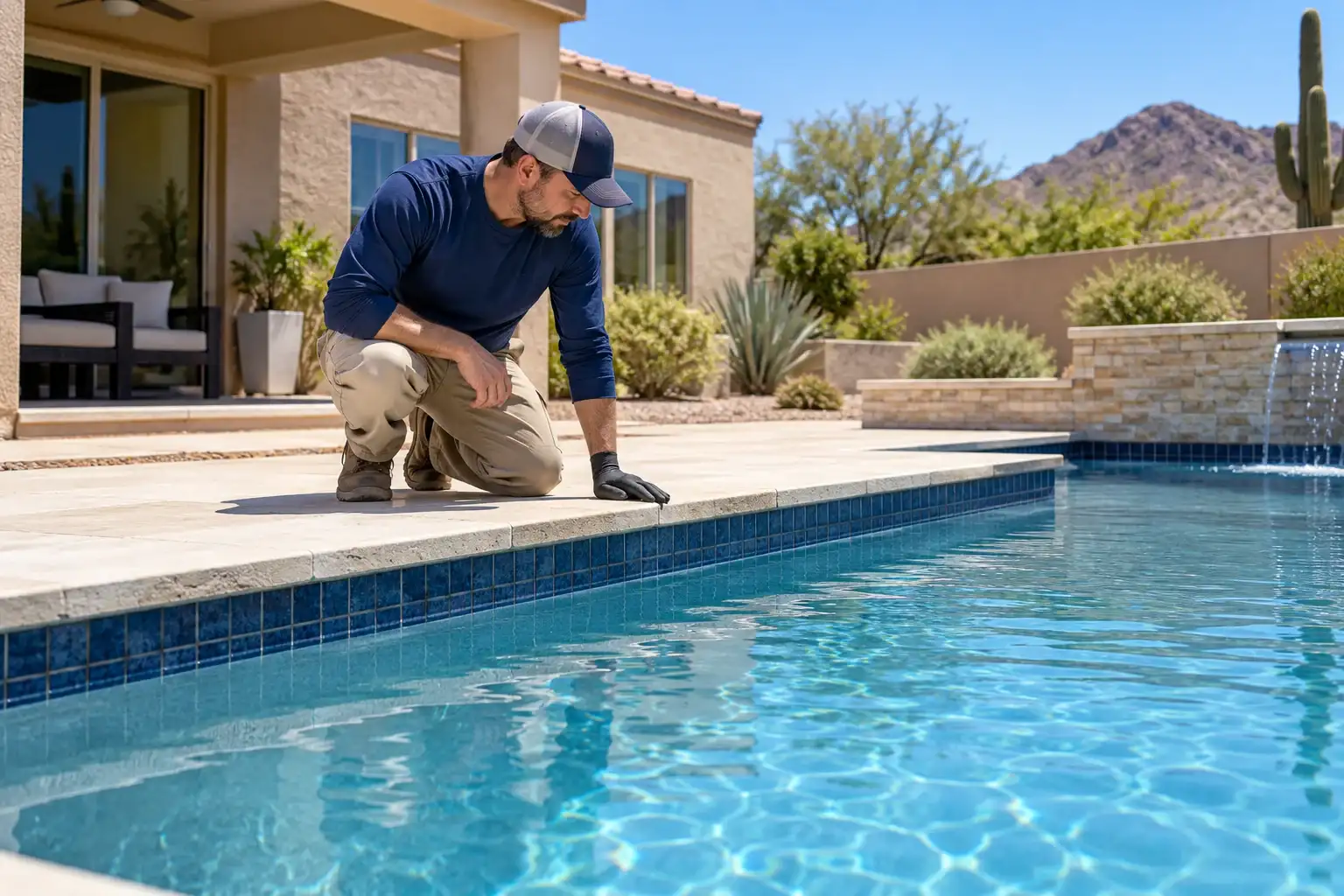
- You get the straight math on both paths and one written scope for the one you pick.
6 questions
Plaster vs Fiberglass Pool: your questions
Still have a question? Call (747) 243-2089 and say what your pool is doing.
Can you put fiberglass over an old concrete pool?
Not as a real fix. Fiberglass is a factory shell, and the standard paths for a concrete pool are plaster, quartz, or pebble. A full change means a new build.
Does gel coat fade in Phoenix sun?
Yes. It is a plastic surface, and Phoenix heat and UV age plastic faster than the national average assumes. Faded gel coat can be painted, but the color does not come back on its own.
Is fiberglass lower maintenance than plaster?
There is no finish to replace, which is the appeal, but gel coat still fades, scales, and blisters, and when it fails there is no resurface option. Lower maintenance and no maintenance are not the same thing.
Should I replace my 1980s pool with fiberglass?
Usually not for money reasons. A resurface is a fraction of a rebuild, and a 1980s shell in Phoenix is often in better shape than its finish. The resurfacing vs new pool page lays out the full comparison.
What does it cost to switch?
A full rebuild runs multiples of a resurface, and the ground decides a lot of it. Caliche, soil movement, and alley access all move the number, which is why it varies so much from yard to yard.
How do I know if my concrete shell is still good?
Cracks that run through the shell, settling, and leaks that survive a new finish are the warning signs. A shell check before any resurfacing bid answers the question on the resurfacing vs replastering page.