Blog · October 30, 2026 · 5 min read
Quartz vs Pebble Pool Finish in Phoenix, AZ
Quartz and pebble are both plaster upgrades that outlast plain plaster in Phoenix. Quartz is smooth and even, with crushed stone mixed through the surface. Pebble is exposed river stone, rougher underfoot and longer wearing. The choice turns on feel, look, and how the finish ages in hard water and full sun.
All postsGood to know
The short answer
Quartz adds fine crushed quartz aggregate to plaster and trowels it smooth, which gives a brighter, more uniform color and a surface that etches slower than plain plaster. Pebble embeds small natural stones in plaster and exposes them by washing away the top cement, so the stones take the wear instead of the cement. Pebble generally lasts longer and costs more, but it mottles when the mix is inconsistent or the pool is filled too early. The right choice depends on the shell, the water, and how much sun and tree debris your yard throws at the pool.
Quartz finish
Quartz: what it actually is
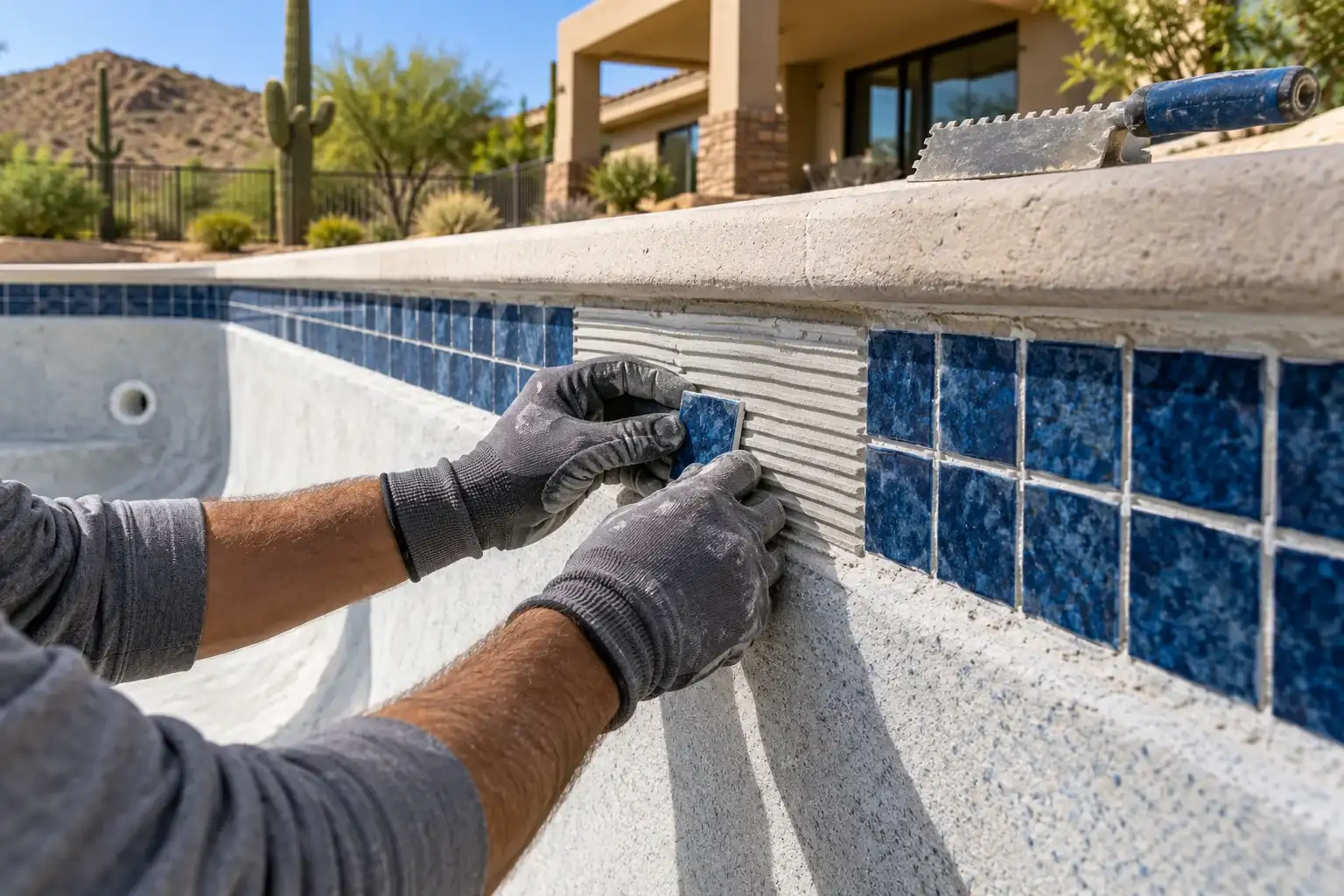
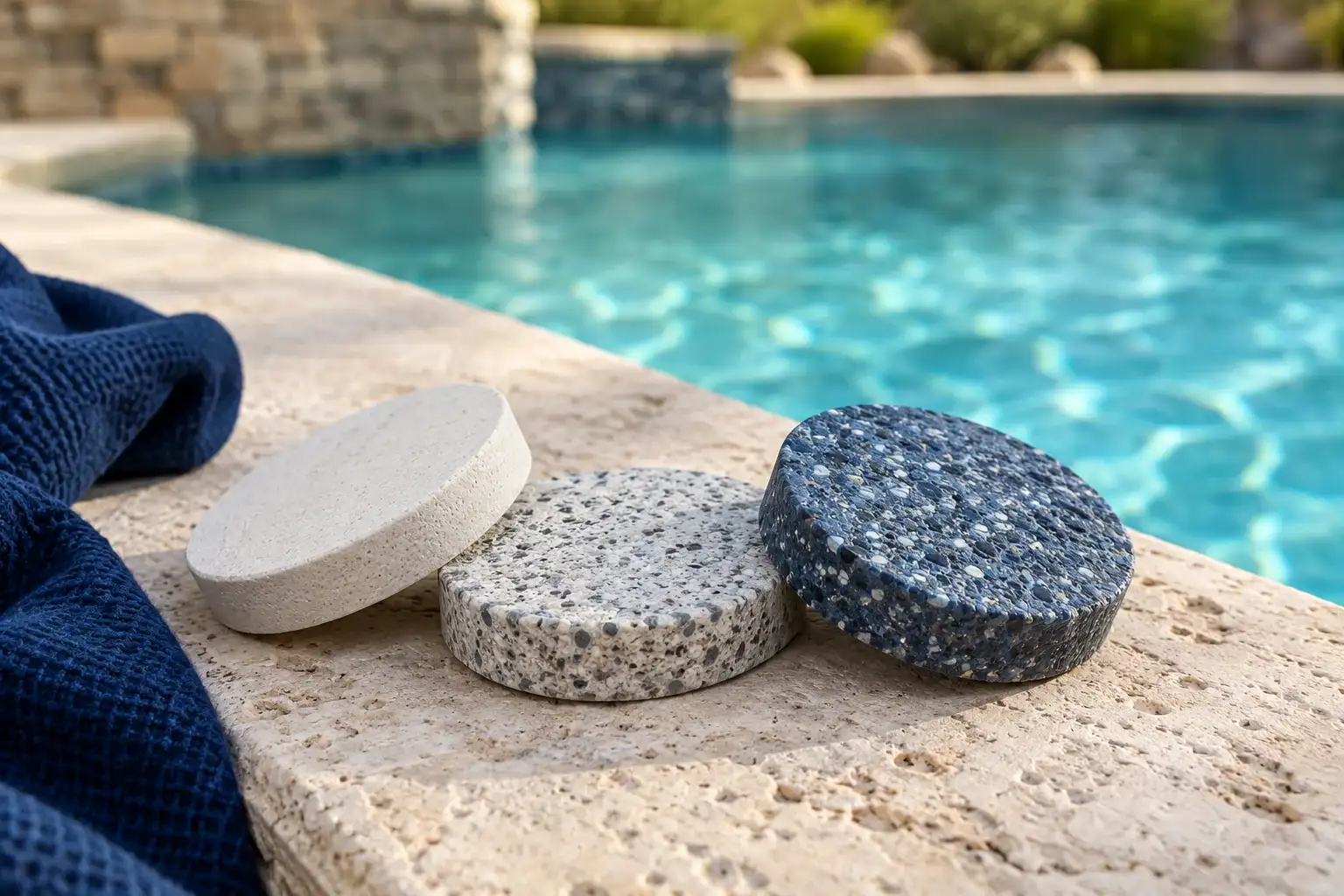
Quartz finishes start as a plaster mix with graded quartz aggregate stirred through it, troweled on like plaster and worked smooth. The quartz grains are harder than the cement around them, so water chemistry and scrubbing eat the cement first and leave the grains standing. That slows the chalk-and-etch cycle that kills plain plaster, and it is why a quartz pool keeps its color longer than a plain white replaster. Because the aggregate is naturally light, tinted quartz reads as even color instead of streaks. The surface ends up smooth, slightly sparkly, and easier on feet than pebble.
It is still a cement surface. The quartz grains help, but the cement between them is the same material that chalks on every Phoenix pool eventually. Quartz stretches the life of a finish. It does not make one immune to hard water or sun, and nobody who works these pools would claim otherwise.
Pebble finish
Pebble: what it actually is
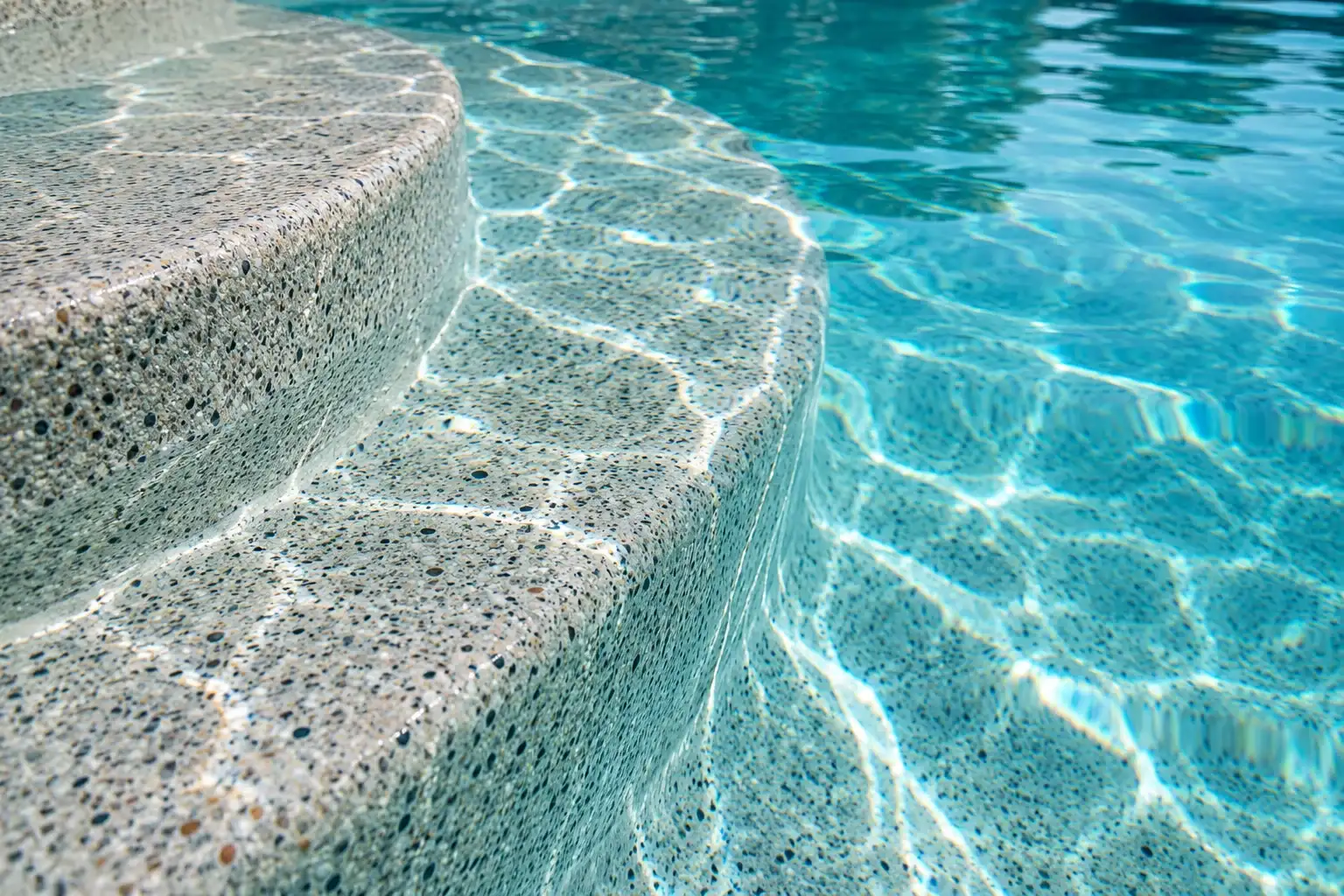
Pebble finishes mix small polished river stones into plaster, trowel the material on, and then wash away the top cream of cement while it is still workable. What is left is a surface where the stones carry most of the contact with the water. The color of the finish comes from the stones themselves, which is why pebble pools look like a stream bed rather than a painted surface. Because the stones do the wearing, pebble keeps its look longer than any cement skin, but the trade is feel. Pebble is noticeably rougher underfoot, on elbows, and on swim trunks.
The mottling risk is real, and it is a prep problem rather than a material problem. Inconsistent mixing, uneven exposure of the stones, or filling the pool too early all leave light and dark patches that never even out. A pebble pool that gets filled on schedule and mixed right holds its color for a long time. One that is rushed shows it from the first week.
Signs
Where quartz fails here
Phoenix hard water still lays a white scale band at the waterline on quartz, and the summer sun still fades pigmented finishes over the years. The smooth surface brushes easily, which matters in a yard with a tree debris load, but the cement between the quartz grains keeps dissolving in aggressive water. A neglected quartz pool chalks eventually, just slower than plain plaster. On a 1970s or 1980s pool in Camelback East, where the shell is fine but the original skin is gone, quartz is the middle path: better than replastering with the same material, smoother and cheaper than pebble, and still a finish that needs the waterline scrubbed every season.
Quartz also shows brush wear on the smooth surface, the way a glossy floor shows scuffs. It is minor and cosmetic, and it is the price of the smoothness that makes quartz the comfortable choice. The real failure is still the waterline, where the scale returns no matter what the finish is called.
Signs
Where pebble fails here
Pebble shows its two failure modes right at the waterline. One, Phoenix hard water lays scale between the stones, and the white band is harder to scrub out of texture than off a smooth surface. Two, mottling: fills that happen too early in summer heat, or mixes that are not consistent, leave patchy light and dark areas that no brushing fixes. In Arcadia, where irrigated lots grow big mesquites and palo verdes over the pool, a dark pebble finish shows every leaf stain, and the stains set fast in the heat. Pebble is the longest-wearing finish on the list, and it still fails here when the prep is rushed or the yard is ignored.
Costs
What it costs and what drives the number
Pebble generally runs above quartz, and both run above plain plaster. The spread varies with square footage, the grade of stone, and how deep the chip-out goes. Access moves the number too: an alley-loaded yard in an older central Phoenix neighborhood costs more to work in than an open lot. Stone grade is a real driver, since small polished pebbles cost more than larger mixed stone. The rest of the drivers sit in the prep, and you can see them line by line on the pool resurfacing cost page. What no bid should promise is a finish that never scales, because Phoenix water scales everything eventually.
Good to know
What good work looks like in Phoenix
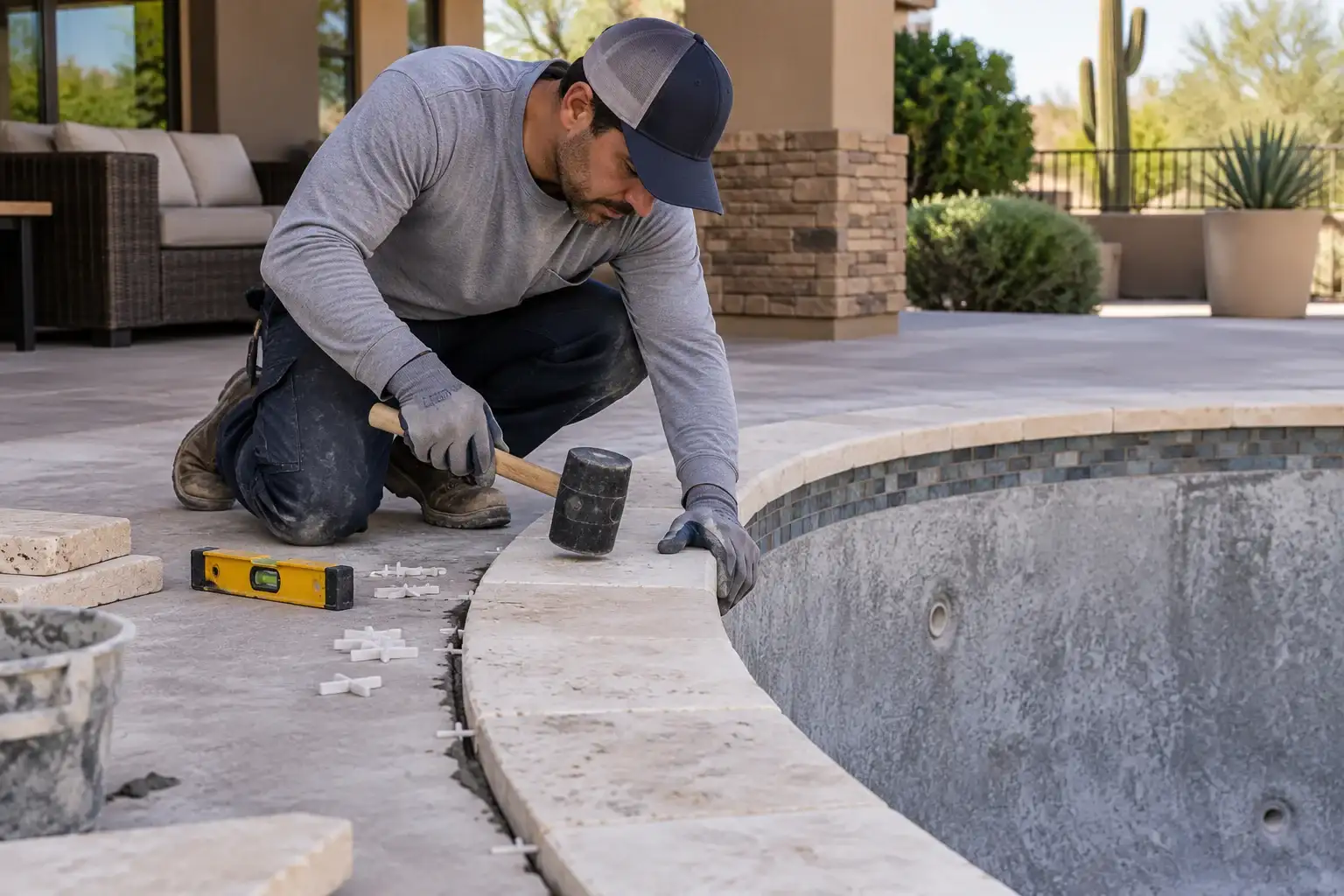
- These finishes get mixed and applied properly, because mottling is a mixing and fill-timing problem, not a mystery.
- Walking the yard before you pick a finish. Trees, sun exposure, and your own feet decide quartz versus pebble more than a brochure does.
- Telling you the waterline will scale on either finish and how to manage it, instead of selling a finish that pretends hard water does not exist.
- You get one scope, one number, and a finish that fits the yard you actually have.
6 questions
Quartz vs Pebble Pool Finish: your questions
Still have a question? Call (747) 243-2089 and say what your pool is doing.
Is quartz or pebble better in Phoenix hard water?
Both develop a scale band at the waterline because the water is what it is. Quartz is easier to scrub clean, while pebble holds scale between the stones. Neither finish stops scale on its own. If you want the line to need the least work, waterline tile is the real answer, not the finish choice.
Does pebble hurt your feet?
It is rougher than quartz or plaster. Kids and adults feel it on feet and knees. Some people trade the texture for the longer life, and others will not, which is why you should stand on both before you pick.
Why does my pebble finish look patchy?
Patchy pebble is mottling, and it comes from inconsistent mixing or filling the pool too early. It is an install problem, not something water chemistry will fix after the fact. The stones are not the problem. The mix and the fill schedule are, which is why a mottled pool is a complaint about the work, not the material.
Which finish is easier to keep clean with trees around?
Smooth quartz brushes easier and sheds leaf debris faster. Pebble texture catches leaves and stains. If a palo verde or mesquite hangs over the pool, quartz is the easier surface to live with.
Does quartz chalk?
Yes, eventually. The cement between the quartz grains dissolves the same way plaster does, just slower, because the harder grains take part of the wear. That slower rate is why quartz sits between plaster and pebble on price and lifespan.
Which finish should an original 1980s pool get?
It depends on the shell and how you use the pool. The pebble vs plaster page and the resurfacing vs replastering page walk through the full decision.