Blog · October 30, 2026 · 5 min read
Pebble vs Plaster Finish in Phoenix, AZ
Plaster is the smooth white skin most 1970s and 1980s Phoenix pools still wear. Pebble exposes small river stones at the surface and lets them take the wear instead. Plaster is softer on feet and cheaper up front. Pebble lasts longer in hard water and full sun.
All postsGood to know
The short answer
Standard plaster is a cement skin that chalks and etches fastest, especially in Phoenix hard water and summer sun. Pebble embeds natural stones in the surface, and the stones carry the water contact while the cement holds them in place, so the finish keeps its look for more years. Pebble costs more and feels rougher, and it mottles when the mix is inconsistent or the pool is filled too early. The right choice depends on the shell, the water, and your tolerance for a rougher feel underfoot.
Plaster
Plaster: what it actually is
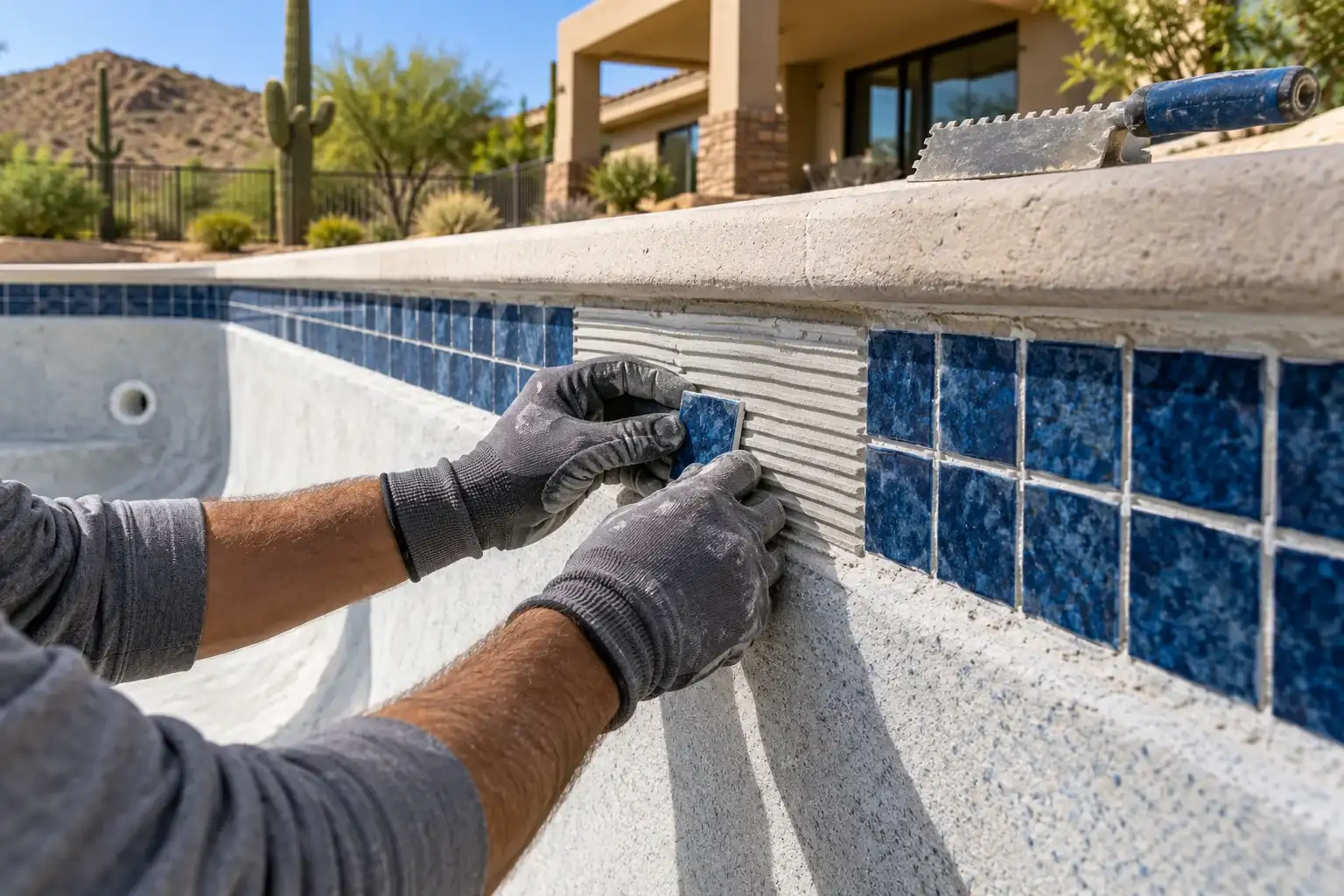
Plaster is the thin cement skin that seals a concrete pool and gives swimmers a smooth surface. It goes on in passes and cures under water on a schedule. Water chemistry is what kills it. Arizona water is hard, and over the years the minerals in the water and the sun's heat dissolve the cement right out of the surface. The finish chalks white powder onto the floor, the walls go rough, and the waterline grows a scale band. On a pool built in the 1970s or 1980s that still has its original skin, that process is mostly finished, which is why the finish feels like sandpaper and clouds the water when you brush it.
Plaster's virtues are real and they are why it lasted as the default for decades: it is smooth, it is the cheapest finish to put on, and it trowels to any shape. The trade is the lifespan. In Phoenix conditions, plain plaster is the shortest-lived finish on the menu, and a replaster with the same material simply restarts the countdown.
Pebble finish
Pebble: what it actually is
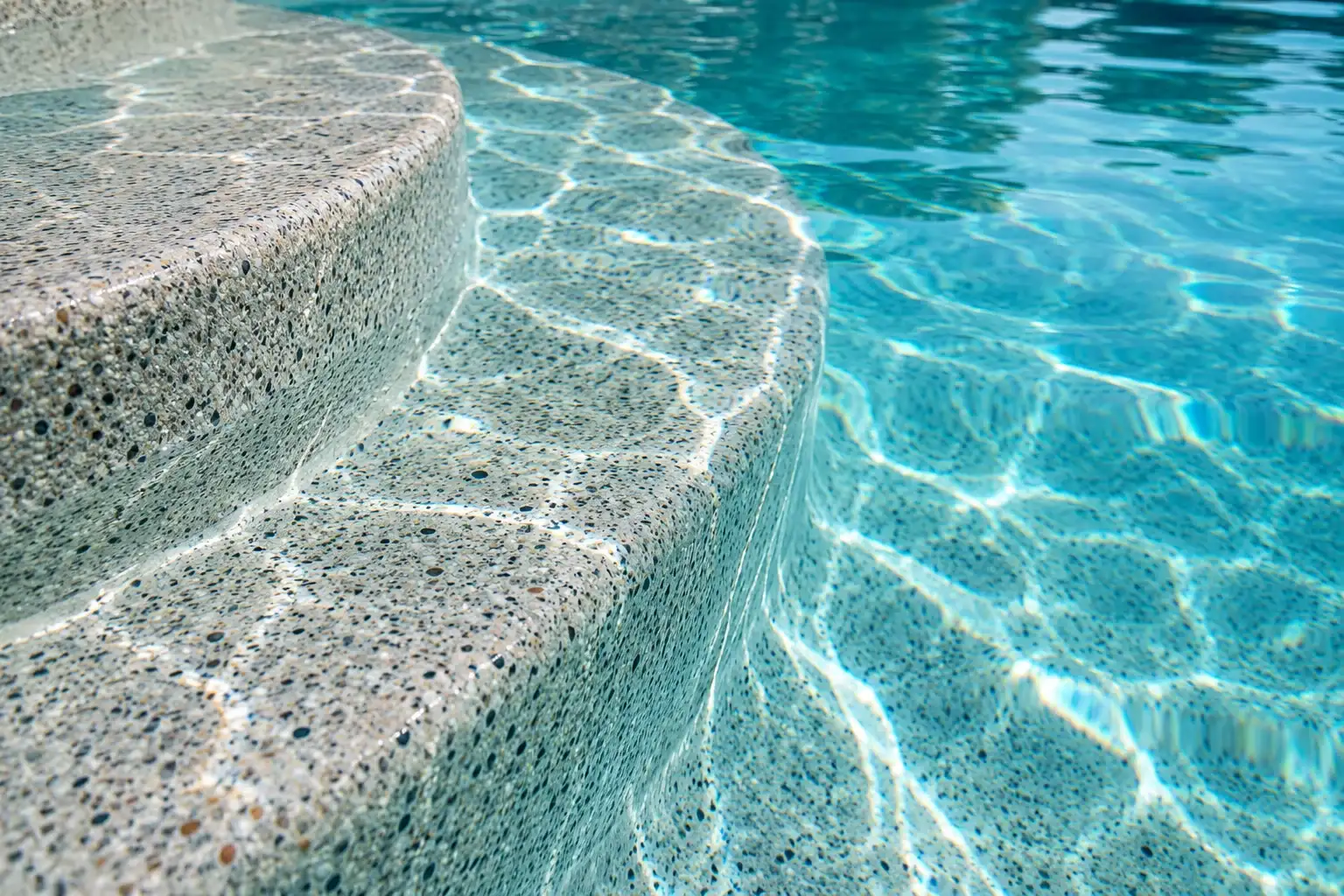
Pebble finishes mix small polished river stones into the plaster, trowel the material on, and then wash away the top cream of cement to expose the stones. The stones, not the cement, face the water, and stone does not dissolve the way cement does. That is the whole mechanism behind the longer life: the part that wears slowly is the part the water touches. The color comes from the stones themselves, so the finish reads like a natural stream bed, and stains and fading have less flat white cement to show on.
The costs are feel and consistency. Pebble is rough on feet, knees, and elbows, and some swimmers never get used to it. And because the stones have to be exposed evenly, the finish only looks right when the mix is consistent and the pool is not filled early. A rushed pebble job mottles into light and dark patches that stay forever.
Signs
Where plaster fails here
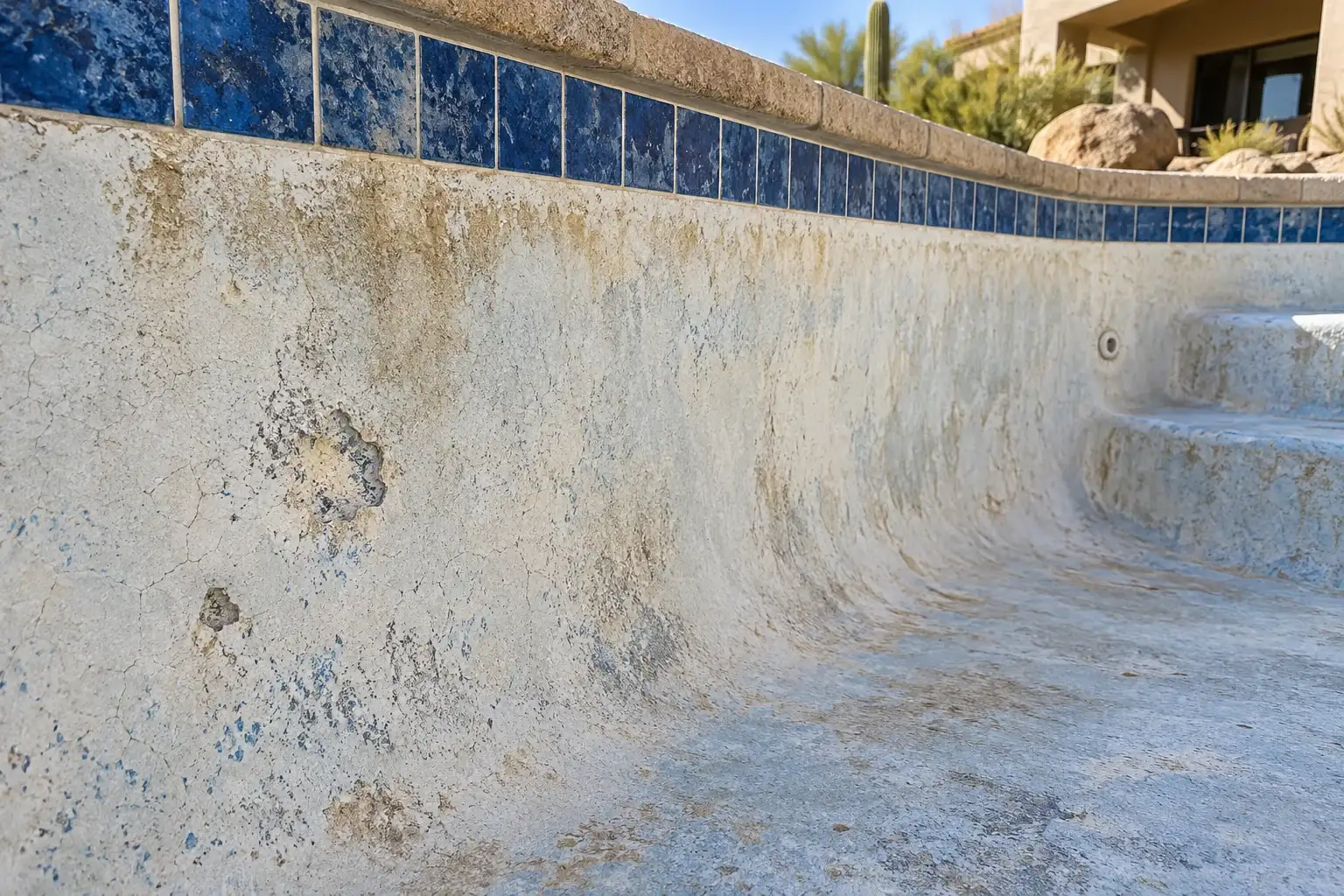
Phoenix is where plaster fails fastest. The water is hard, the sun is brutal, and many pools from the 1970s and 1980s are running their original skin. The tell is the same on every one: white powder on the floor, walls rough as fine sandpaper, and a crusted scale band at the waterline. In Camelback East and the older central neighborhoods, the tree debris load adds tannin stains to the chalking, and the finish looks twenty years older than the house. An acid wash brightens it for a season, then the chalking returns, because the skin itself is gone. Plain plaster redone is the cheapest fix and the fastest to repeat. The resurfacing vs replastering page lays out what a re-skin actually involves.
The pattern is predictable. The white powder shows up in the same summer the roughness spreads across the walls, and the waterline crust has usually been building for years by then. The chemistry gets blamed, and the owner gets sold balancing chemicals, because that is an easier story than the truth: the skin has given up its binder, and no chemical grows binder back.
Signs
Where pebble fails here
Pebble's two failure modes show up at the Phoenix waterline. Hard water scale settles between the stones, and the white band is harder to scrub out of texture than off a smooth plaster surface. And mottling: a mix that is not consistent, or a pool filled too early in the heat, leaves patchy light and dark areas that no brushing or chemistry fixes. In Arcadia, where flood-irrigated lots feed big mesquites over the pool, dark pebble also shows every leaf stain, and the stains bake in fast. Pebble is the longest-wearing finish on the list here, and it still fails when the prep is rushed or the yard is ignored. The quartz vs pebble page compares the middle option against it.
Costs
What it costs and what drives the number
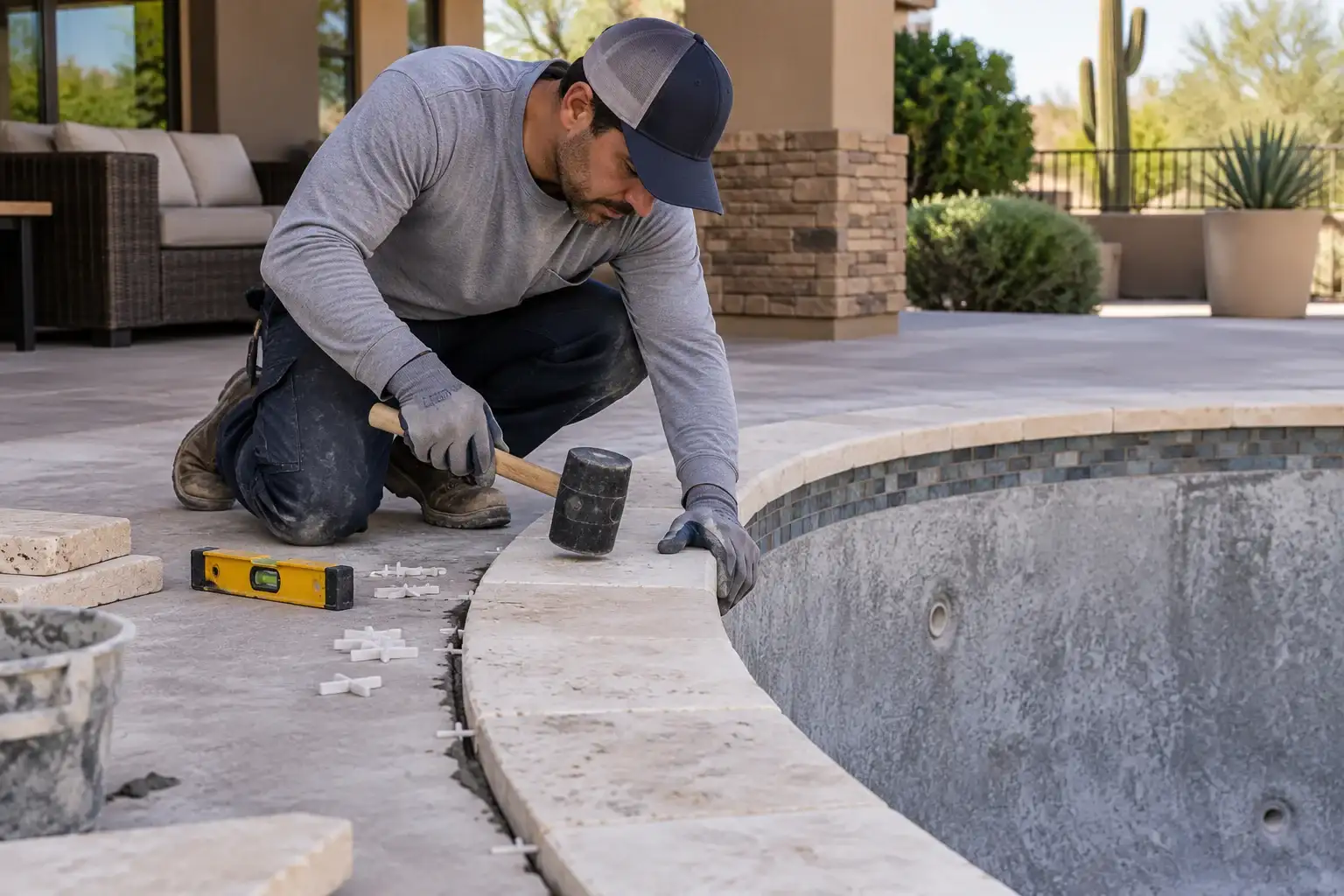
Pebble runs above plain plaster, and the gap varies with square footage, stone grade, and how deep the chip-out goes. The stone itself is the obvious driver, since polished river pebbles cost more than plaster sand, but the prep drives the number just as hard. A proper chip-out, a shell that gets inspected rather than ignored, and a cure that is not rushed all cost money and are exactly where cheap bids cut. Access moves it too: alley-loaded yards in older Phoenix neighborhoods cost more to work in. The full list of drivers is on the pool resurfacing cost page.
Good to know
What good work looks like in Phoenix
- Telling you the honest trade: plaster is smooth and cheap and wears out first, pebble is rough and costs more and wears longest.
- The mix and the fill happen on schedule, because mottled pebble is a rushed job, and rushed is how it gets done cheap.
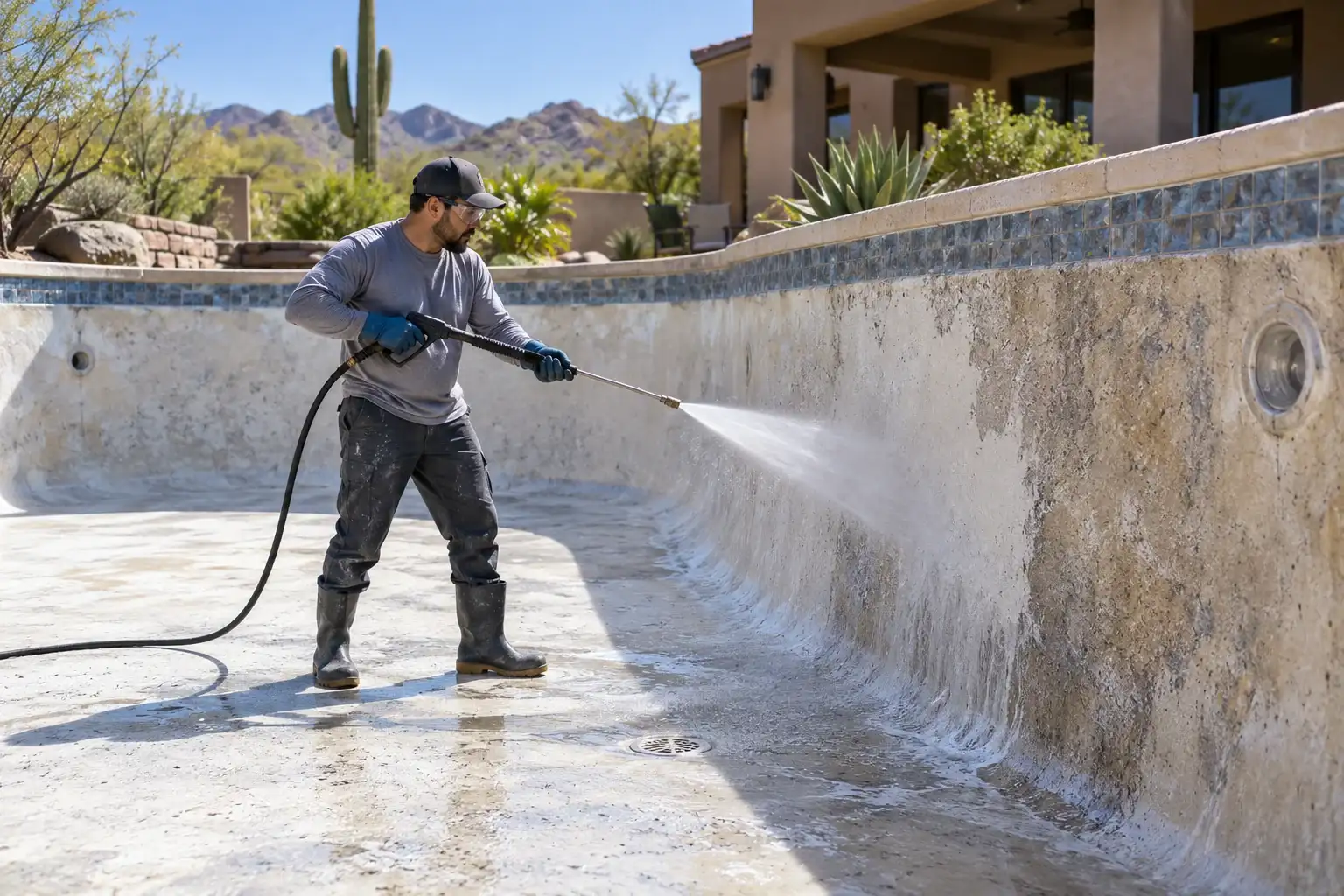
- Checking the shell and the waterline before any finish choice, because the finish sits on the prep.
- You get one scope and one number, with the finish picked for your yard, not for the brochure.
6 questions
Pebble vs Plaster Finish: your questions
Still have a question? Call (747) 243-2089 and say what your pool is doing.
Is pebble worth the extra cost?
For a pool you plan to keep, usually. The finish lasts longer in hard water and sun, which is the whole Phoenix problem, and the extra cost is front-loaded while the saving is every year after. If the pool is a stopgap before a rebuild you already plan, plain plaster might be the right money. The answer follows the plan for the yard, not the brochure for the finish.
Does pebble hurt your feet?
It is rougher than plaster. Most people get used to it; some do not. Standing on a finished pebble pool before you commit answers it better than any description.
Why does pebble finish look patchy?
Mottling comes from inconsistent mixing or filling the pool too early. It is an install problem that shows up in the first week and never evens out, which is why the crew doing the work matters more than the stone brand.
Can I switch from plaster to pebble when I resurface?
Yes. The old plaster comes off, the shell gets prepped, and pebble goes on in its place. Most original-plaster pools in Phoenix switch finishes when they finally get resurfaced.
How long does plaster last in Phoenix?
The shortest of the finishes. Hard water and summer sun chalking eat it faster here than almost anywhere, and an original 1970s skin is living on borrowed time by now. When the powder and the roughness show up together, the skin is done, not dirty.
Which finish handles the waterline best?
None of them stop hard water scale. Tile handles it best, and the tile vs plaster waterline page explains why the line is its own decision.