Blog · October 30, 2026 · 5 min read
Tile vs Plaster at the Waterline in Phoenix, AZ
The waterline is where hard water scale and sun damage hit hardest. Tile sheds scale and scrubbing better than plaster. A 1970s or 1980s Phoenix pool with failing waterline tile leaks at the line, and resurfacing the interior without fixing the tile first just moves the leak.
All postsGood to know
The short answer
Waterline tile is a glazed band that sits at the water's surface, nonporous and easy to clean, and it fails when the bed behind it lets go and tiles pop. A plaster waterline is the same finish carried up the wall, and in Phoenix hard water it etches, chalks, and grows a scale band that scrubbing makes worse. Tile costs more to put in and outlasts the plaster around it, which is why most 1970s and 1980s pools were built with it and why the decision now is repair versus replace. The right choice depends on the tile bed, the shell behind it, and how far the failure has spread.
Tile and coping
Tile at the waterline: what it actually is
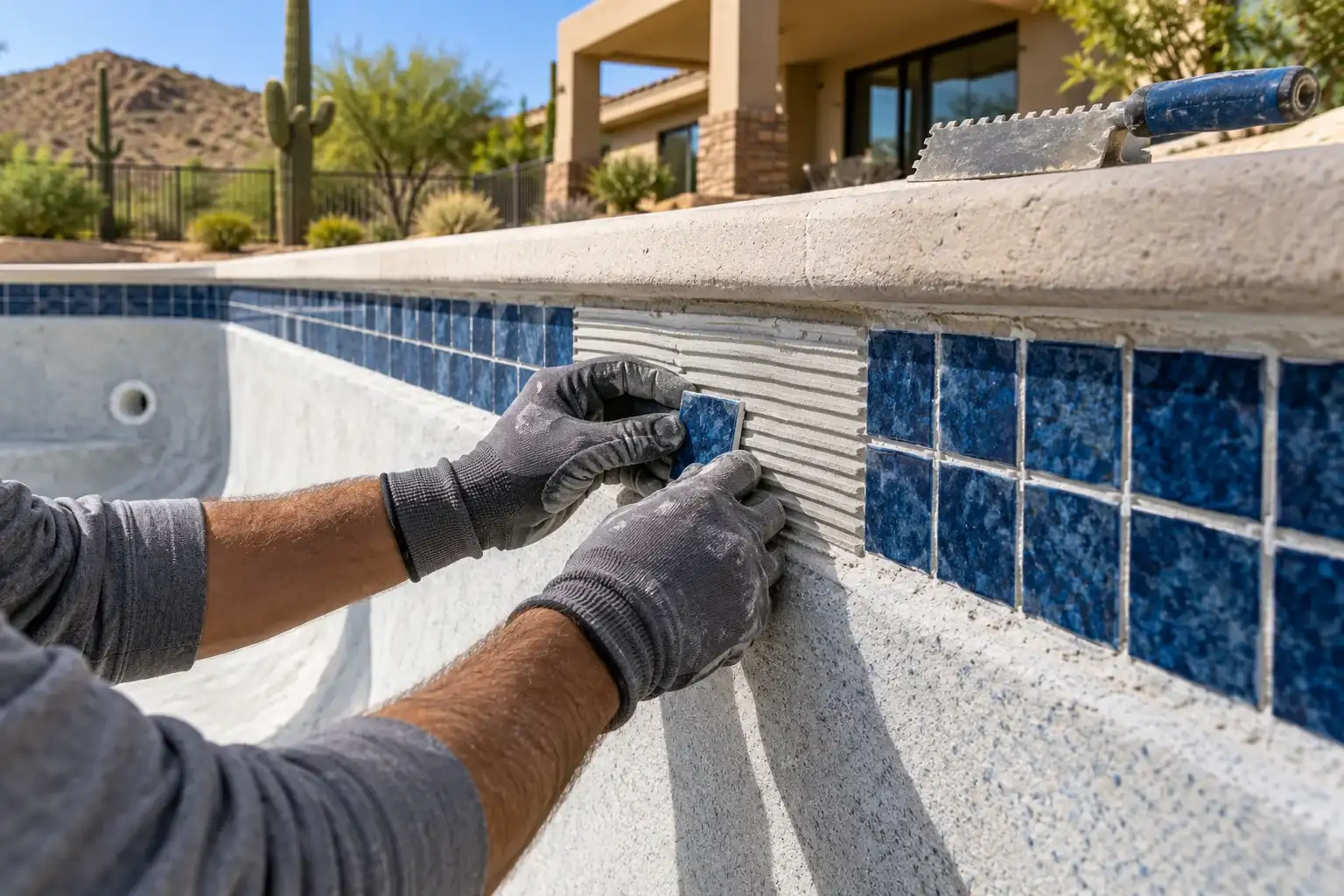
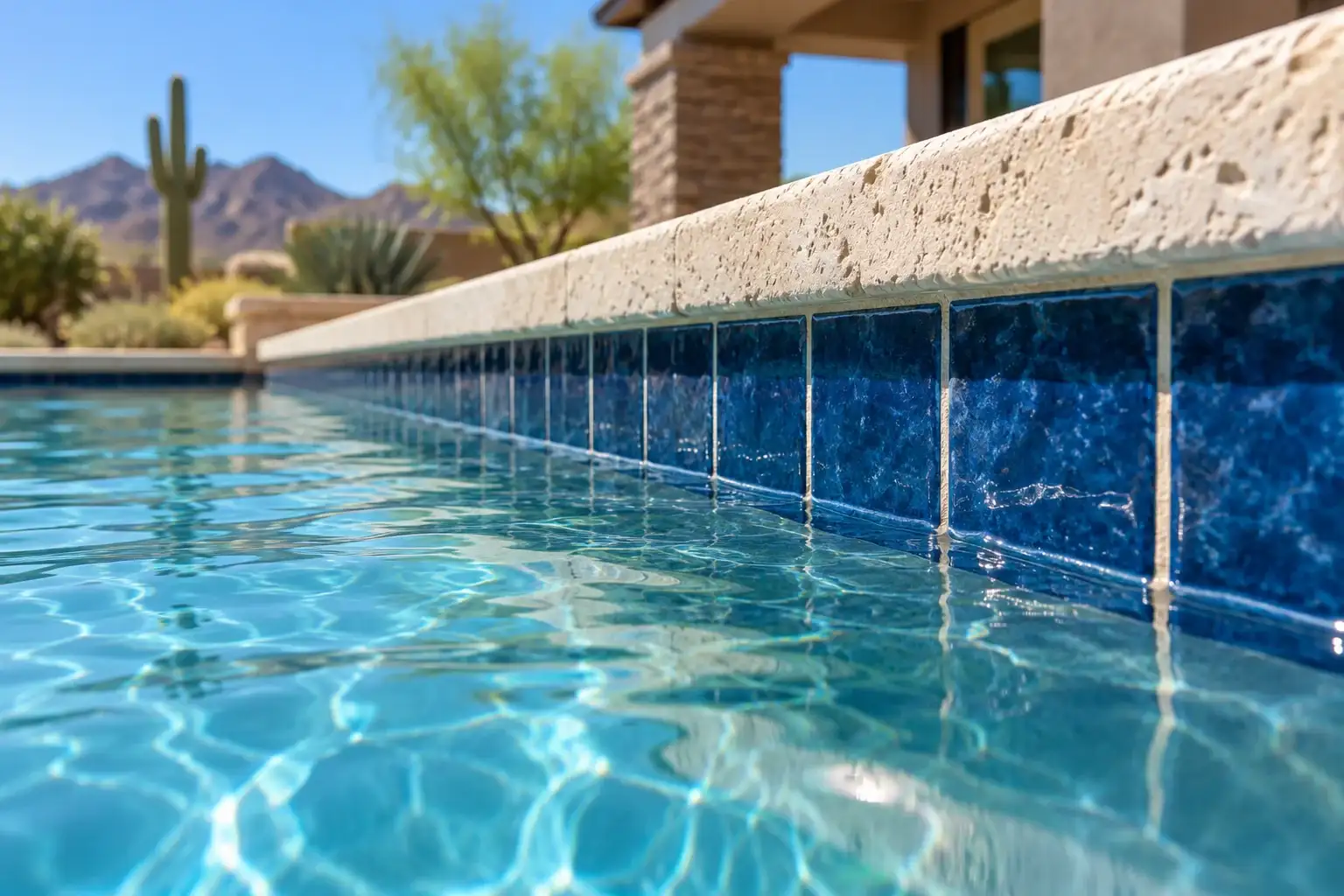
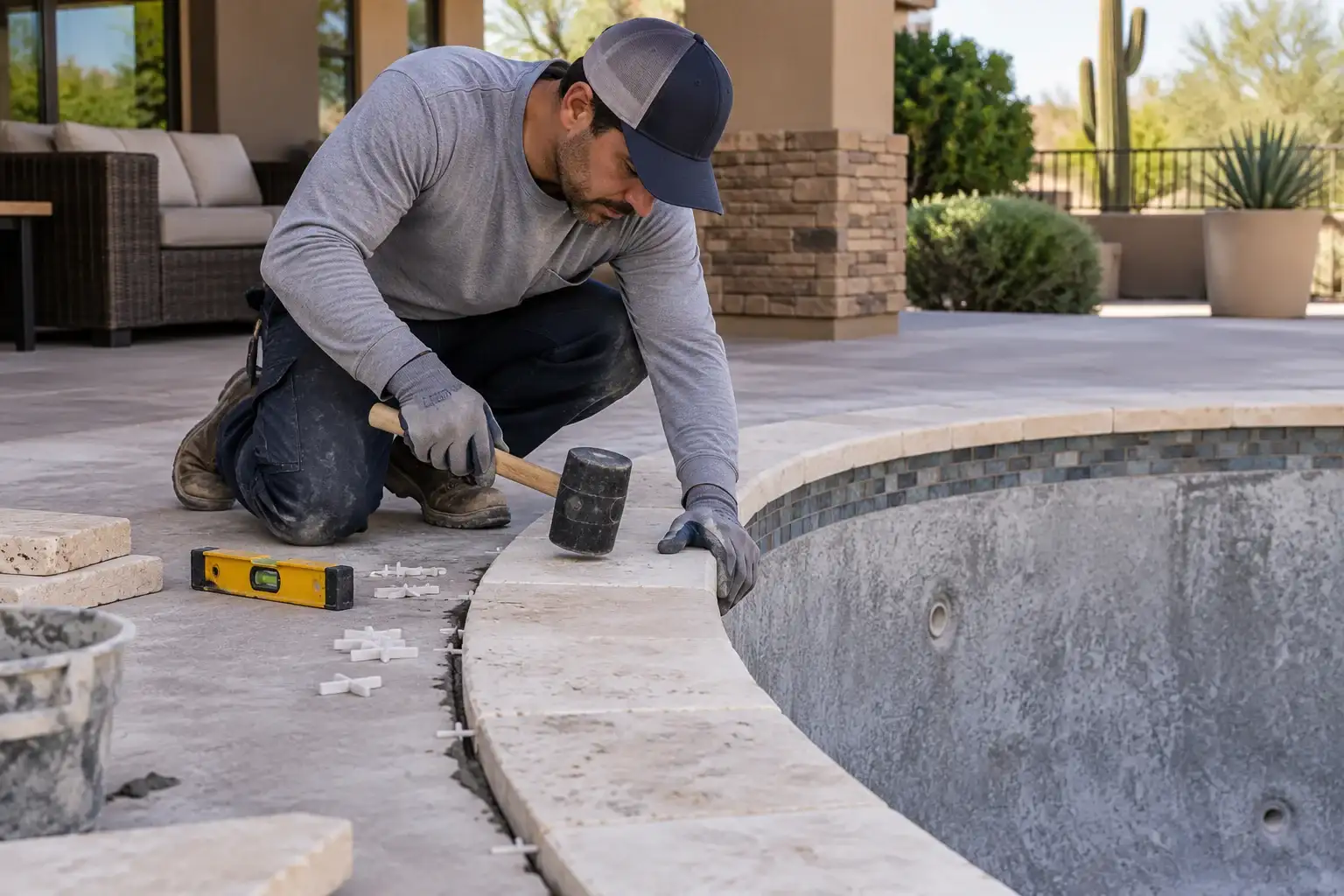
Waterline tile is a band of glazed ceramic, usually a few inches tall, set in mortar at the level where the water sits. The glaze is glass. Scale and scum land on it, but they sit on the surface and wipe or acid off, because the glaze is nonporous. The tile also hides the line where sun, evaporation, and chemistry all concentrate their damage at once. On most 1970s and 1980s Phoenix pools, the original build included a tile band, and it has often outlived the plaster it was set against.
Tile fails from behind. The mortar bed dries and cracks over the decades, water works in behind the glaze, and tiles start popping loose one by one. Once water is moving behind the band, the leak is at the waterline, which is the last place a leak shows as wet ground, so it runs quietly for a long time.
Plaster
Plaster at the waterline: what it actually is
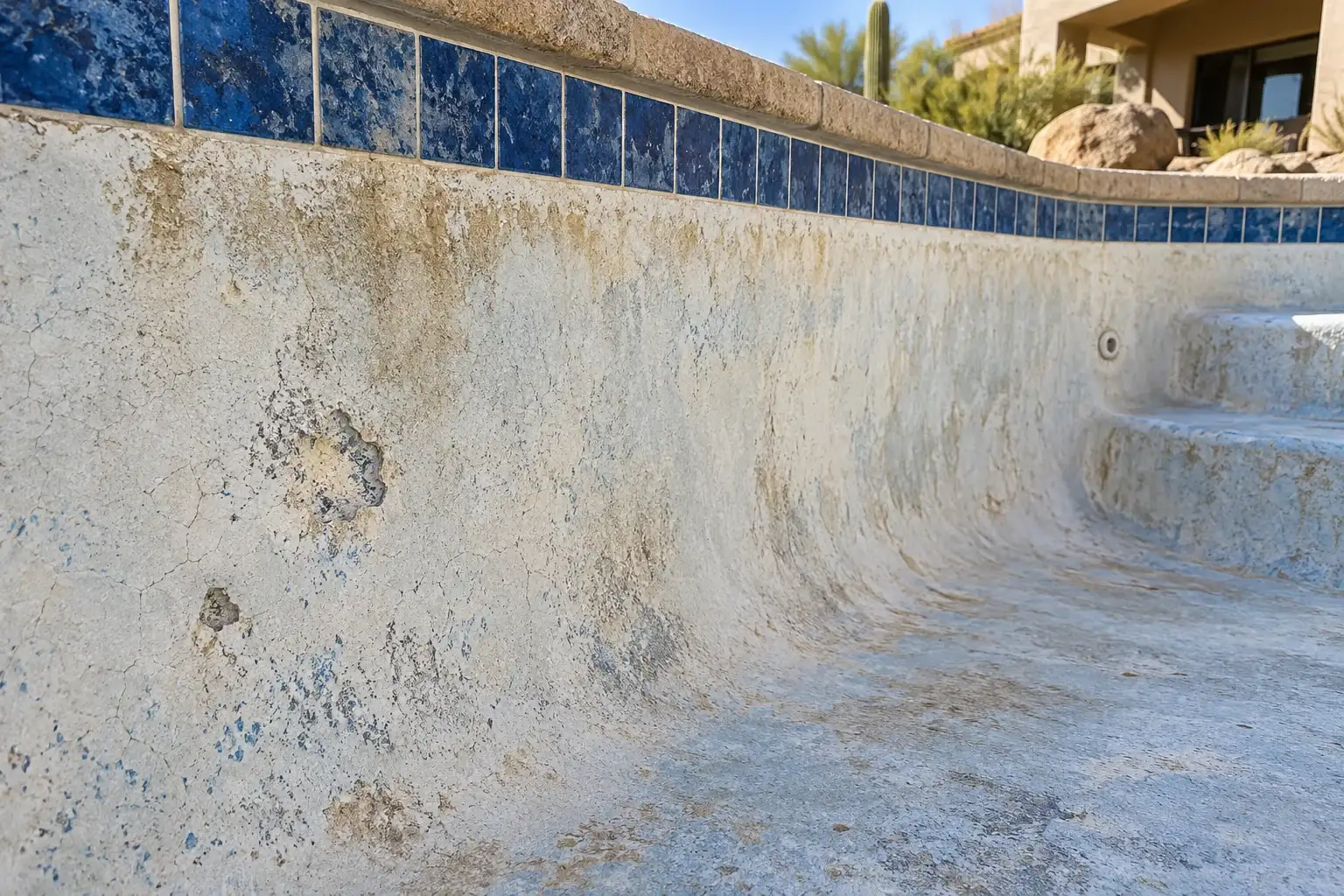
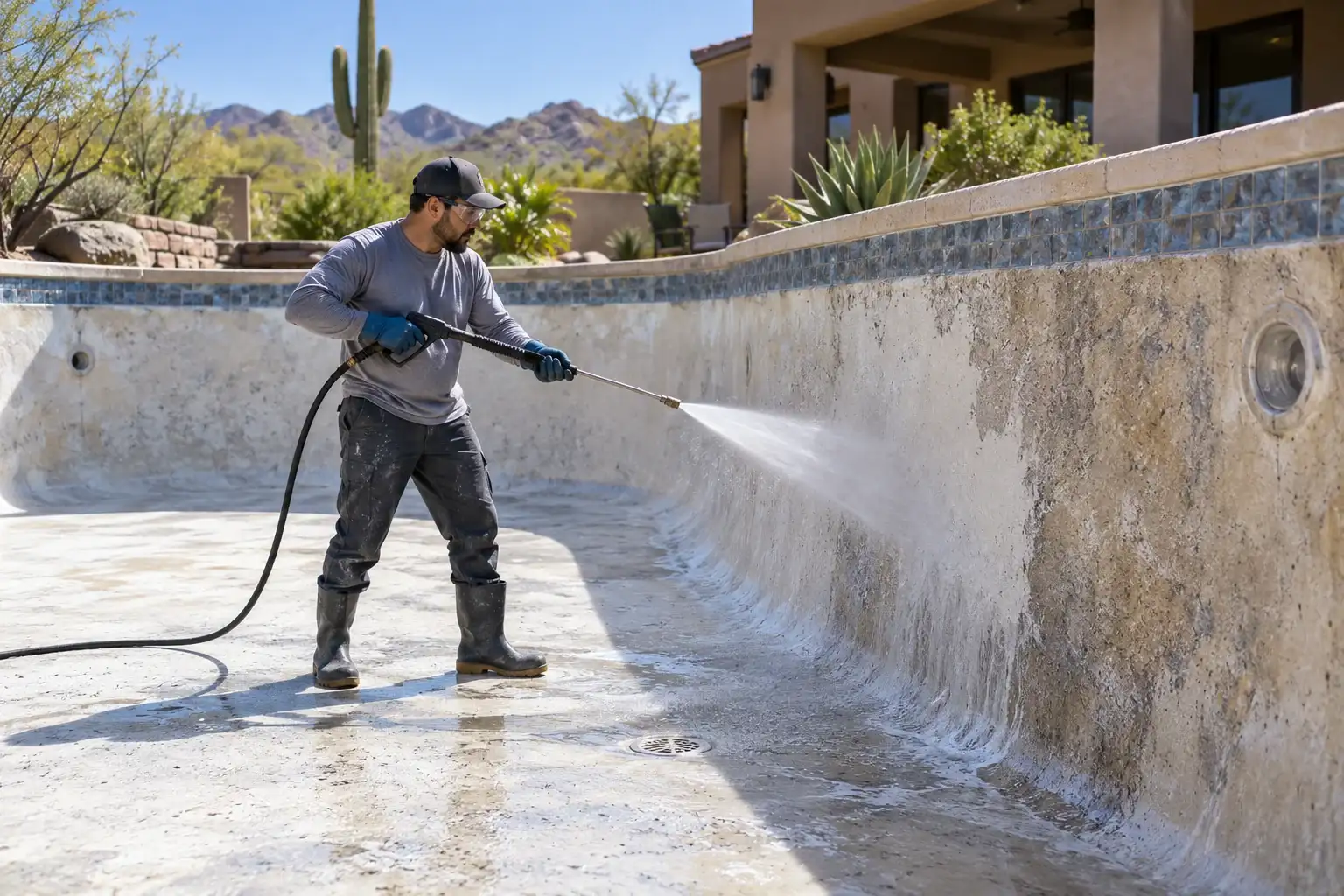
A plaster waterline is the same cement skin as the rest of the pool, carried up the wall with no tile on top of it. It is porous, so hard water minerals soak in and bond, not sit on the surface. The result is the classic Phoenix scale band: a white, crusty ring that darkens to brown as dirt joins the minerals. Scrubbing it with a pumice or cleaning it with acid removes scale and plaster together, and the surface roughens a little every year until the line feels like sandpaper.
The line is also where chalking shows first. Water chemistry is most aggressive at the surface, where evaporation concentrates everything, so the plaster at the waterline fails before the floor does. When the line goes chalky and rough, the rest of the finish is not far behind.
Signs
Where tile fails here
Phoenix hard water scales the tile face the same as everything else, but the glaze cleans up, so the face is not the failure. The failure is behind the band. The mortar beds under 1970s and 1980s tile have dried and cracked through decades of summer heat cycling, and the tiles pop one by one, usually starting where the sun beats on the wall all afternoon. In a Camelback East pool that has already been resurfaced once, loose tile left in place during the resurface is the most common leak nobody can find, because the new finish holds water right up to the band and the water slips out behind it.
Signs
Where plaster fails here
The plaster waterline fails from the hard water itself. The scale band forms, the scrubbing etches the cement, and within a few years the line is chalky white and rough while the floor still looks acceptable. In Arcadia, where flood irrigation and big trees mean the waterline catches debris as well as minerals, the band goes from white to stained brown fast. Once the plaster at the line is failing, an acid wash buys a season and then the same band comes back, because the water is the same water. The line fails first, and it is the early warning that the whole finish is on its way out.
The pattern repeats every summer. The band forms, someone scrubs or acids it, the plaster at the line gets a little rougher, and the next band forms faster on the rougher surface. After a few seasons the line is pitted enough to hold dirt, and the pool looks dirty at exactly the line where everyone looks.
Costs
What it costs and what drives the number
A tile band costs more per linear foot than a plaster line, which is why pools that never had tile usually stay plaster, and pools that lost their tile usually get it back. Replacing just the waterline tile is priced on footage, how much of the old bed has to come out, and whether the shell behind it needs work. Doing the tile during a resurface is the cheapest moment to do it, because the pool is already drained and the interior is already being worked. The full range of drivers is on the pool resurfacing cost page, and the one rule that matters is simple: never resurface past loose tile.
Good to know
What good work looks like in Phoenix
- Checking the waterline before any resurfacing bid, because loose tile behind a new finish is a leak with a receipt.
- Telling you when the tile can be saved and when the bed behind it is gone, instead of gluing tiles back onto a bad bed.
- The band and the finish get set in the right order, so the tile seats into the new plaster rather than floating over it.
- You get one scope that covers the line and the finish together, not two surprises.
6 questions
Tile vs Plaster at the Waterline: your questions
Still have a question? Call (747) 243-2089 and say what your pool is doing.
Should I tile the waterline when I resurface?
Almost always yes if the pool had tile or the budget allows it. The band protects the finish at the line where hard water and sun concentrate their damage, and doing it during a resurface is the cheapest time.
Why is my waterline tile falling off?
The tile face is fine. The mortar bed behind it has dried and cracked over the decades, water has worked in behind the band, and the tiles are popping from the back. It is a bed failure, not a tile failure.
Does hard water ruin pool tile?
It scales the face, but glaze cleans up. The danger is that hard water scale hides the failing bed behind the band, and the leak runs quietly while everyone scrubs the outside. What ruins the band is time and heat behind the glaze, because the face is the last thing to fail, which is why the check starts behind it.
Can I just replaster over old tile?
No. The new finish over loose tile is a leak waiting a season. The old band has to come off and a new one goes in, which is why the resurfacing vs replastering page treats the waterline as part of the job.
How do I get scale off the waterline?
Tile takes a gentle acid cleaning and survives it. Plaster takes the acid and thins with it. That difference is the whole argument for tile on a Phoenix pool, and the acid wash page covers when cleaning is enough.
Do 1970s Phoenix pools still have their original tile?
Plenty do, which is why the bed is the question. A band that has sat in the sun for forty or fifty years may look fine from the deck and be gone behind the glaze. When the bed is gone, the fix is a re-tile during the resurface, not glue.