Blog · November 1, 2026 · 5 min read
Pool plaster repair vs resurfacing: when is a patch enough?
A patch makes sense for small damage on plaster that is otherwise smooth and sound. Several signs together, or a finish near 10 years old, point to resurfacing the whole pool, because a patch cannot change the water, the age or the surface around it. The sources give no patch rule for a backyard pool, so the line below comes from the signs they list. Here is what a patch is, which signs call for the whole surface, what a patch cannot fix and where a county guide draws a line.
All postsPlaster
What is the difference between a pool plaster patch and resurfacing?
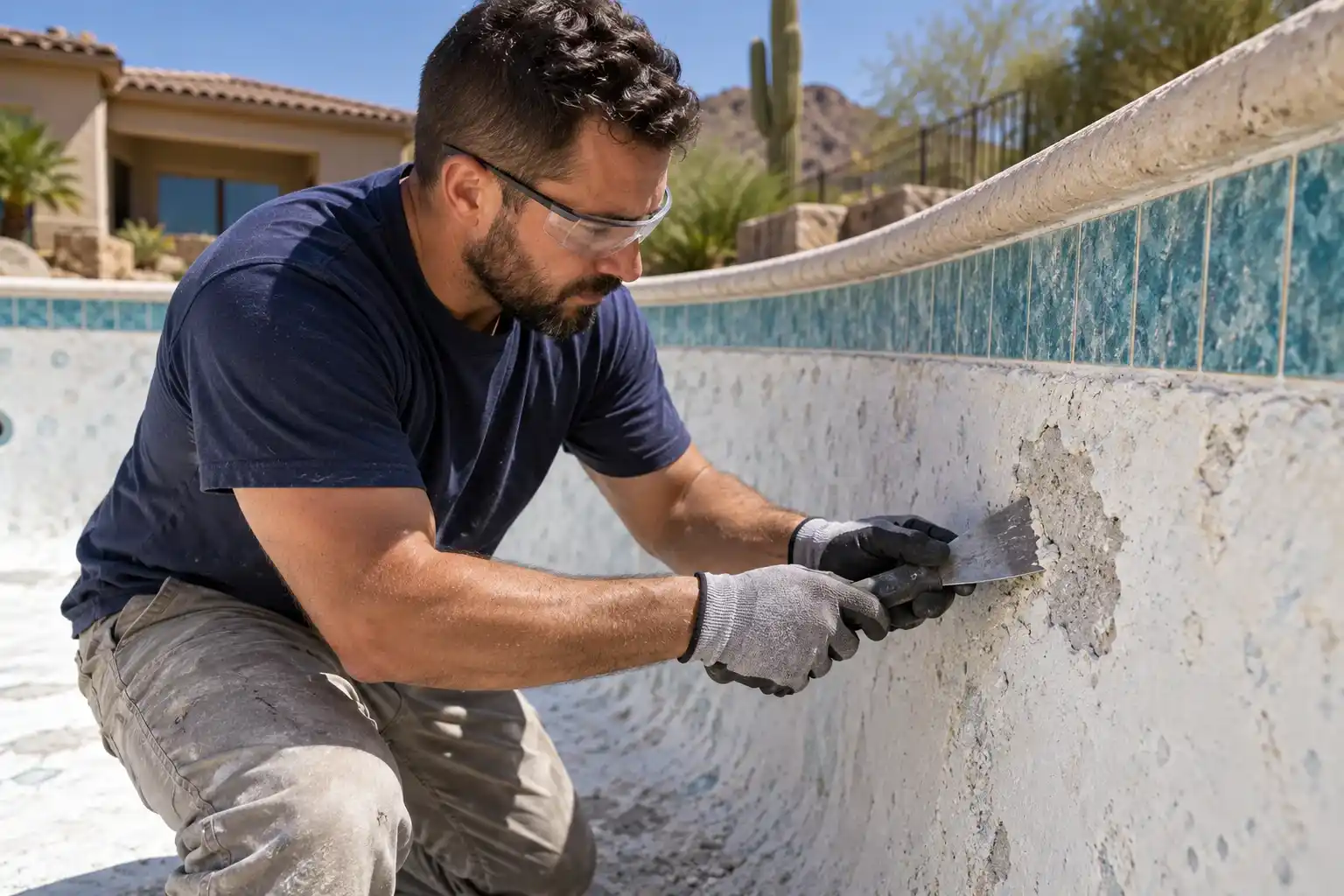
A patch repairs one area of the plaster, while resurfacing replaces the interior finish over the whole pool. Between the two sits light prep, a standard resurface that keeps the existing surface, sanded and cleaned with minor repairs, before the new finish goes on.
A full chip-out goes further and removes the old finish down to the shell. A pool with deep cracking, widespread delamination (the finish separating from the shell in sheets) or a history of repeated patch jobs usually needs the full chip-out, so the new finish has a sound surface to hold to. The job itself is covered in pool plastering and replastering.
Signs
Which signs say the whole surface needs redoing?
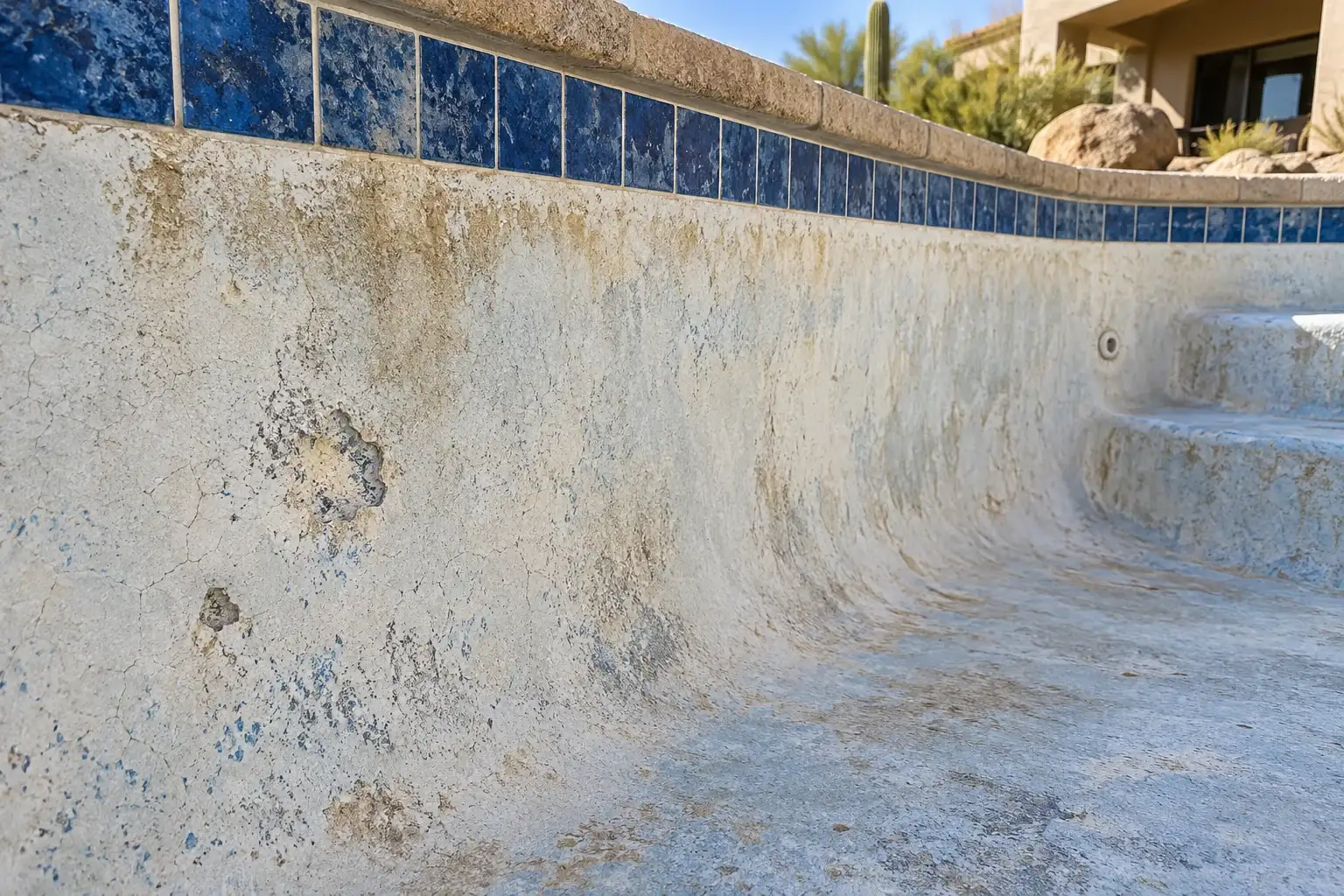
Several signs showing at once point to wear across the whole surface, not one spot. For a plaster pool in Phoenix the signs list reads like this:
- The surface feels rough or grainy where it used to feel smooth.
- White scale and calcium buildup ring the waterline and will not scrub off.
- Stains from leaves, minerals and pool chemicals have settled into the plaster.
- Patches of plaster have thinned and the gray shell shows through.
- Small cracks or hollow spots have appeared where the plaster let go of the shell.
If you see 2 or more of these, the surface may be telling you it is time. Visible cracks in the shell itself, especially near steps and benches, and chipping, flaking or exposed gray patches are on the longer signs list too.
A county pool guide lists rough finishes and scale formation among the things that stimulate algae growth, and says algae create a slipping hazard (LA County Public Health, pool service study guide (opens in a new tab)).
Good to know
How does the age of the finish change patch or resurface?
The older the finish, the less one repaired spot says about the rest of the surface. A 2026 Arizona pool cost guide puts plaster at 10 to 15 years in Arizona, and a national 2026 cost guide puts it at about 10 years.
Published 2026 cost data for the Phoenix metro describes resurfacing a concrete pool every 10 to 15 years, and a finish 10 years old or older is the point where Arizona plaster commonly nears the end of its working life.
A patch repairs one area, and the rest of the surface keeps its age. None of the sources checked gives a lifespan for a patch. The pool surface lifespan page goes finish by finish.
Good to know
What can a patch not fix?
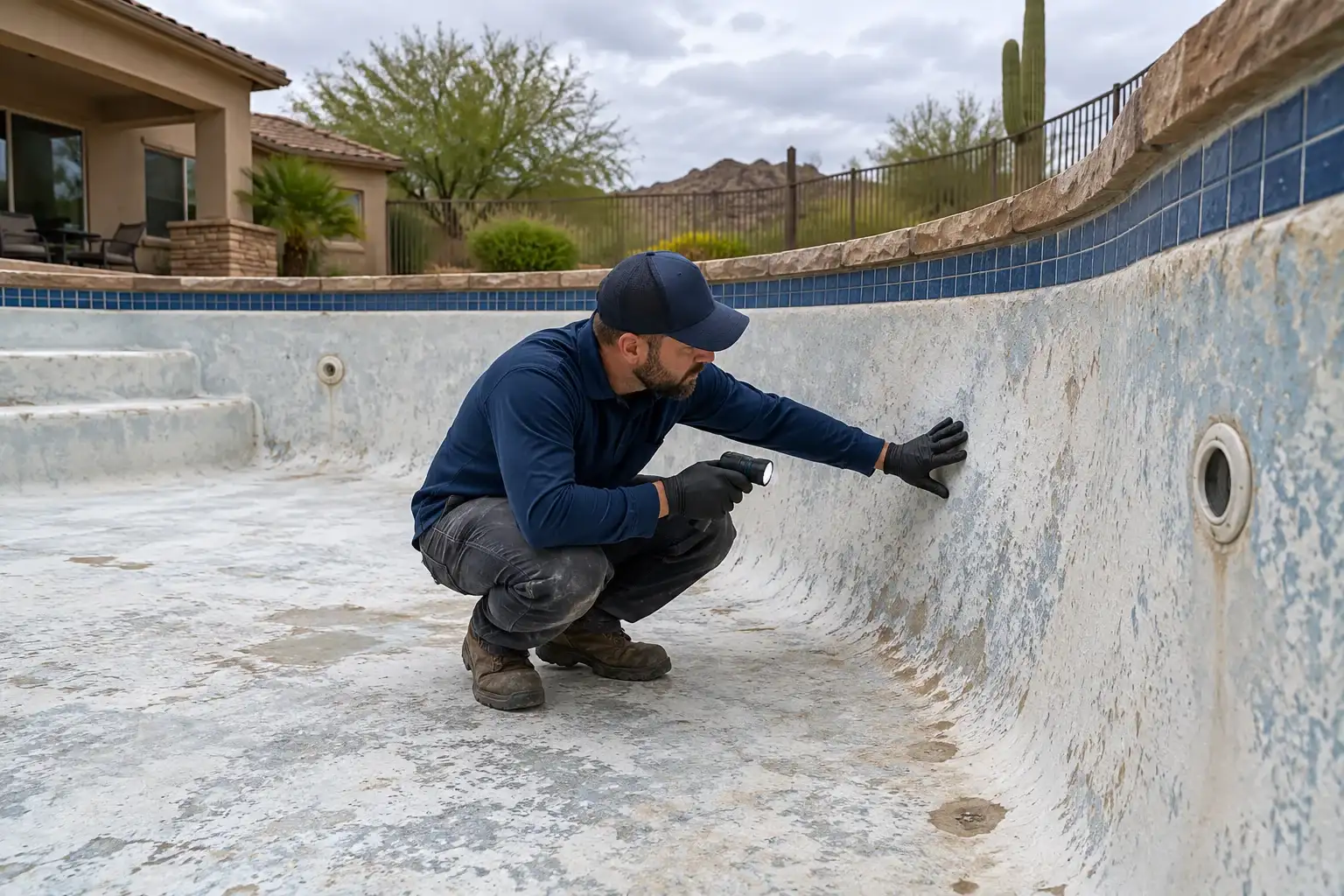
A patch cannot reach past the spot it covers, so it leaves the cause and the rest of the surface as they were. These are the limits, hedged where the sources stop:
- The water. The county guide says high calcium levels may form scale, which results in rough plaster surfaces, and that low calcium levels can result in etching and pitting of plaster. Both come from the water, not from one damaged spot (LA County Public Health (opens in a new tab)).
- A finish that has let go of the shell. Delamination is one of the clearest signs a full chip-out is needed rather than light prep.
- Wear across the surface. Thin plaster with the shell showing through, or scale and stains that will not lift, describe the whole surface.
- A matching look. Steps and benches "mismatched from an earlier patch job" are on the remodeling signs list, so a repaired area can fail to match what is around it.
Phoenix tap water measured 172 to 302 ppm total hardness in the City of Phoenix 2025 water quality report (opens in a new tab). The sources do not say how a given patch holds up in water like that.
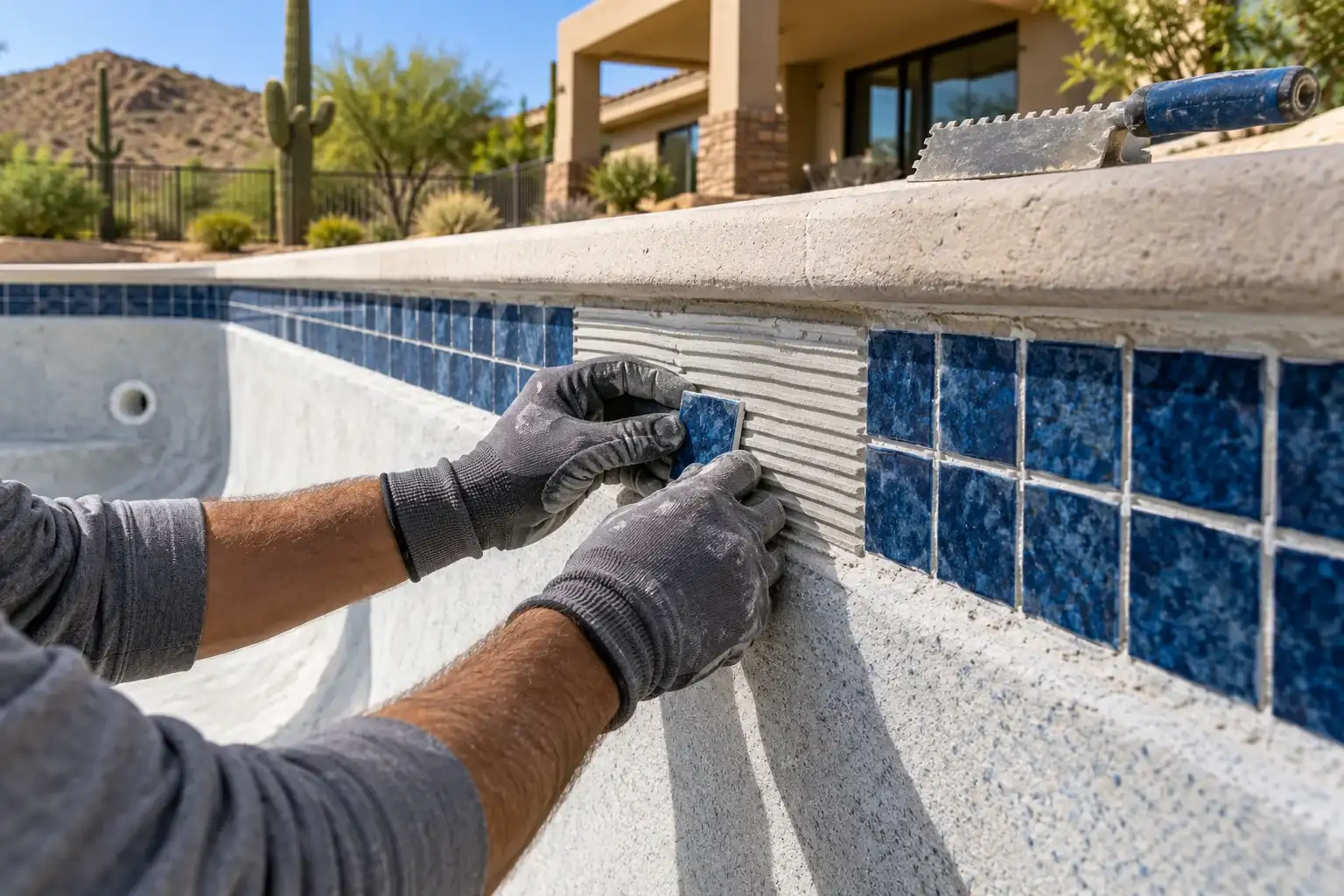
Good to know
How big can the damage get before a county guide calls for resurfacing?
One county pool guide draws the line at one square foot. It says plaster surfaces with cracks and chipping larger than one square foot require resurfacing (County of San Diego, Swimming Pool Operator's Guide (opens in a new tab)).
The County of San Diego Department of Environmental Health adds that it is time to resurface when the shell shows damage that could cause cuts, scrapes or other injuries.
That guide is written for public pool owners and operators in California, so it is not a rule for a Phoenix backyard pool. It does show how a regulator frames the question: the size of the damage and the risk of injury. The same guide says a monthly check of the pool shell allows minor repairs as needed instead of waiting for costly major repairs.
5 questions
Questions people ask
Still have a question? Call (747) 243-2089 and say what your pool is doing.
Can a small crack in pool plaster be patched?
A crack on its own does not settle it. Small cracks or hollow spots where the plaster let go of the shell are on the signs list that points to a new surface, and so are cracks in the shell itself near steps and benches. Tell us what you see, and someone from our team will call you back.
How many signs mean the whole pool needs resurfacing?
The Phoenix plastering signs list uses 2 or more as the point where the surface may be telling you it is time. Rough texture, scale that will not scrub off, set-in stains, thin patches and hollow spots all count, and a finish near 10 years old adds weight.
Does a patch last as long as new plaster?
None of the sources checked gives a lifespan for a patch. A new plaster surface runs 10 to 15 years in Arizona in a 2026 Arizona pool cost guide, and the rest of an old surface keeps its age when one spot is repaired.
Is there an option between a patch and a full chip-out?
Light prep sits between them. It keeps the existing surface, sanded and cleaned with minor repairs, before the new finish goes on. A full chip-out removes the old finish down to the shell and adds cost, and the shell is inspected in person before one is chosen over the other.
What does resurfacing cost instead of a patch?
The sources give no price for a patch. A 2026 Arizona pool cost guide puts a plaster resurface at $6,000 to $10,000 per pool and a pebble style finish at $9,000 to $16,000, and a full chip-out adds cost over light prep. The Phoenix pool resurfacing cost page has the tables by size and finish.
Keep reading
Keep reading
- Pool plastering and replastering: for what a new plaster surface involves.
- How long a pool surface lasts in Phoenix: for the lifespan of each finish.
- When to resurface a pool in Phoenix: for timing around monsoon season.
- Phoenix pool resurfacing cost: for the published price ranges by size and finish.
- Rough pool plaster in Phoenix: for what a rough surface points to.